
Last updated November 21, 2026
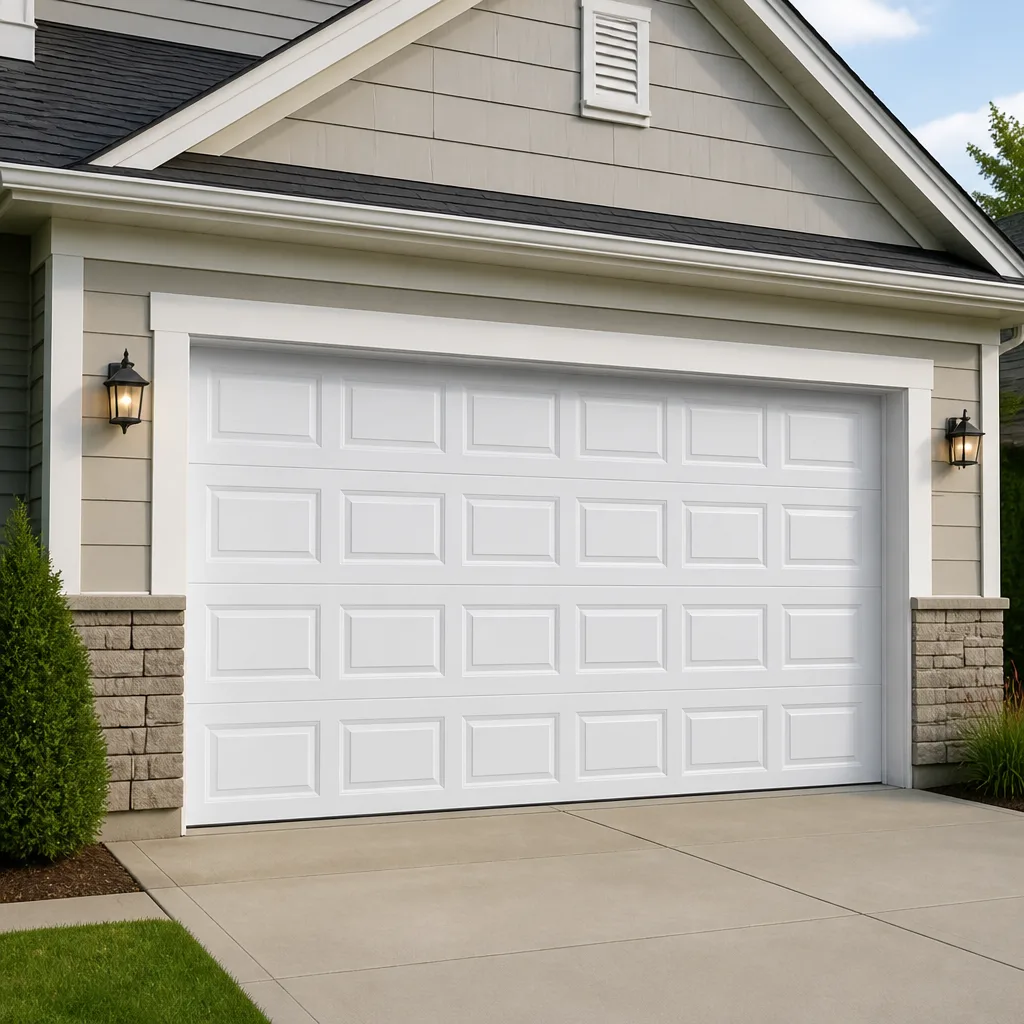 Raised-panel steel
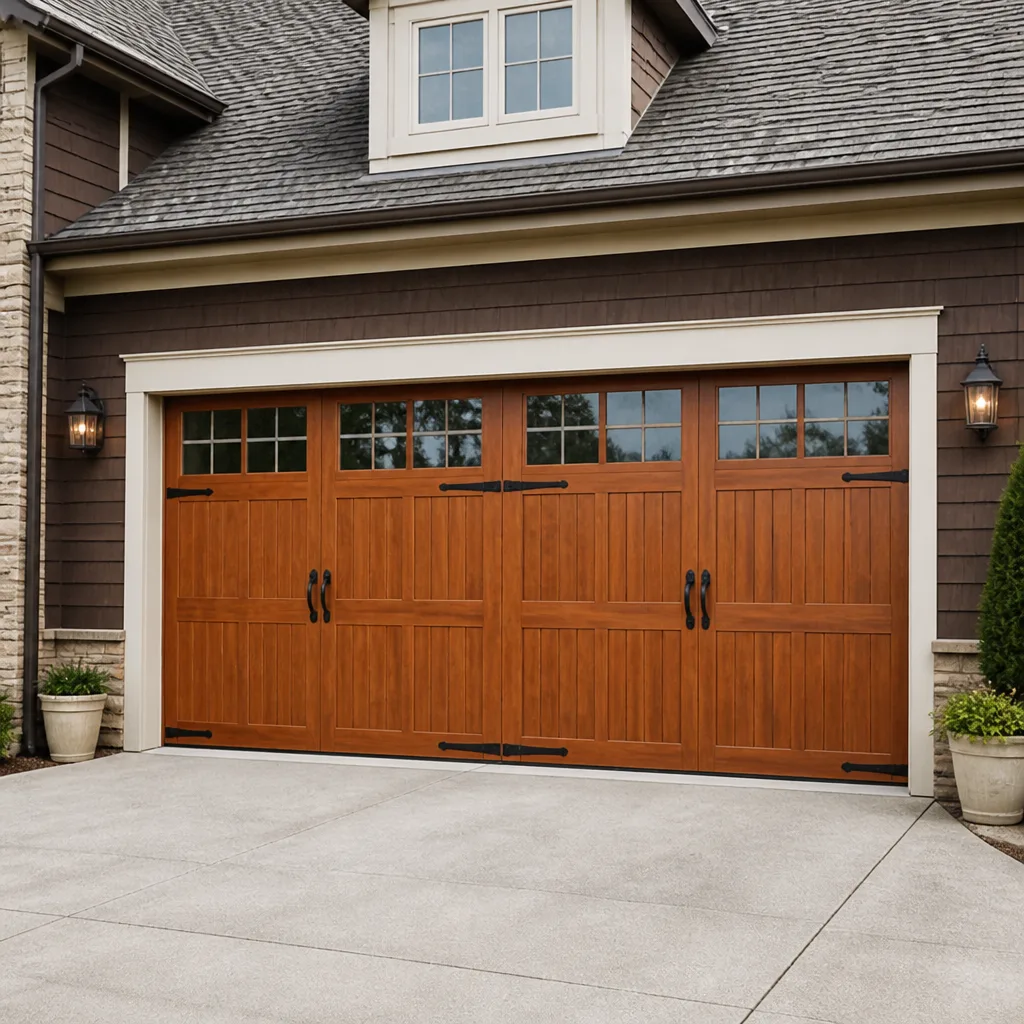 Carriage house
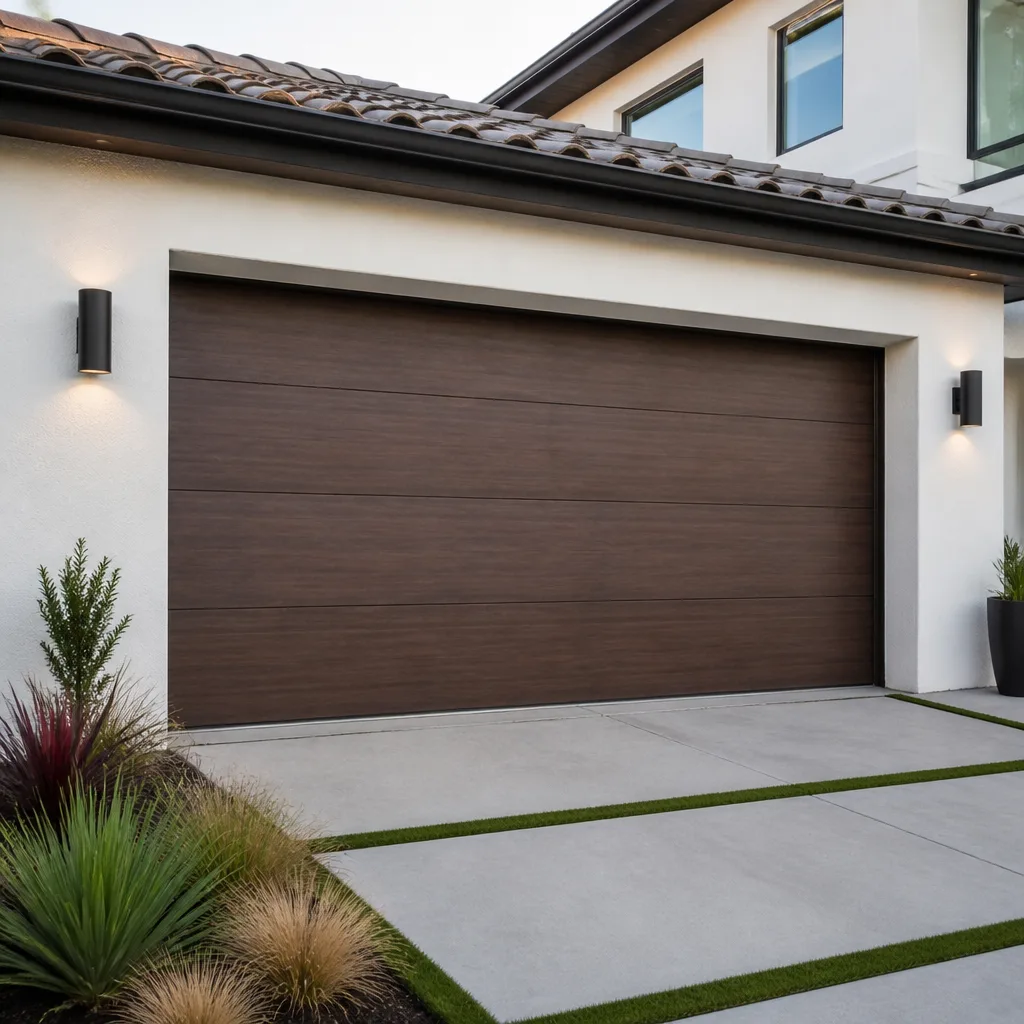 Modern flush
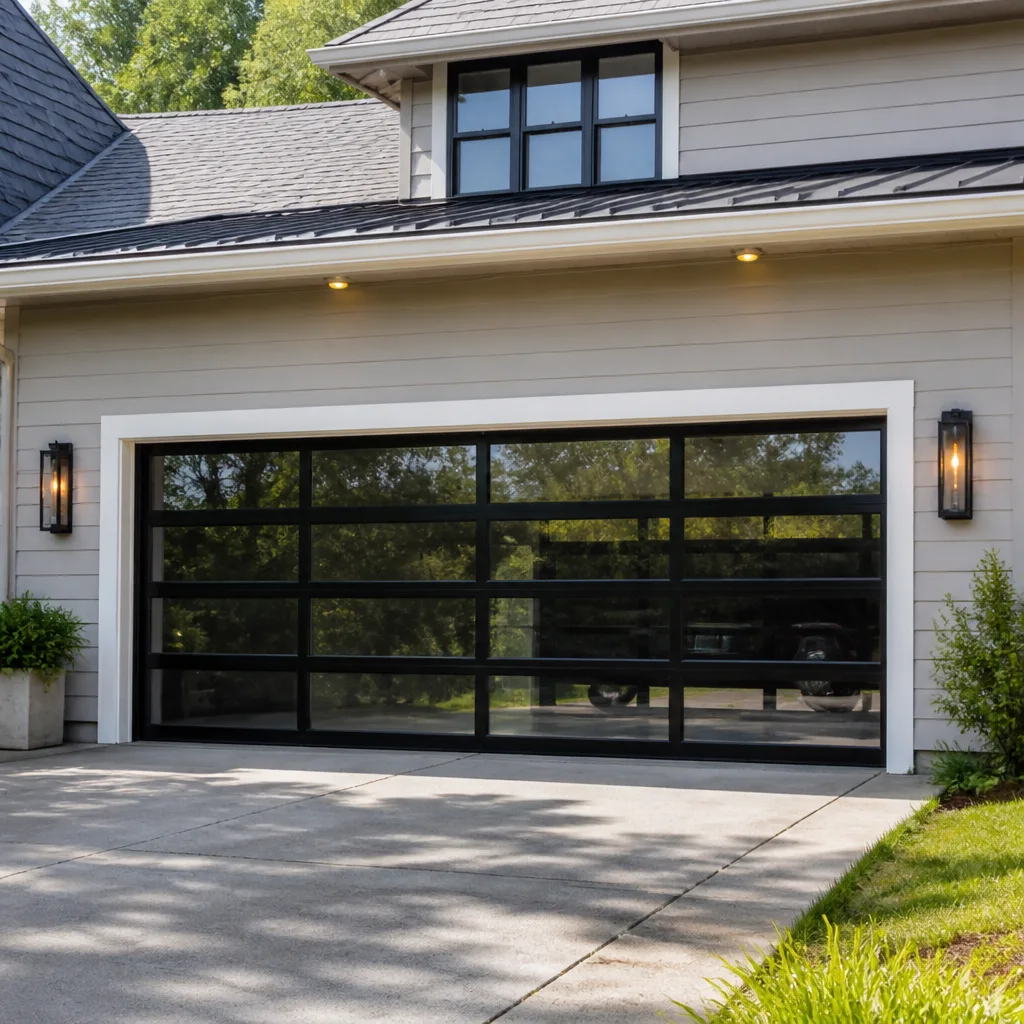 Full-view glass
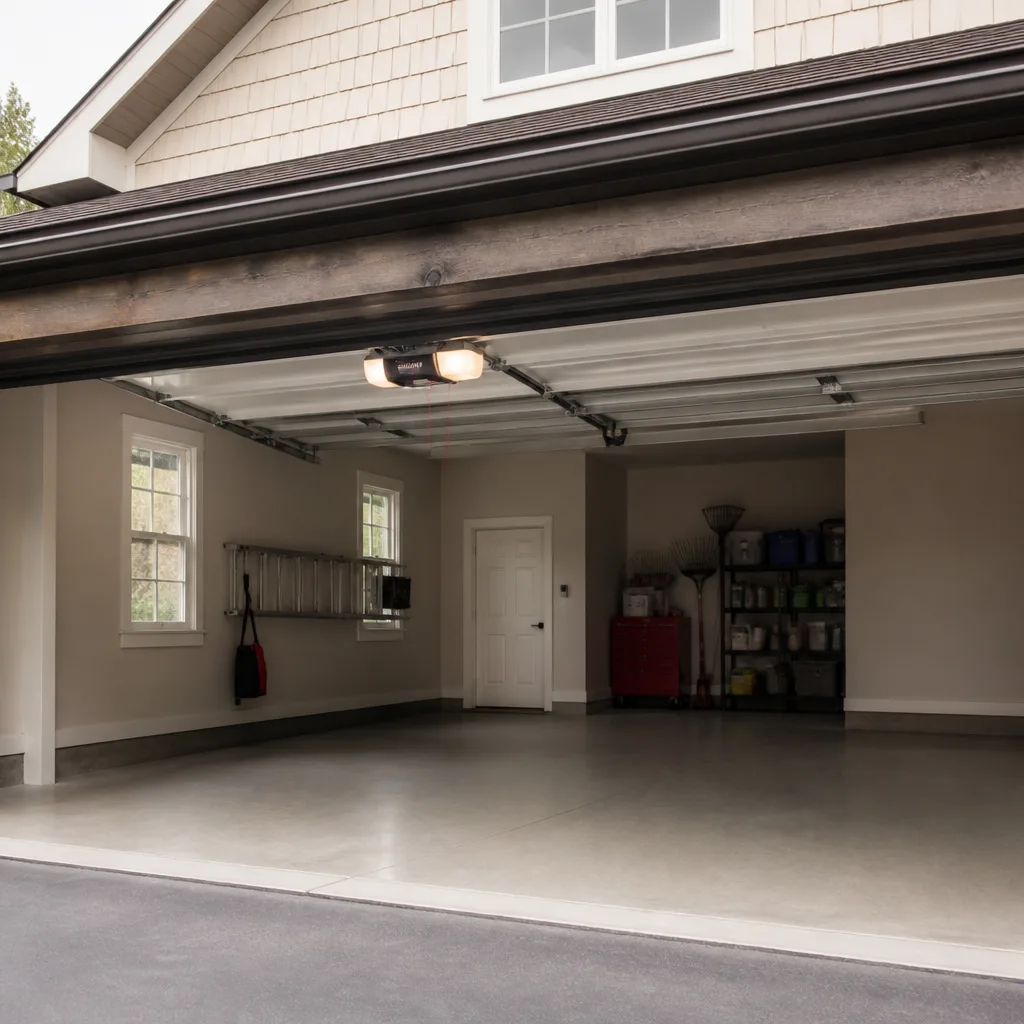 LiftMaster openers
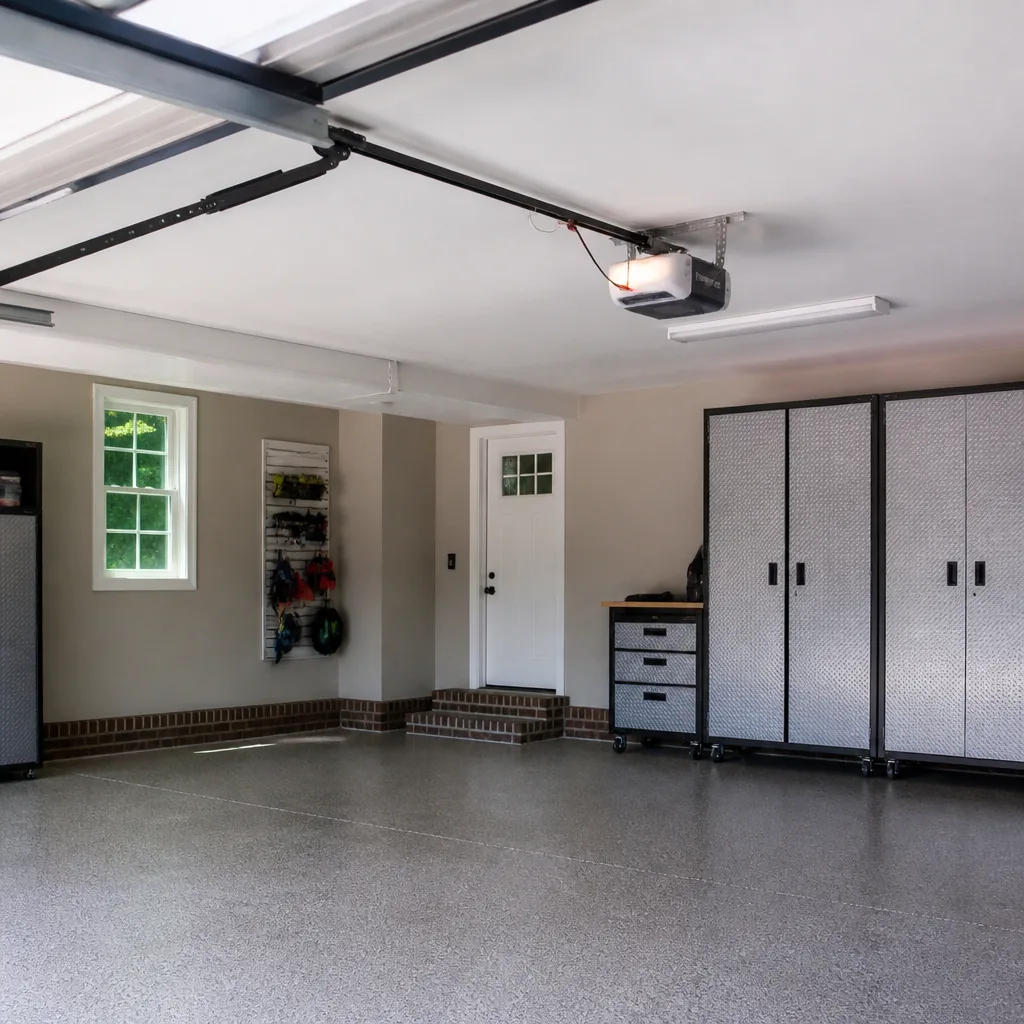 Chamberlain openers
Full 25-point door and opener safety check with every visit - springs, cables, rollers, tracks, and your LiftMaster or Chamberlain opener included
You get a price before we start. It does not change when the pro arrives.
Get your free estimateThe Complete Guide to Garage Doors in Clearwater
Most homeowners in Clearwater replace their garage door once and then stop thinking about it, right up until a panel gives out or a cable seizes and the door won’t lift. The common assumption is that a garage door is a garage door, and any model that fits the opening will do. That assumption costs money here. A door spec’d for an inland climate behaves differently in Clearwater’s heat, humidity and storm season, and the opener that made sense for a detached garage in a dry city can be the wrong machine for an attached garage in this one. This guide covers how doors and openers actually perform in Clearwater, what the ratings mean, which materials hold up, and how to choose without overpaying.
Quick Answer
A garage door in Clearwater should be rated for wind and water exposure, not just sized to the opening. That means a door with a current Florida Product Approval or Miami-Dade Notice of Acceptance, corrosion-resistant hardware (stainless or hot-dipped galvanized springs and cables), and an opener matched to whether the garage is attached or detached. Steel is the usual choice, aluminum does better in humid air, and fiberglass is the light option. The written estimate from a specialist sets the final price.
Styles & brands we work with
- Raised-panel steel
- Carriage house
- Modern flush
- Full-view glass
- LiftMaster openers
- Chamberlain openers
Table of Contents
- Why a Clearwater Garage Door Isn’t the Same as Anywhere Else
- What Miami-Dade and Florida Product Approval Ratings Actually Mean
- Steel, Aluminum or Fiberglass: Which Holds Up in Clearwater?
- Heat, Humidity and Your Springs and Cables
- HOA and Pinellas County Rules That Affect Door Choice
- Choosing an Opener for an Attached vs. Detached Garage
- Repair or Replace? A Decision Path
- What Garage Door Work Typically Costs in Clearwater
Why a Clearwater Garage Door Isn’t the Same as Anywhere Else
Clearwater sits in a building environment that most generic garage door guides flatly ignore. The variables that matter here are heat, humidity, wind exposure and code requirements, and they push door selection in directions that would be unnecessary in, say, Atlanta. A door that was a fine choice in a drier climate can be the wrong call for a Clearwater home within a few seasons.
The first reason is thermal cycling. A Clearwater garage can swing from cool overnight air to a garage interior that holds heat well into the evening, and that repeated expansion and contraction works on springs, hinges, rollers and the door itself. The second reason is humidity. The air here stays moist through much of the year, and that is what drives corrosion on the steel components that do the hardest work: torsion springs, extension springs, cables and the bottom brackets they anchor to.
The third reason is storm exposure. A Clearwater door isn’t just an entry point, it’s part of the building envelope when wind-driven rain and pressure hit. Doors that aren’t rated for pressure simply aren’t built the same way, and a garage that’s open to the wind can lose the door or the framing around it.
What all of this means is that the door, the hardware and the opener form one system that should be chosen together for Clearwater conditions. Our technicians have up to 11 years of experience with exactly that system, and we work on LiftMaster, Chamberlain, Genie, Clopay, Amarr, Wayne Dalton, Craftsman and Raynor equipment specifically. Garage doors are all we do, so the diagnosis is specific to the brand and model in front of us, not a generalist’s best guess.
What Miami-Dade and Florida Product Approval Ratings Actually Mean
Florida Product Approval and Miami-Dade Notice of Acceptance are the two rating systems you’ll see referenced on garage door spec sheets, and it’s a common misconception that they only apply to homes deep in South Florida. They don’t. In Clearwater and across Pinellas County, a rated door is the relevant standard if you care about how the door performs under wind load, and the local building department is the authority on what your property actually requires.
Here’s how to think about the two ratings:
- Florida Product Approval means the product has been evaluated for use in Florida under defined conditions, with the rating tied to specific wind speeds, sizes and installation methods. It’s the baseline most Florida homeowners will see on a door spec sheet.
- Miami-Dade Notice of Acceptance (NOA) is the stricter High-Velocity Hurricane Zone (HVHZ) approval. It’s the toughest wind standard in the state, and doors built to it tend to be the most heavily engineered. It’s not required everywhere, but it’s a strong indicator of how seriously the manufacturer built the product.
The rating only matters if the door is installed to match it. A rated door hung with the wrong brackets, the wrong anchors or unrated reinforcing hardware doesn’t perform at its rating. This is one of the quiet ways a cheap installation fails an inspection or, worse, a storm. If you’re not sure what your property requires, ask the City of Clearwater building department directly rather than relying on a generic guide. We can tell you what a rated door should look like on your wall, but the inspector has the final say.
Steel, Aluminum or Fiberglass: Which Holds Up in Clearwater?
Three materials dominate residential garage doors, and in Clearwater’s humid air they perform differently enough to be worth ranking. Here’s how we’d line them up for local conditions, with the trade-offs that matter more than the sales pitch:
- Aluminum: best overall for humid Clearwater. Aluminum won’t rust the way steel will under moisture, and it’s lighter, which eases the load on springs and the opener. The trade-off is dent resistance. An aluminum door can dent more readily than steel if something hits a panel, so it suits homes with careful drivers and a clear approach.
- Steel: the strongest balance of cost and durability. A well-built steel door, with a corrosion-resistant finish and stainless or galvanized hardware, is the most common choice in Clearwater homes for good reason. It’s strong, it’s affordable, and it holds a finish well. The failure point isn’t the panel, it’s the hardware. Regular inspection of springs, hinges and bottom brackets matters more than any material decision.
- Fiberglass: the light, low-maintenance option. Fiberglass doors resist moisture and won’t corrode, and they’re the lightest of the three. The trade-off is that some fiberglass panels can fade or chalk over years of sun, and impact resistance is lower than steel or aluminum rated for the same wind speed. It’s a solid choice for a covered garage or a lighter application.
Whichever material you choose, the finish and the hardware decide how long it lasts in Clearwater humidity. An enamel finish on steel is the difference between a decade of service and a fifteen-year string of rust problems. And hardware is where the corrosion actually does damage: springs, cables, hinges and brackets. That’s a materials question, not a door question, and it’s the one most generic guides skip entirely.
Heat, Humidity and Your Springs and Cables
The parts of your garage door that fail first, most often, aren’t the panels. They’re the torsion or extension springs and the cables that carry the door’s weight. In Clearwater’s humid air, those steel components sit in a garage that stays warm and moist, and that combination is the single biggest cause of spring and cable failure we see. It’s not a design flaw. It’s just physics, and it’s worth understanding before you plan a repair.
The specific problem is corrosion on the parts that are under the most tension. A torsion spring is a coil of steel under enormous stored force, and when rust weakens it, it doesn’t fail slowly. It can break with a loud bang that owners describe as a gunshot in the garage. Cables corrode too, and a rusted cable can fray or snap. In an inland city with drier air, the same springs might last noticeably longer. Here in Clearwater, they’re working harder against the environment.
Safety matters here more than anywhere else on your garage door. A broken torsion spring or a snapped cable is genuinely dangerous to work on, because the energy stored in a tensioned spring is not something to handle with hand tools and a ladder. This isn’t a job to attempt yourself. The manual says “do not attempt,” and that warning is there for good reason. What you can do is check, safely, from a distance: look for rust streaks on the springs, fraying on the cables, and any gap or kink in the coil. If anything looks wrong, keep the door closed or call for a trained technician.
Clearwater Garage Door Repair Pros includes garage door repair and spring work as a named service rather than a sideline. Our technicians handle a failed spring safely, and we source the correct parts for the brand, so the repair holds rather than becoming a recurring leaky fix. That’s the difference between a repair done right and one that fails again in a couple of months.
Choosing an Opener for an Attached vs. Detached Garage
The opener is where Clearwater’s heat changes the math more than most people expect. An attached garage shares walls and often a ceiling with the living space, and in Florida’s climate the garage is the hottest room in the house. A detached garage, with its own uninsulated shell and no conditioned air, can run even hotter inside during summer. The opener that suits one may not suit the other, and the choice of door material and opening type feeds directly into that decision.
Here’s the breakdown:
- Attached garage: the priority is heat management, quiet operation and safe closing. A belt-drive opener is a strong fit here because it’s quiet and runs cooler than a chain-drive, so it’s less annoying to the rooms above and less stressed in the heat. A door sensor and a battery-backup safety feature are worth the small extra cost, because an attached garage door is a shared entry point.
- Detached garage: the priority is durability in an uninsulated structure. Chain-drive openers are the more durable option, and they tolerate temperature swings better than some belt-drive units. A screw-drive is a third option worth a look if you want a low-maintenance machine with fewer moving parts.
- Either garage: the opener should be rated for the door’s weight and size, and it should be a brand with parts available locally. That’s where knowing the brand matters. We service LiftMaster, Chamberlain, Genie, Craftsman and the rest, which means we’re not guessing at the specs before we arrive.
Heat is the underrated variable. In Clearwater, an opener motor that is under-spec’d for the door and left in a hot garage will wear faster than the same unit in a cooler city. Matching the opener to the door and the environment, rather than pulling the cheapest unit off the shelf, is how you avoid a string of opener repairs down the line. If your opener is already giving trouble, garage door opener repair is the fastest path back to a working door.
HOA and Pinellas County Rules That Affect Door Choice
Clearwater’s aesthetic rules can quietly eliminate half the options before you ever look at a wind rating. Homeowners association covenants, and in some areas design review, often restrict door style, color, panel design and even material. Ignoring that at the shopping stage is how a homeowner buys a beautiful door that the HOA then asks them to remove.
The rule for any garage door project in Clearwater is to check the following before you order:
- Read your HOA’s architectural rules. Many specify approved colors and panel styles, and some prohibit certain materials or require matching the other doors on the street. If your neighborhood has a design review committee, ask what the current approved palette is.
- Check whether your property is in a designated historic or design-review area. Some Clearwater neighborhoods have additional standards on doors and windows, and the local building department can confirm what applies to your address.
- Confirm whether a permit is required. Most jurisdictions require a permit for garage door replacement, and the City of Clearwater building department is the authority on whether your project needs one and what it must show. Ask before work starts rather than after.
- Match the door to the home’s architecture. A carriage-house door on a mid-century home or a minimalist panel on a bungalow creates a look that the HOA may reject, and that doesn’t suit the house anyway. Choose with the house in mind first, and the covenant second.
These rules don’t usually block a good door choice, but they do narrow the field. Getting them right up front saves a return trip and a rejected order. We can help you line up an approved style with the wind rating your property needs, though the HOA and the city have the final word.
Repair or Replace? A Decision Path
One board broken doesn’t mean a new door, and one ugly-looking door doesn’t mean the opener is failing. In Clearwater, the honest answer to repair-or-replace usually comes down to which component failed and how far the damage has spread. Here’s the path we’d walk a homeowner through:
- Is it one part or the whole system? A snapped spring, a frayed cable or a dead opener is a repair, almost always. A door with multiple dented or rotted panels, a bent track and a struggling opener is a replacement conversation.
- How old is the door, and does it meet current wind rating? An older door that predates the current Florida wind standards may be a liability as well as a look you’re tired of. A rated replacement solves both at once.
- How much corrosion is there? Surface rust on hardware is a repair. Rust that has compromised the panel structure, the bottom section or the anchors is a sign the door is on its way out.
- Does the door suit the garage? A heavy steel door on an aging opener in a hot Clearwater garage is a system mismatch. Sometimes the smartest move is to replace both together so they’re matched.
The decision path isn’t a way to upsell you, it’s a way to spend money once. If a repair will get you years of service, that’s the answer. If it won’t, a replacement is the honest recommendation. We give the written estimate first, and the price is agreed before any work starts, so there’s no surprise invoice at the end.
What Garage Door Work Typically Costs in Clearwater
Costs in Clearwater depend on the brand, the size of the door, whether it’s rated for wind, and which components are being fixed. The ranges below are typical estimates for the local market, not exact quotes. The written estimate from the technician sets the final price, and it’s agreed before work starts.
- Torsion spring replacement, one spring: typically $180 – $340
- Torsion spring replacement, matched pair: typically $360 – $680 (a pair is usually replaced together, so it costs about twice a single spring)
- Extension spring replacement, one spring: typically $140 – $260
- Cable replacement, one side: typically $120 – $220
- Opener repair (board, gear, motor or sensor): typically $150 – $320
- New opener installation, standard unit: typically $350 – $650
- Panel replacement, single section: typically $250 – $600, depending on material and finish
- New door installation, standard steel, single-car: typically $900 – $1,800
- New door installation, rated and insulated, double-car: typically $2,000 – $4,500
These aren’t published “real local prices” and they aren’t a bait number. They’re a range informed by the Clearwater market, and the exact figure depends on what’s on your door. A rated door, a high-end brand and a custom finish all move the number toward the top of the range. A standard steel door with a basic opener sits toward the bottom.
The estimate covers the diagnosis and the written price, and it’s free. There’s no service-call fee, no diagnostic fee and no trip charge. If you want a starting point, garage door installation is the right call for a new door, and we’ll bring the wind rating and HOA questions into the conversation before you commit.
Common Mistakes to Avoid
- Buying a door without a wind rating. A door that isn’t rated for Clearwater’s storm exposure may pass a casual look and fail an inspection or a storm. Check the rating against what your property requires before you buy, not after.
- Ignoring the HOA rules until after the order. It’s common for a homeowner to fall for a door style, order it, and then discover the HOA prohibits the color or panel design. Read the covenant first and save yourself the return.
- Assuming a cheap opener will survive a hot garage. In Clearwater heat, an under-spec’d opener wears faster. Match the opener to the door and the garage, and the unit lasts.
- DIY spring repair. A tensioned torsion spring is one of the most dangerous components in a home, and a broken one can injure you badly. Leave it to a trained technician; the risk isn’t worth the saved repair cost.
- Choosing material by look alone. Steel, aluminum and fiberglass behave differently in Clearwater humidity. A door that looks right but isn’t suited to local moisture will show it within a few seasons.
- Letting a small corrosion problem turn into a structural one. Surface rust on a hinge is minor. Rust that reaches the bottom brackets or the spring is a stalled door waiting to happen. Address it early.
- Getting a generic fix from a handyman who doesn’t know the brand. Brand-specific knowledge means the right parts and the right diagnosis the first time. A generic fix on unfamiliar hardware often fails again in a couple of months.
See the difference
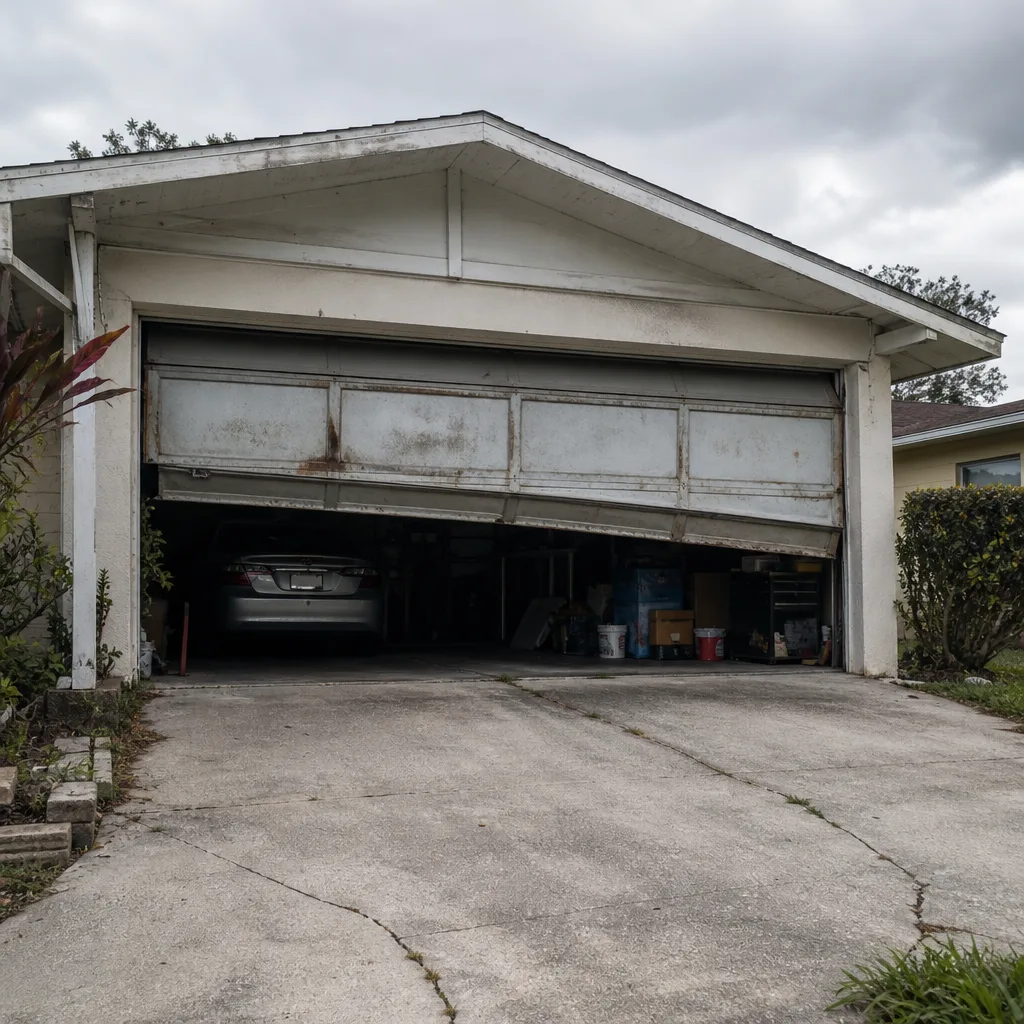 Before
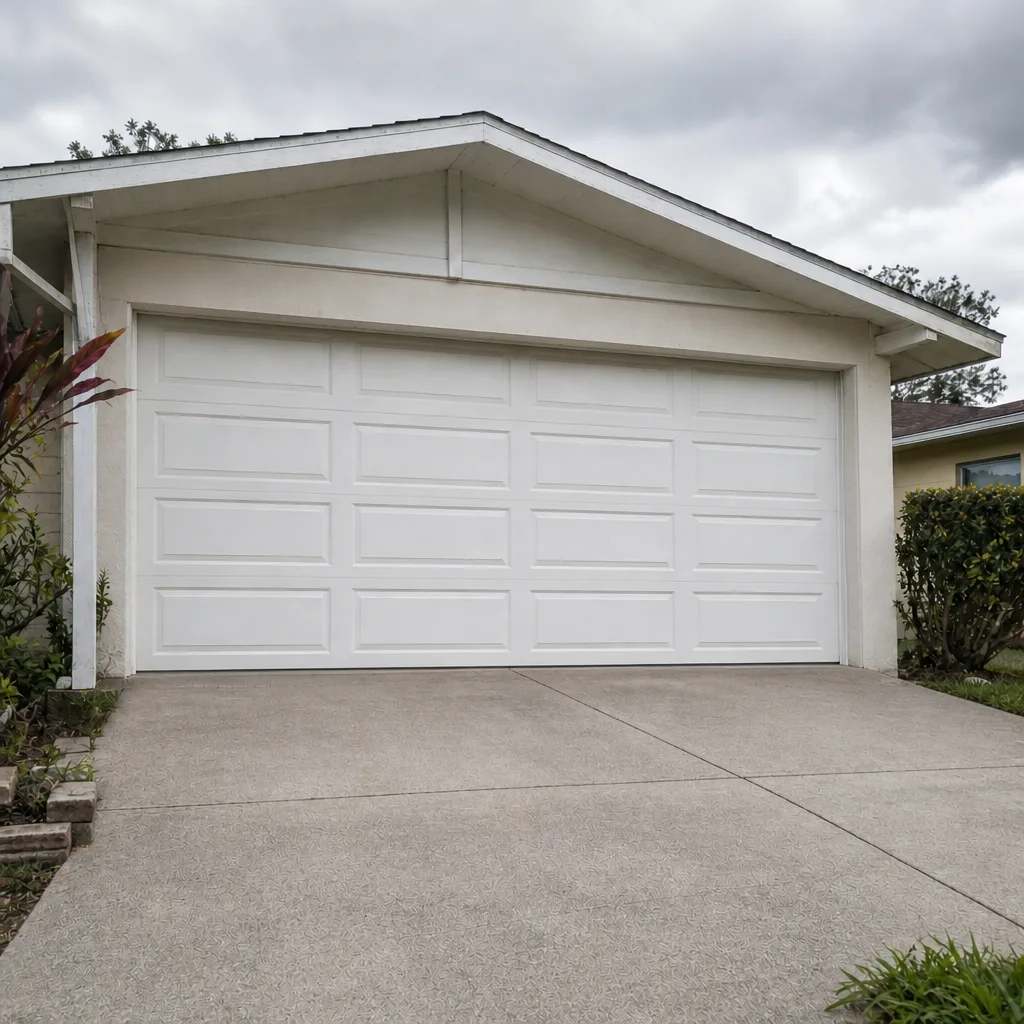 After
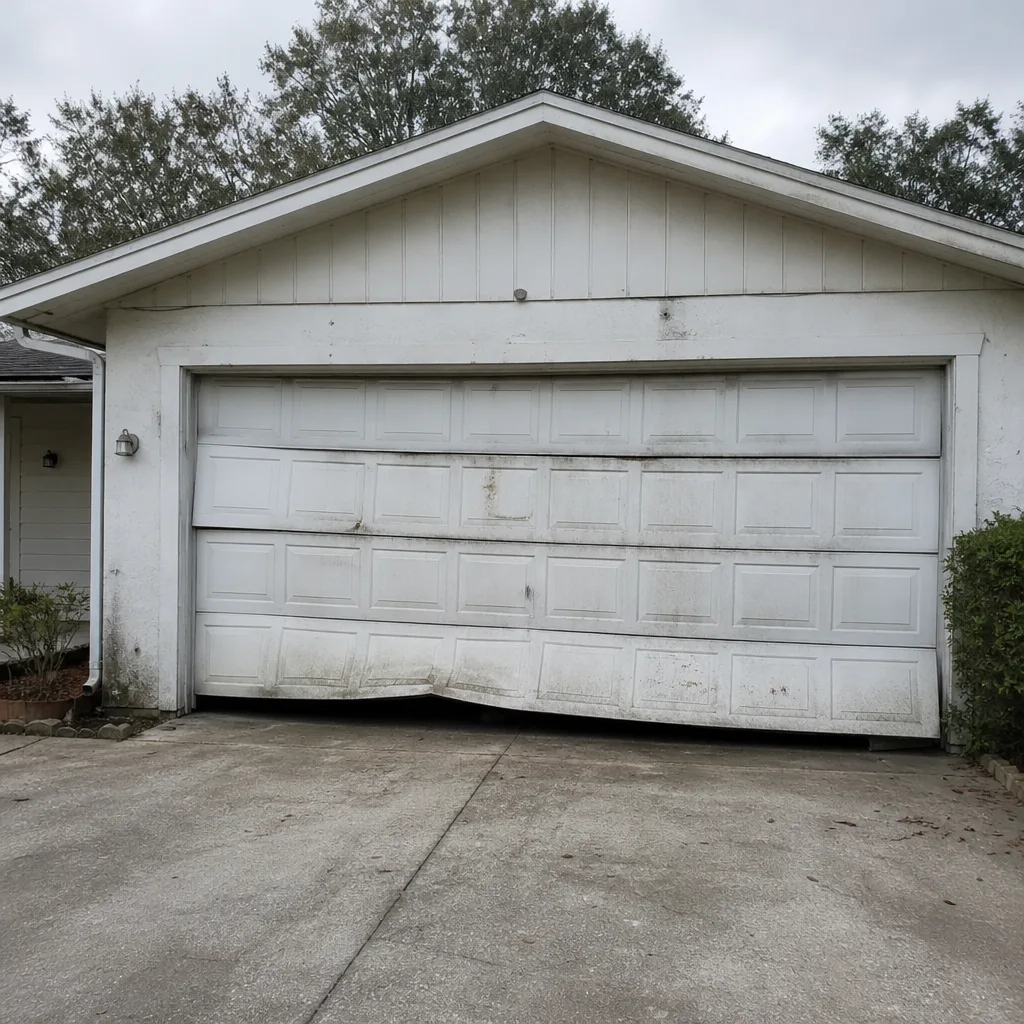 Before
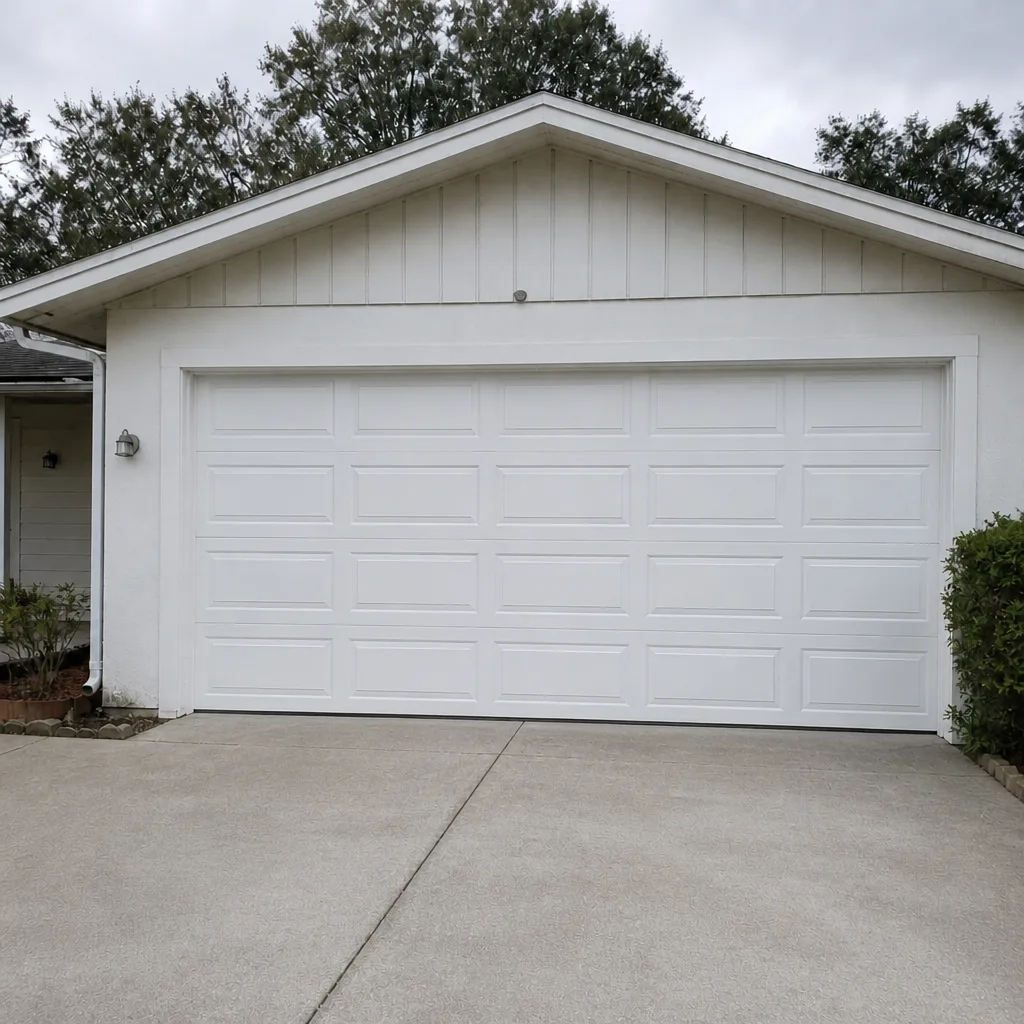 After
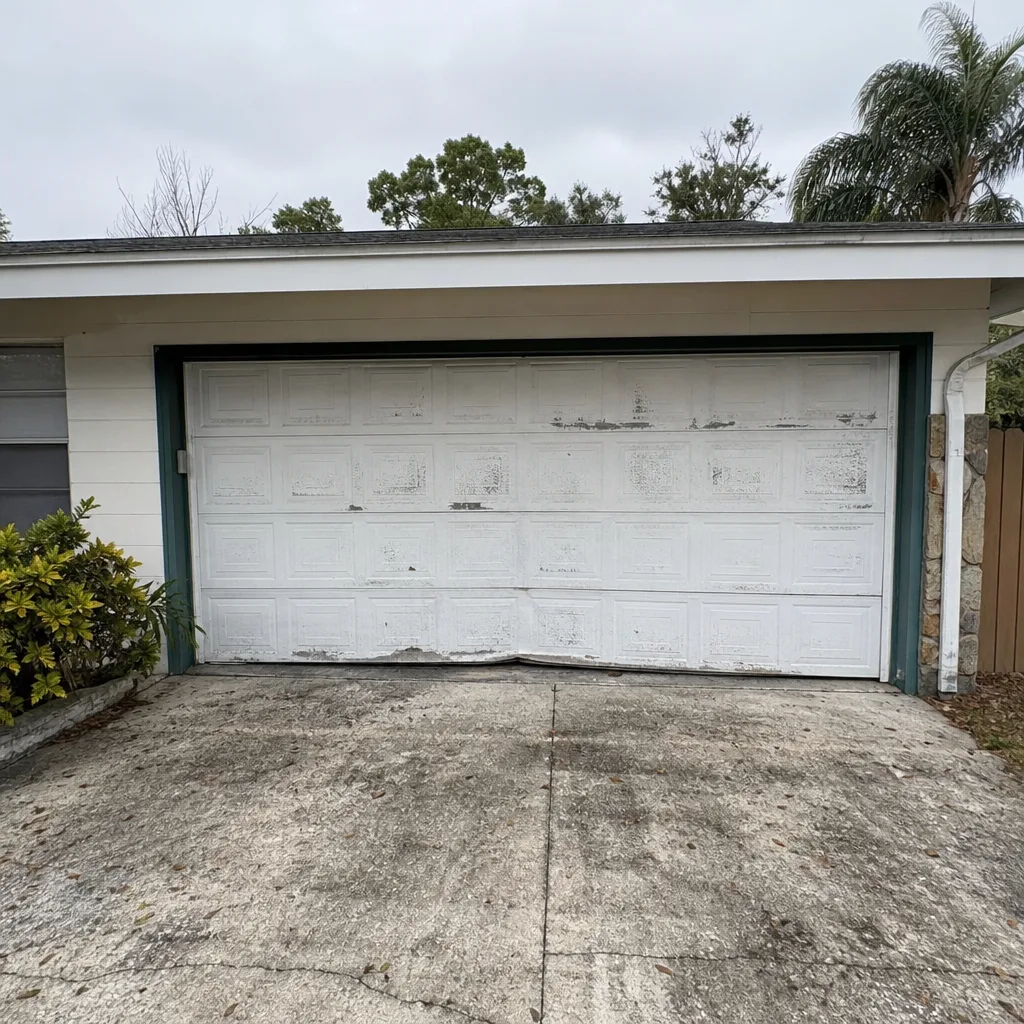 Before
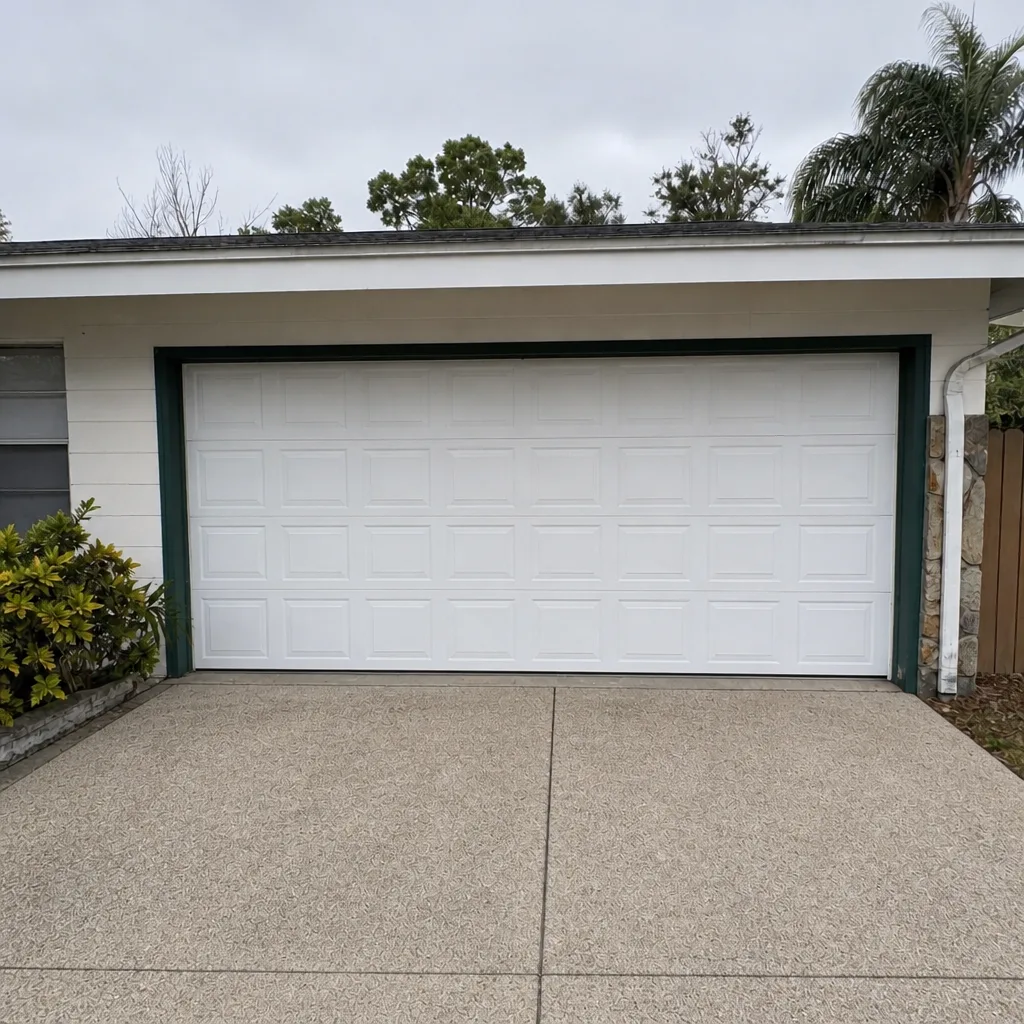 After
When to Call a Professional
Some garage door problems are safe to investigate from a distance. Others are not, and this is where a professional call is the right move. Call a specialist if a spring breaks, a cable snaps or frays, the door comes down crooked or won’t close flush, the opener runs but the door doesn’t move, or you notice rust on the springs and brackets. The same rule applies if the door is stuck open and your garage is exposed, or if a broken door has trapped your vehicle. Clearwater Garage Door Repair Pros offers free estimates in Clearwater. Call (866) 488-2820, and we’ll diagnose the brand and model before we arrive. We answer 24/7, with fast dispatch from 7am to 7pm, Sunday through Friday. A call outside dispatch hours is booked into the next opening. Emergency service is a core offering here. Garage doors are all we do, so when your door won’t move, we do.
Frequently Asked Questions
Aluminum and corrosion-resistant steel are the best choices for Clearwater’s humidity, with aluminum edging ahead for rust resistance and steel for strength and cost. Whichever you pick, choose a current Florida Product Approval rating and hardware that’s stainless or galvanized. The written estimate sets the final price on the installation, and it’s agreed before work starts.
Not necessarily. Miami-Dade NOA is the strictest wind standard in Florida, and it’s not required everywhere. What you do need is a door rated to the wind load your property requires under current standards. Ask the City of Clearwater building department what applies to your address, and we’ll help you match an approved door to it.
Torsion spring replacement in Clearwater typically runs $180 – $340 for one spring, and a matched pair usually costs about twice that because both springs are typically replaced together. Extension springs run $140 – $260 for one. The written estimate is the final price, and it’s agreed before any work starts. Call (866) 488-2820 for an exact quote; estimates are free.
A visual check once or twice a year is sensible in Clearwater’s humid air, because corrosion is the main threat to springs and cables. Look, from a safe distance, for rust streaks, fraying and any gap in the spring coil. If you see any of that, don’t try to fix it yourself. Call a trained technician.
Yes, many garage door repairs in Clearwater can be handled same-day once we know the brand and model. Call (866) 488-2820. We answer 24/7, with fast dispatch from 7am to 7pm, Sunday through Friday. A call outside dispatch hours is booked into the next opening. The price is quoted before any work starts.
No, not on the terms of the written estimate. We give you a written price after diagnosis, and it’s agreed before any work starts, so there’s no surprise invoice. If the job turns out to need more than expected, we tell you first. Call (866) 488-2820 for a free estimate on your Clearwater door.
The Bottom Line
A garage door in Clearwater is a system, not a panel. Get the wind rating right for your property, choose a material that suits the humidity, match the opener to whether the garage is attached or detached, and check the HOA and city rules before you order. The parts that fail most often are the springs and cables, and those are the ones to inspect and, when needed, hand to a trained technician. Our technicians have up to 11 years of experience, and we work across LiftMaster, Chamberlain, Genie, Clopay, Amarr, Wayne Dalton, Craftsman and Raynor equipment specifically. Whether you need garage door repair, garage door opener repair or a full garage door installation, the written estimate comes first and the price is agreed before any work begins. For the pillars that anchor this guide, see Clearwater Garage Door Repair Pros.
Call (866) 488-2820 for a free estimate. We answer 24/7, with fast dispatch from 7am to 7pm, Sunday through Friday. Clearwater Garage Door Repair Pros connects you with vetted local professionals who are licensed and insured as the state requires, and the estimate is free. The price is quoted and agreed before any work starts. Garage doors are all we do.
Written by the team at Clearwater Garage Door Repair Pros.