
Last updated November 21, 2026
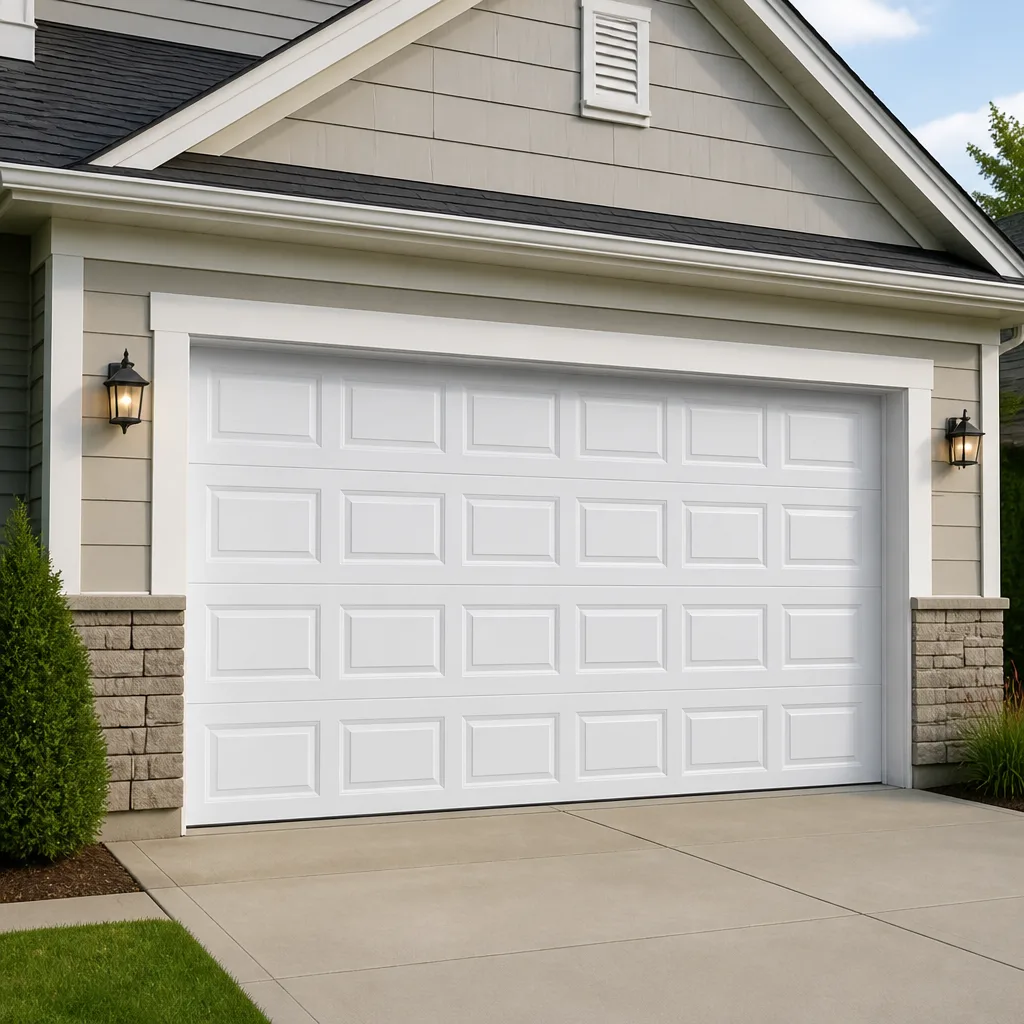 Raised-panel steel
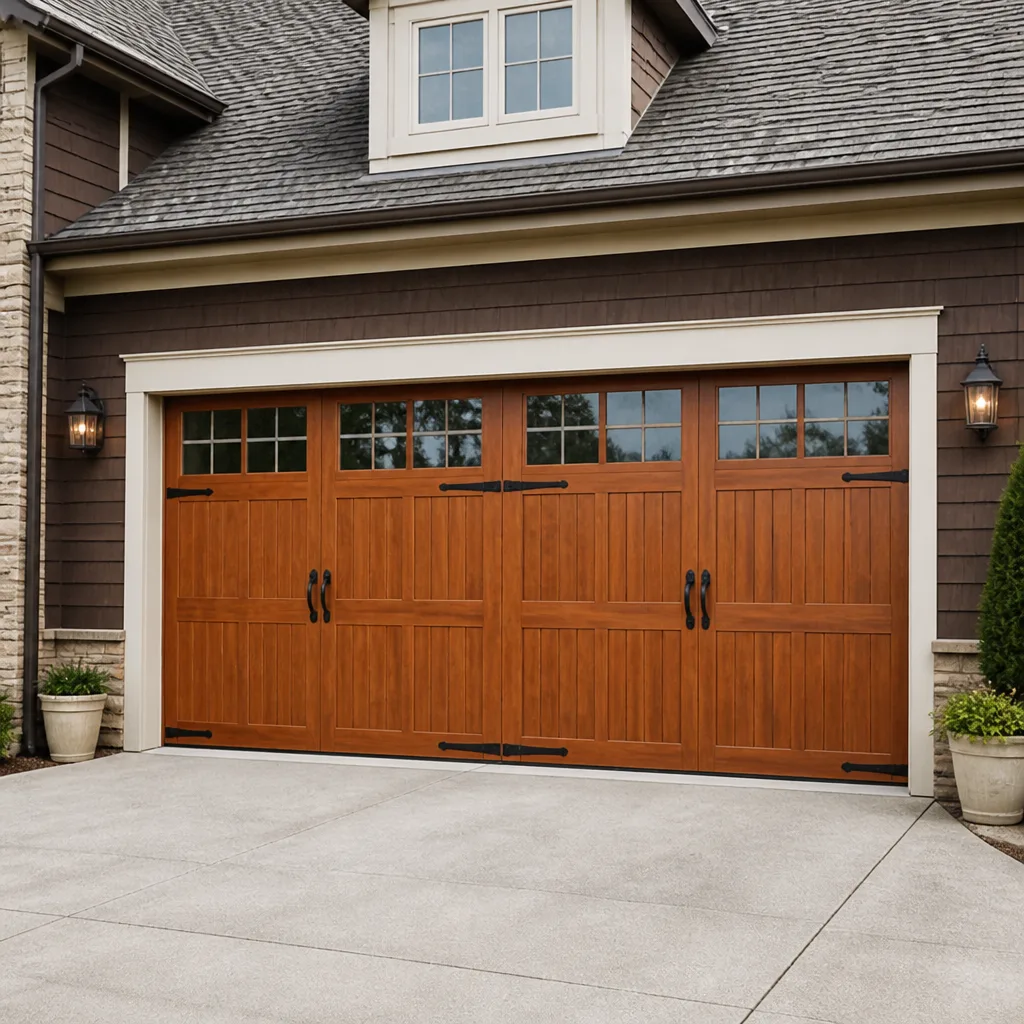 Carriage house
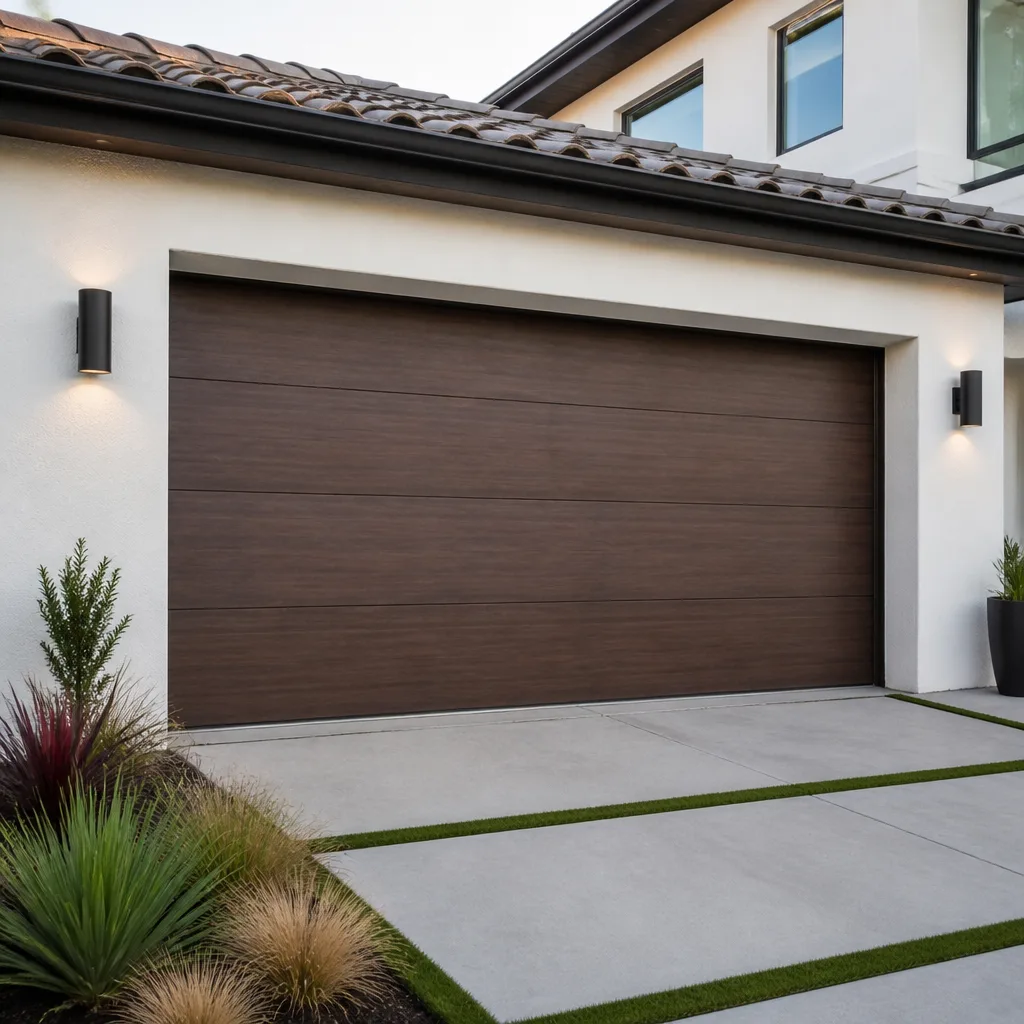 Modern flush
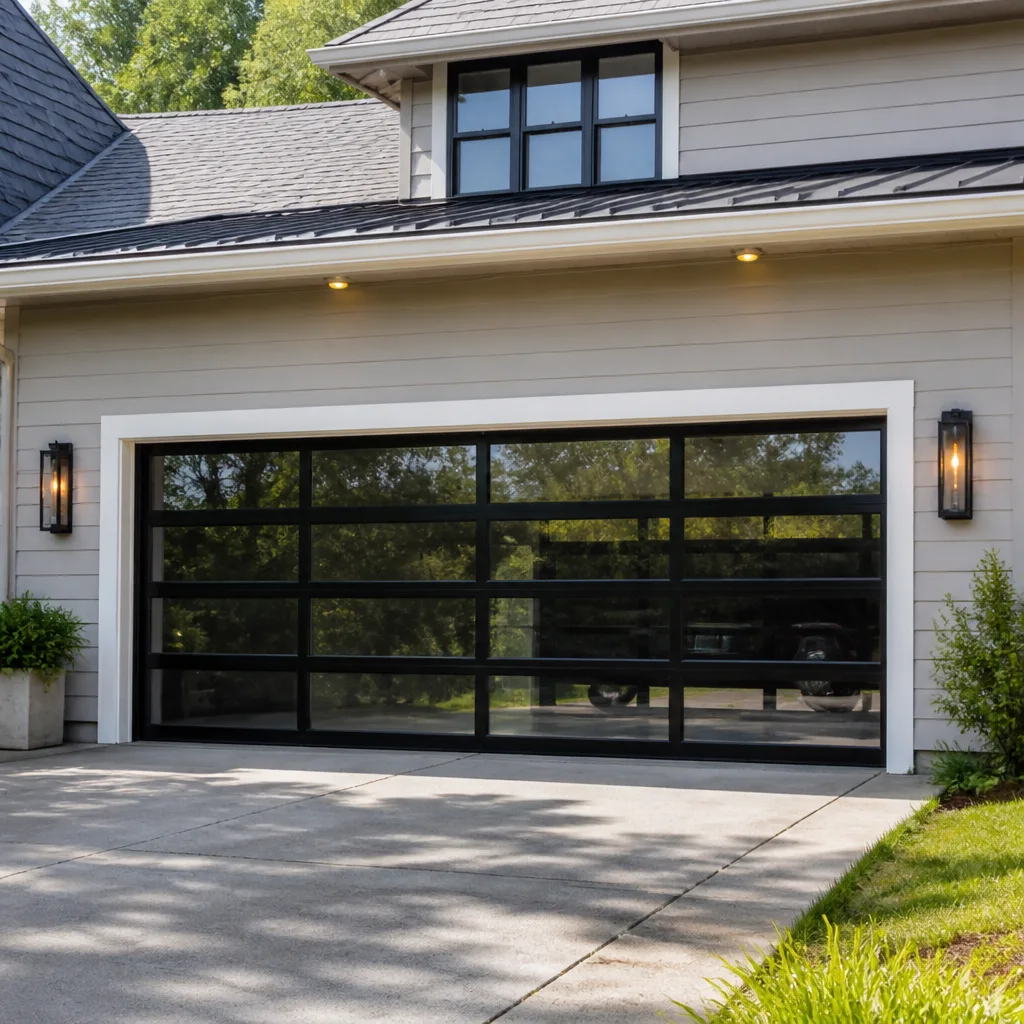 Full-view glass
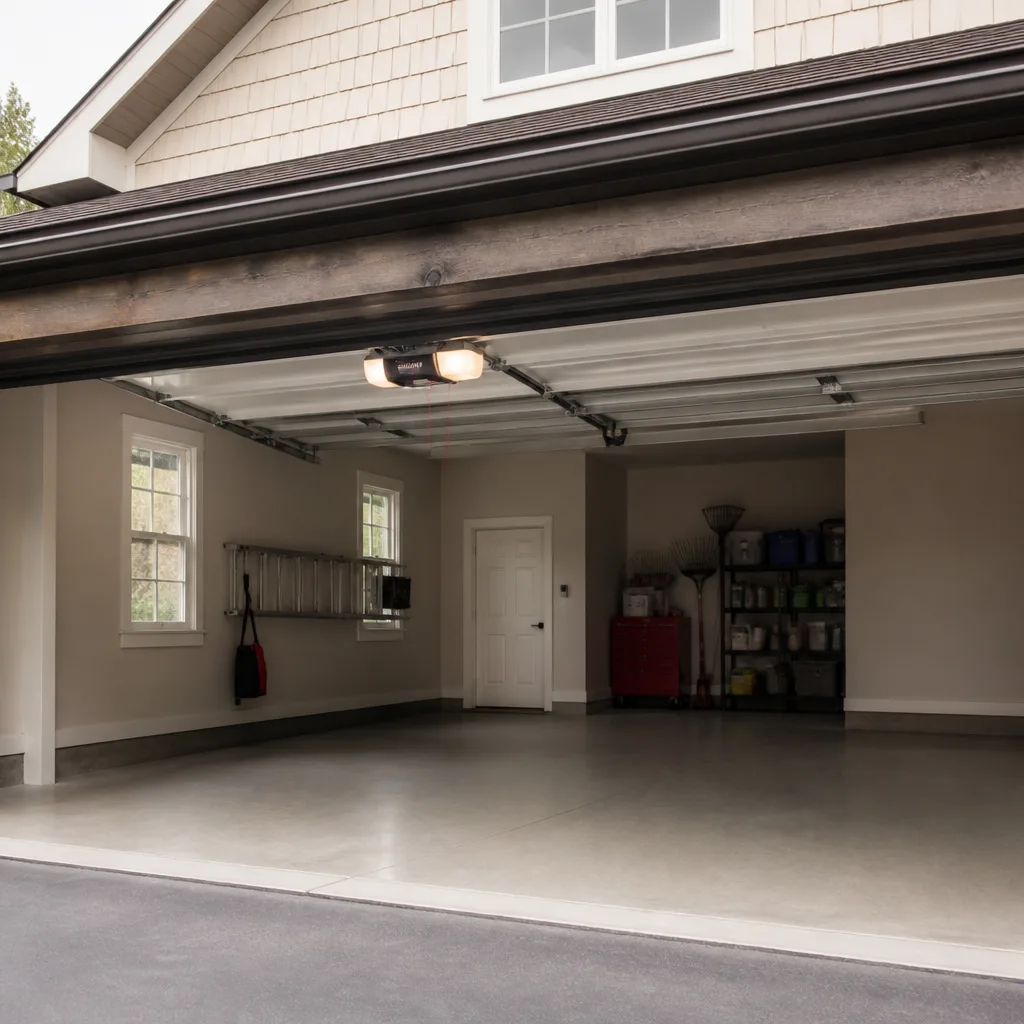 LiftMaster openers
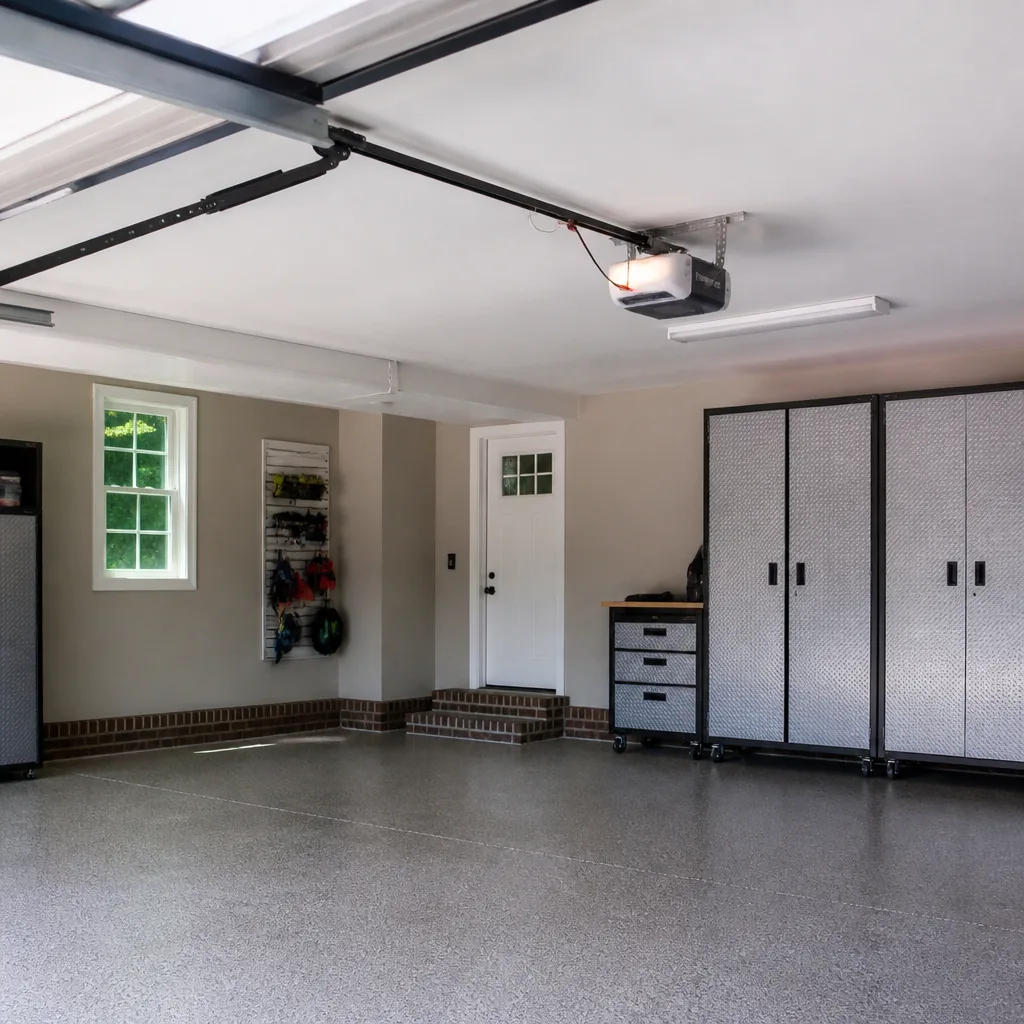 Chamberlain openers
Full 25-point door and opener safety check with every visit - springs, cables, rollers, tracks, and your LiftMaster or Chamberlain opener included
You get a price before we start. It does not change when the pro arrives.
Get your free estimateHow to Hire a Garage Door Contractor in Clearwater: A Step-by-Step Guide
Florida has one of the most specific contractor licensing systems in the country, and a garage door installer who is “licensed and insured” in another state may be operating outside their scope the moment they cross into Pinellas County. That’s the part most hiring guides skip. They tell you to read reviews, compare three quotes, and make sure the truck looks professional. None of that tells you whether the person lifting a 400-pound torsion spring over your car is actually authorized to do the work in this state, or whether the door they install will pass inspection when wind-load rules come into play. In this guide, we’ll walk through the exact checks Clearwater homeowners should run before signing anything: how to verify a license, what brand certification means for your warranty, which product approval numbers matter, and how to write a contract that protects you if a permit problem crops up later.
Quick Answer
To hire a garage door contractor in Clearwater, verify the company’s license through Florida’s DBPR database before anything else, confirm they’re certified on your specific brand (LiftMaster, Chamberlain, Craftsman, or similar), ask for the wind-load rating and product approval number on any door being installed, and get a written contract that states who pulls the permit. Skip any one of those steps and you’re gambling on the most expensive and dangerous part of your home’s exterior.
Styles & brands we work with
- Raised-panel steel
- Carriage house
- Modern flush
- Full-view glass
- LiftMaster openers
- Chamberlain openers
Table of Contents
- Why Hiring a Garage Door Contractor in Clearwater Is Different
- How Do You Verify a Florida Garage Door Contractor’s License?
- Why Brand Certification Protects Your Warranty
- Red Flags Specific to Florida’s Contractor Market
- Wind-Load Ratings and Product Approval Numbers Explained
- How to Structure a Contract That Protects You
- Questions to Ask Before You Sign
- Repair or Replace? How to Decide
Why Hiring a Garage Door Contractor in Clearwater Is Different
Garage doors in Clearwater face a particular set of conditions that don’t exist in most of the country. The heat and humidity are relentless through the warmer months, and the afternoon storms that roll through Pinellas County each summer put real stress on door hardware, opener electronics, and seals. A door that would last fifteen years in a drier climate often needs attention sooner here. Add the salt-laden humidity that hangs in the air even a few miles inland, and you get rust on springs, corroded hinges, and rollers that seize long before their rated lifespan.
Then there’s the regulatory layer. Florida doesn’t license contractors the way most states do. The Department of Business and Professional Regulation (DBPR) issues licenses under specific classifications, and each classification tells you what kind of work a company can legally perform. Someone holding a general contractor license is not automatically authorized to install a garage door, and someone holding a handyman registration is not authorized to do structural work at all. Homeowners in Clearwater regularly assume “licensed” means “licensed for garage doors.” It doesn’t. You have to check the classification.
Wind-load requirements are the other wrinkle. Florida’s building code ties garage door installation to wind-load ratings and product approval numbers, and the specifics depend on where in Pinellas County the home sits and when it was built. A door that was perfectly legal in 2005 may not meet current requirements for a replacement today. Any contractor who doesn’t ask about the home’s location and construction type before quoting a new door is either unfamiliar with local code or hoping you won’t notice.
On top of all that, Clearwater sees the same post-storm surge every few years: a wave of out-of-state crews and newly formed “companies” that show up offering low bids and disappear before the next season. They often quote work they aren’t licensed to do and use parts that void manufacturer warranties. Recognizing them is a skill worth cultivating.
How Do You Verify a Florida Garage Door Contractor’s License?
The only reliable way to verify a Florida garage door contractor’s license is to look it up directly in the DBPR’s online license database, using the company’s legal business name or license number. Do not accept a photocopy of a license card, a “license number” on an invoice, or a verbal assurance over the phone. Those are easy to fake or borrow, and the database doesn’t lie.
Here’s the process, step by step:
- Ask the contractor for their license number and the exact legal name registered to it. A legitimate company will give you both without hesitation. If they deflect or say “we’re licensed through the state, don’t worry about it,” that’s your answer.
- Go to the DBPR license lookup on the state’s website. Search by name or license number. If the number doesn’t pull up, or the name on the license doesn’t match the company you’re talking to, stop.
- Check the license status. Is it current, “active,” or “delinquent”? A delinquent license is a red flag. It often means the business hasn’t renewed, and working under a delinquent license exposes you to liability.
- Check the classification. This is the step most homeowners miss. A general contractor license (CGC or CBC) covers certain building and structural work but does not automatically authorize garage door installation or repair in the same way a specialty license might. Ask the contractor directly: “What classification does your license carry, and what work does it authorize?” The answer should be specific and verifiable in the DBPR listing.
- Check the qualified business entity. In Florida, a company operates under a business entity that is “qualified” by an individual holding the license. The DBPR listing will show the qualified individual’s name. Verify that this person is actually associated with the company you’re hiring.
- Ask for proof of general liability insurance and workers’ compensation coverage. Have your own insurance agent glance over the certificate of insurance if you have one. This isn’t paranoid; it’s the standard in Florida real estate transactions.
If you’re in Clearwater and you’re not sure whether a company is legitimate, ask them for their DBPR license number and then look it up while you’re on the phone with them. Legitimate contractors expect this. They may even offer it before you ask. Anyone who gets defensive about a license lookup is telling you everything you need to know.
One more thing: the license number on an invoice should match the number in the database, and it should match the company on the contract. If any of those three don’t line up, walk away.
Why Brand Certification Protects Your Warranty
Manufacturer certification is one of those things that sounds like marketing fluff until it costs you thousands of dollars. Here’s the plain version: garage door manufacturers like LiftMaster, Chamberlain, Craftsman, and Raynor all publish warranty terms that specify the door must be installed or repaired by a technician trained on their system, using their genuine parts. If a non-certified installer uses an aftermarket spring or an unapproved opener, the manufacturer can and often will deny a warranty claim. You paid for the warranty when you bought the door. Don’t give it away to save the installer’s training costs.
Certification also correlates with diagnosis accuracy. A technician trained specifically on LiftMaster openers knows the model-specific logic board behavior that causes intermittent door reversal, and they know which replacement parts actually fit. A generalist with a toolbox may guess at the problem, replace a part that doesn’t fix it, and charge you for the guess. We’ve seen this pattern repeatedly. The door “works” for two months, then fails again – usually because the wrong part was installed the first time.
When you’re hiring, ask directly:
- Which manufacturers are you factory-certified or trained on?
- Do you use OEM parts, and can you show me the part numbers on the quote?
- If the manufacturer requires certified installation for the warranty, will you document your certification on the invoice?
A company that services eight major brands – LiftMaster, Chamberlain, Genie, Clopay, Amarr, Wayne Dalton, Craftsman, and Raynor – will not only know the right part but often has it in mind before arriving. That single fact cuts down on the callbacks and re-visits that eat into your time and patience. When you need garage door opener repair, ask which brand the technician was trained on for your specific unit.
For installations, certification also reduces the chance of a code-compliance failure. A certified installer knows which product approval number applies to your door and will include it on the installation paperwork. That matters when a neighbor’s inspector-flagged door or a home sale inspection brings questions.
Red Flags Specific to Florida’s Contractor Market
Florida’s storm seasons bring out the opportunists. After a severe weather cycle, unlicensed crews from out of state flood into Pinellas County, knock on doors, and bid garage door work at prices that seem unbeatable. The homeowner hires them, pays a deposit, and waits. Sometimes the work gets done badly. Sometimes it doesn’t get done at all, and the crew disappears with the deposit. We’ve seen both in Clearwater.
Here’s how to spot them before you sign:
- No DBPR license number on the quote or the truck. Licensed Florida contractors are required to display their license number on advertisements, invoices, and contracts. If it’s missing, that’s not a paperwork oversight; it’s a legal requirement they’re violating.
- Cash-only, deposit-heavy terms. Florida law limits how much a contractor can require as a deposit up front. If someone asks for half or more in cash before any materials are ordered, that’s a red flag. Legitimate contractors work on progress payments tied to actual milestones.
- Out-of-state plates and no local references. A crew that just “happens to be in the neighborhood” is not your contractor. Ask for three recent local references and actually call them.
- Vague answers about permits. Garage door replacements typically require a permit in Clearwater, and the installer is usually the one responsible for pulling it. If the contractor says “you don’t need a permit for this” without asking where you live or what kind of door you’re installing, they’re either wrong or they plan to skip it.
- Quotes that skip product approval numbers. Wind-load compliance requires a product approval number. A contractor who doesn’t mention it doesn’t know the code.
- No physical address or verifiable business phone. Ask for the business address, then confirm it exists. A PO box and a cell number are not a business.
- Pressure to sign today. Urgency is the oldest sales tactic there is. If a contractor tells you the price is only good for the next hour, walk away. Legitimate quotes have reasonable validity periods, usually thirty days or more.
If you’re uncertain, ask the contractor one question: “Can you send me your DBPR license number and your certificate of insurance before we schedule?” A real company will send both within a day. A fake one will change the subject or stop answering.
Wind-Load Ratings and Product Approval Numbers Explained
Garage doors are the largest opening in most homes, and in a high-wind event, they’re the most likely failure point. Florida’s building code addresses this with wind-load ratings: a number that tells you how much wind pressure the door and its hardware are designed to withstand. The rating depends on several things, including where the home sits relative to the coast, the home’s construction type, and the door’s size and design.
Every compliant garage door installation includes a product approval number – sometimes called a “Florida Product Approval” or “FL#.” This number is a document, held by the manufacturer, that certifies the door and its installation method meet the state’s code requirements. When a contractor installs a new door, the approval number should appear on the permit application and on the final paperwork you receive.
Here’s what to ask:
- What wind-load rating does this door carry, and what is the source of that rating? The answer should reference the manufacturer’s engineering documentation, not a guess.
- What is the product approval number for this specific door and installation configuration? The number must match the door model and the anchoring method being used.
- Does your installation method match what the product approval covers? A door that carries a valid rating can still fail inspection if the installer uses a different anchor spacing than the approval specifies. This is one of the most common reasons garage door installations fail inspection in Pinellas County.
- Will you provide a copy of the product approval and installation instructions with the completed job? Keep these with your home records. They matter if you ever sell the home.
If you’re replacing an existing door, the contractor should also be able to tell you what your current door’s rating is and whether the replacement needs to be upgraded. Older homes sometimes have doors that met code at the time they were installed but don’t meet current requirements. A clearance for a sale or a permit inspection will catch this. So will a knowledgeable contractor.
Wind-load compliance isn’t just about storms. It’s about having documentation that your home was built or modified to code. When you hire through a proper specialist, that paperwork comes with the job. That’s part of what you pay for when you hire a company that does garage door installation the right way.
How to Structure a Contract That Protects You
The contract is where you either protect yourself or expose yourself. Most homeowners skim the paperwork, sign at the bottom, and hope for the best. Don’t. A garage door contract should be specific enough that you can hold the contractor to it if something goes wrong – especially if a permit or inspection issue surfaces after the work is complete.
Here’s what to insist on:
- Scope of work, itemized. The contract should list each component being installed or repaired: door model, spring size and type, opener model, rollers, hinges, weatherstripping. Not “garage door replacement – labor and materials.” Itemized scope is what lets you compare bids fairly and verify the finished work matches what you paid for.
- Product approval number and wind-load rating on the contract. These aren’t optional extras. They’re the compliance documentation. If they aren’t on the contract, they can’t be verified later.
- Permit responsibility clause. The contract should state, in plain language, who is pulling the permit and who is responsible for final inspection. In most cases, the licensed contractor pulls the permit. If the contractor asks you to pull it as the homeowner, ask why. In some cases that’s legitimate; in others, it’s a way to avoid liability if something goes wrong with the inspection.
- Contingency for inspection failure. Include language stating what happens if the job fails inspection: who fixes it, at whose cost, and on what timeline. A vague “we’ll make it right” isn’t enough. Get it in writing.
- Payment schedule tied to milestones. Don’t pay more than a modest deposit up front. Final payment should follow a passed inspection and your own walkthrough of the finished door.
- Warranty terms on labor and materials. Separate the manufacturer’s warranty on the door and opener from the installer’s warranty on their workmanship. Both should be in the contract, with timeframes.
- Change-order procedure. If a problem surfaces mid-job – a rotted header, a bent track, an unexpected structural issue – the contract should specify how changes get approved in writing and how the price adjusts.
- Right of rescission notice. Florida law gives homeowners a specific window to cancel a signed home improvement contract. The contract should include the required notice.
A contractor who resists putting any of this in writing is telling you how the job will go. The good ones will have a template that covers most of it already, and they’ll be glad to add the rest.
Questions to Ask Before You Sign
When you’re comparing contractors, the questions matter less than whether the answers are specific and verifiable. Here’s what to ask. Ask it all before you let anyone touch your door.
- What’s your DBPR license number and classification? Write it down. Look it up.
- Are you certified on my brand? If you have a LiftMaster opener and the contractor is certified on Chamberlain and Genie, ask whether they’re trained on yours specifically. Most major brands are related, but not all certifications transfer.
- How many garage doors do you install or repair per month in Pinellas County? Volume matters. A company that does this work regularly in Clearwater knows the local inspection quirks.
- What’s the wind-load rating on the door you’re quoting me, and what’s the product approval number? If the contractor can’t answer on the spot, it’s not their area.
- Who pulls the permit, and what happens if the inspection fails? Get the answer in the contract, not just verbally.
- What warranty do you offer on labor? Manufacturer warranty covers parts. Labor warranty is separate, and it’s often the difference between a fix and a recurring problem.
- What’s your approach if the door needs a repair, not a replacement? A company that jumps straight to “you need a new door” on every call isn’t diagnosing. A specialist will tell you when a repair is the right answer.
- Is the price on this quote the price I pay, or will it change when you see the job? The price should be quoted and agreed in writing before any work starts. Ask how the contractor handles changes discovered mid-job.
We work on the eight major brands – LiftMaster, Chamberlain, Genie, Clopay, Amarr, Wayne Dalton, Craftsman, and Raynor – so when a homeowner asks about certification, the question is easy to answer. For contractors you haven’t worked with before, ask the same question and see whether the answer is specific.
Repair or Replace? How to Decide
The decision to repair or replace a garage door is often simpler than it feels. In most cases, the question comes down to the springs, the panels, and the opener. If two of those three are in good condition, a repair usually makes sense. If two or more need significant work, a replacement often costs about the same as the repairs, and you end up with a newer, more efficient door that’s built to current code.
Broken springs are the most common call we get. A spring replacement on its own is straightforward and usually same-day. A door with rusted panels, a bent track, and worn rollers is a different story. The same logic applies to openers: replacing a single bad capacitor on a Chamberlain unit is fast and cheap, but replacing the whole opener assembly on a twelve-year-old unit may cost close to a new one.
If you’re not sure which side of the line you’re on, ask for a written assessment. A specialist should be able to tell you what’s failing, what’s likely to fail next, and what the repair vs. replacement math looks like for your specific door. Whether you’re in Countryside, Safety Harbor, or anywhere else around Clearwater, the math is the same – the difference is in how well the contractor explains it.
For repairs, look for a company that offers garage door repair as an actual service line and not just an upsell to a new install. For installations, look for a company that will also come back and fix them if something isn’t right.
Common Mistakes to Avoid
- Taking “licensed and insured” at face value. Florida’s contractor licensing is specific to classification. Ask for the number, look it up in the DBPR database, and confirm the classification actually covers garage door work.
- Skipping the product approval number. If your new door doesn’t come with a Florida Product Approval number on the paperwork, it may not pass inspection. Ask for it before signing, not after installation.
- Hiring on price alone after a storm. Post-storm, unlicensed crews flood into Clearwater offering low bids. The price is low because there’s no license, no insurance, and no permit being pulled. The savings evaporate the moment something goes wrong.
- Letting the contractor pull you into a same-day decision. Garage doors don’t get more expensive over the weekend. A quote that expires in an hour is a sales tactic, not a real price.
- Ignoring the warranty implications of non-OEM parts. Aftermarket springs and openers are cheap for a reason. They void the manufacturer warranty on the rest of the door, and they tend to fail faster.
- Paying too much up front. Florida limits contractor deposits for a reason. A reasonable deposit tied to materials is fine. A 50% cash deposit before work starts is not.
- Skipping the permit on a replacement. A garage door replacement typically requires a permit in Clearwater because of the wind-load and product approval documentation. A contractor who says you don’t need one is putting you at risk of an inspection failure at sale or later.
See the difference
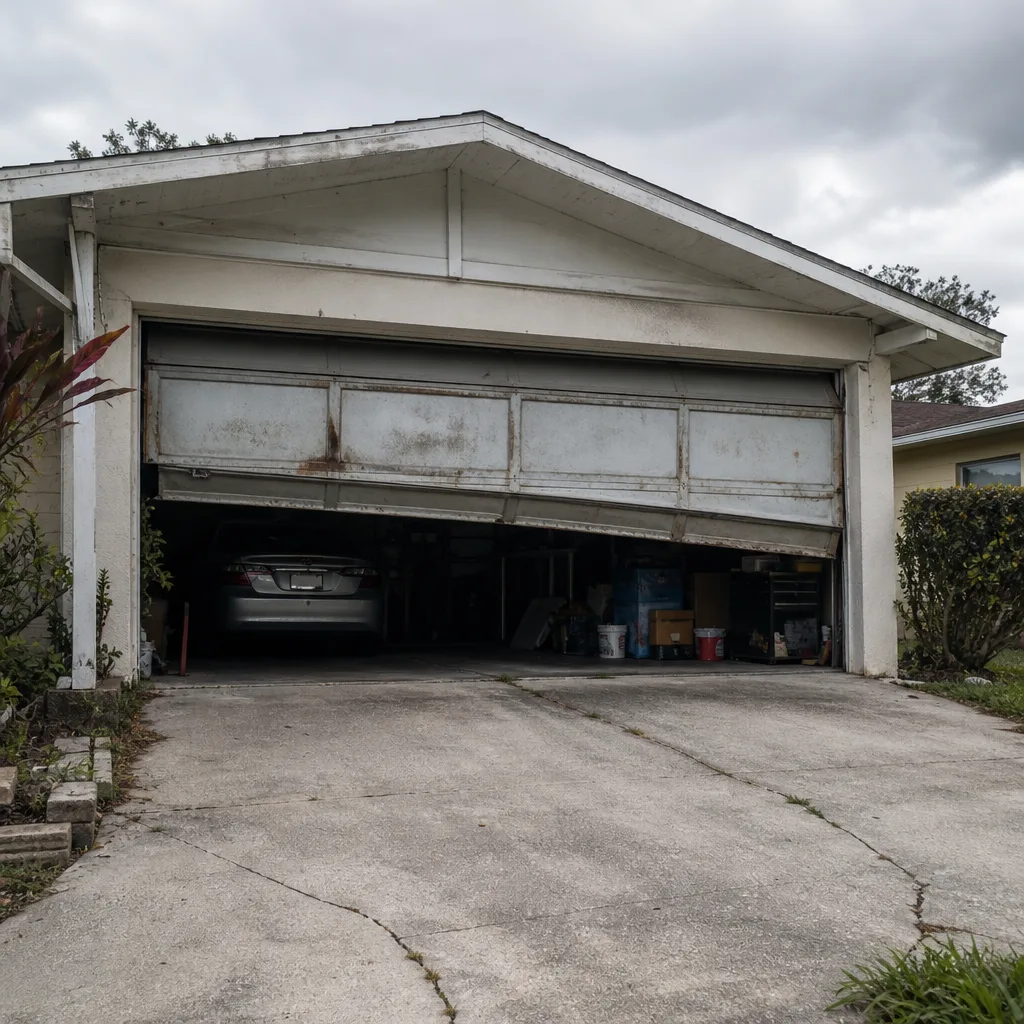 Before
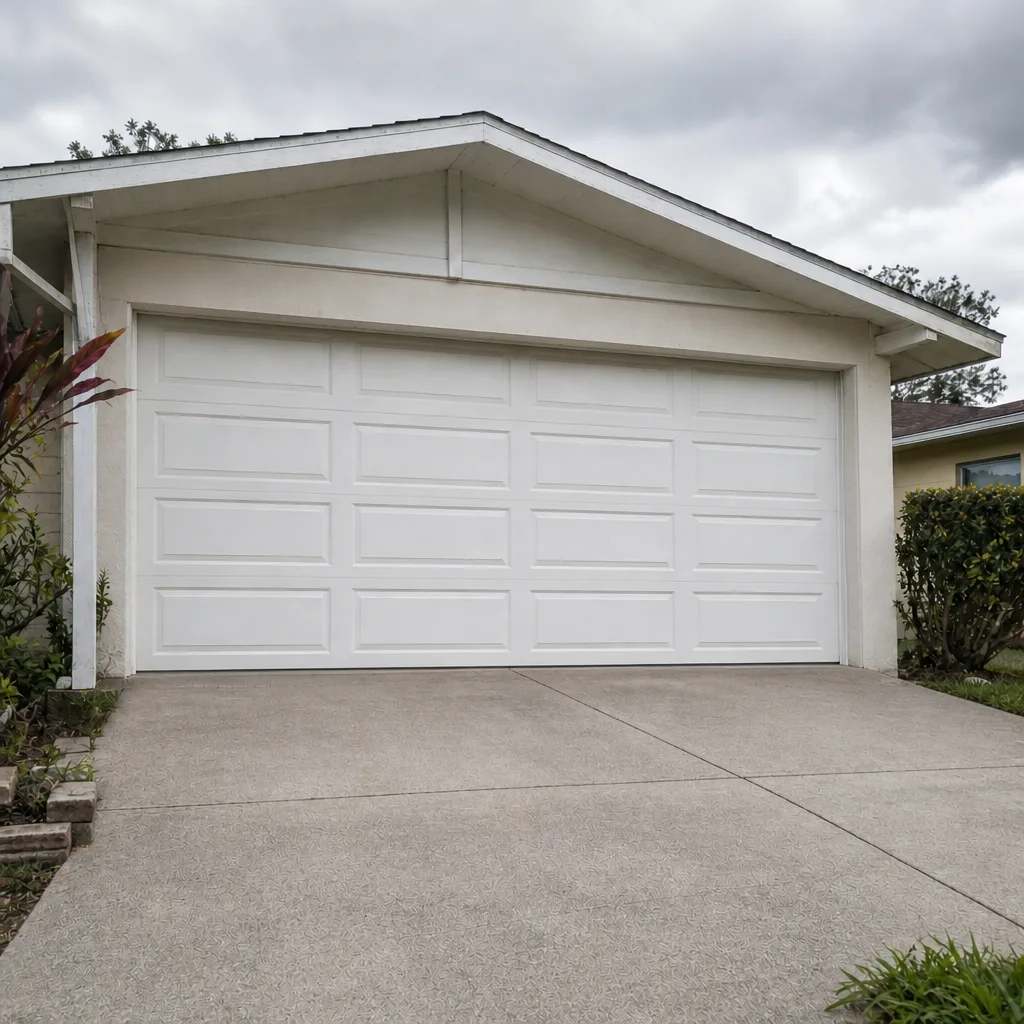 After
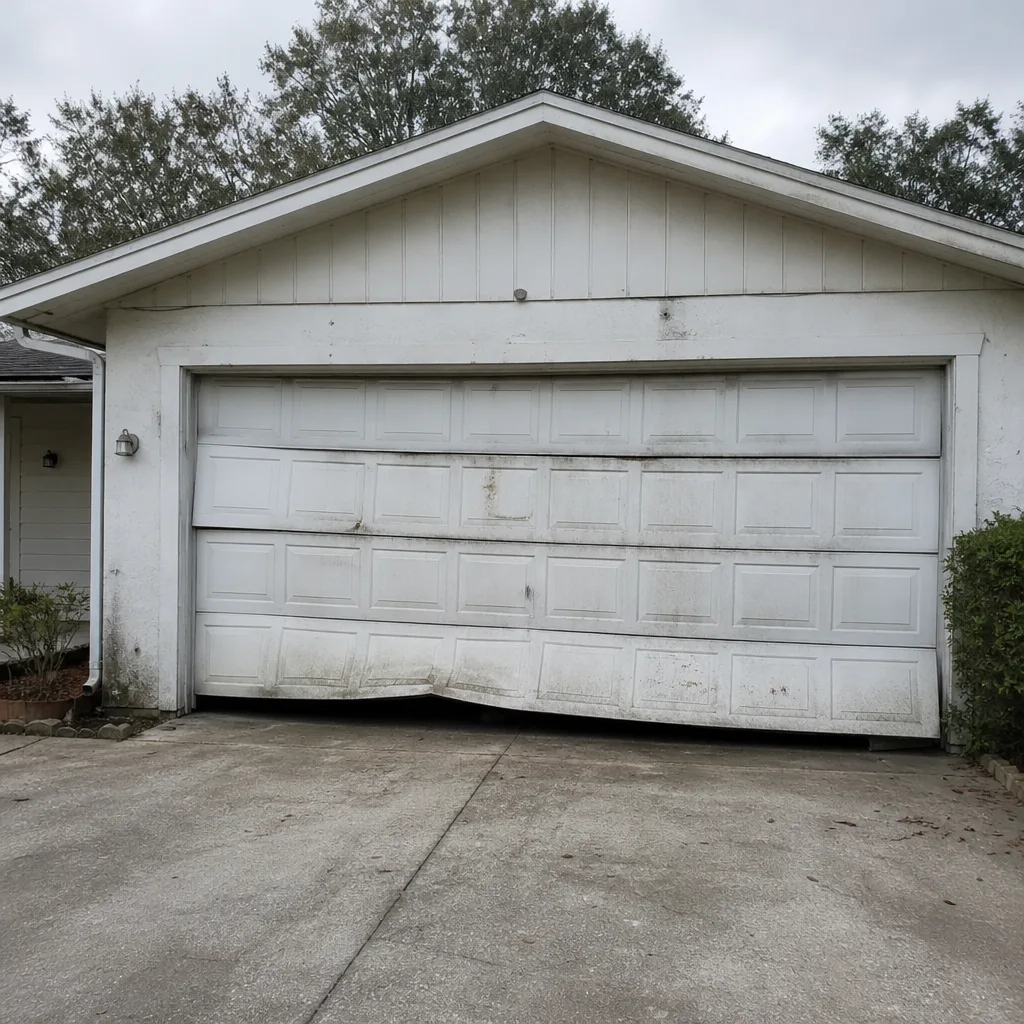 Before
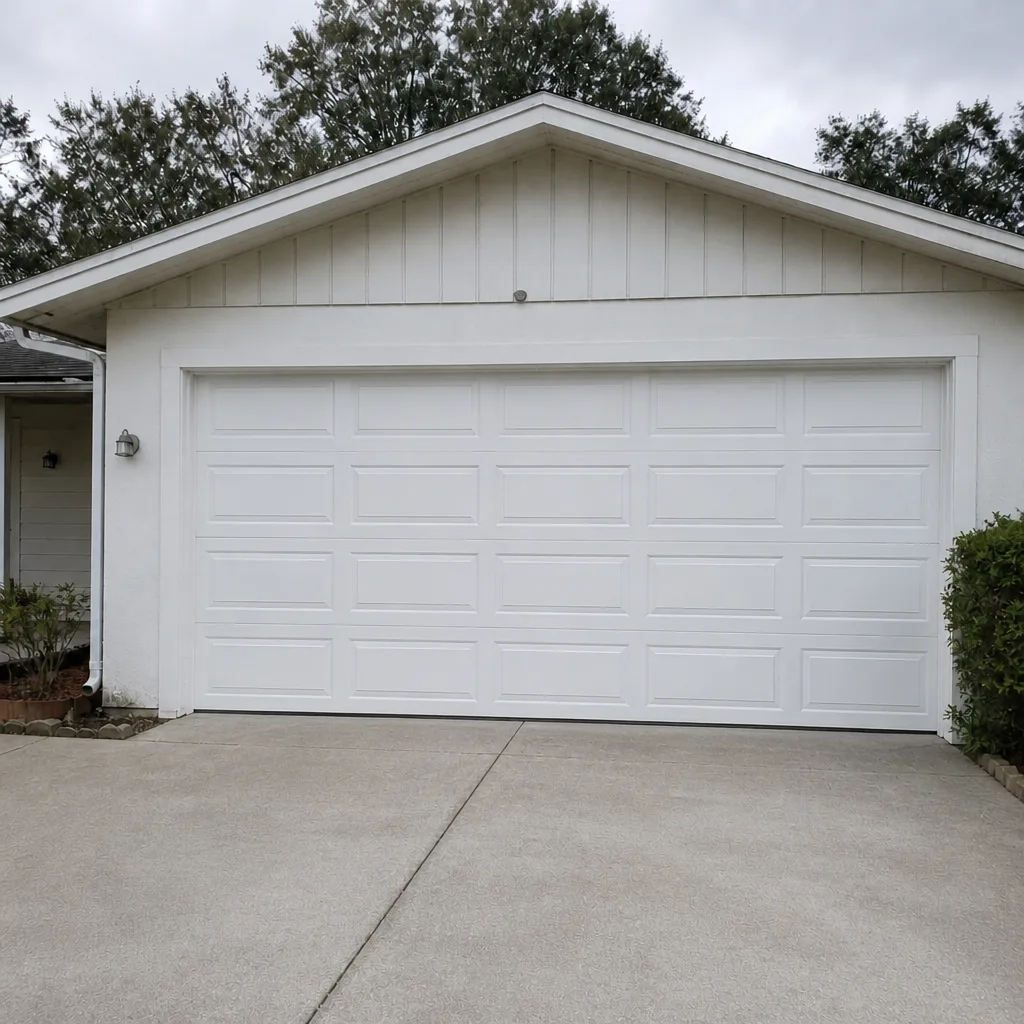 After
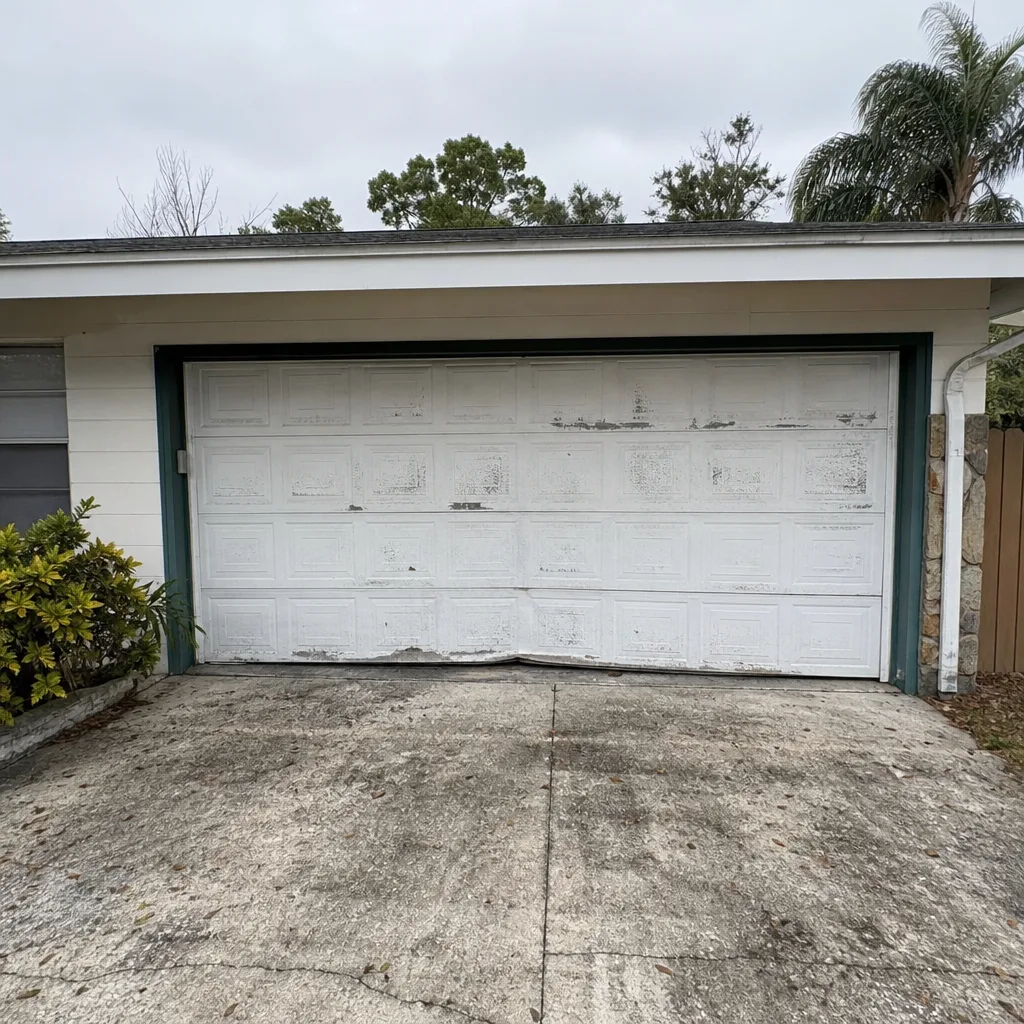 Before
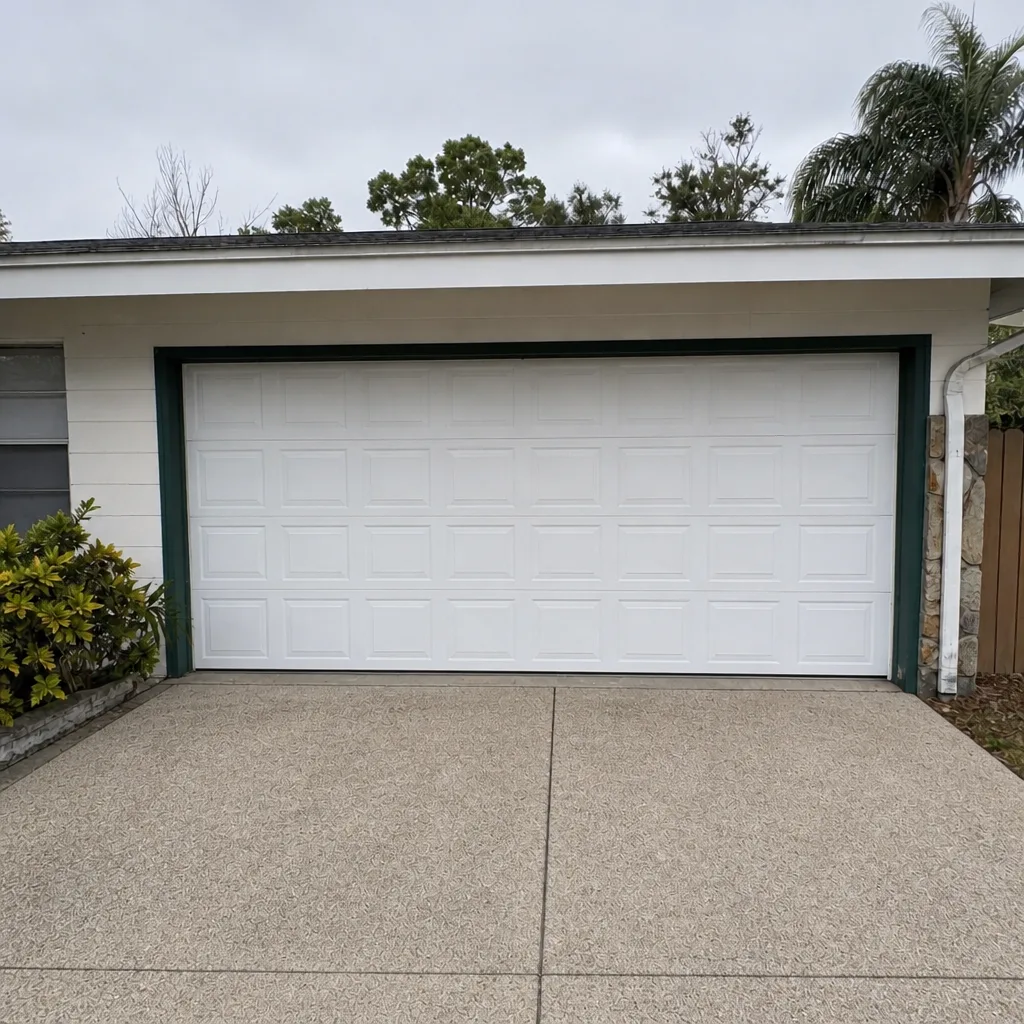 After
When to Call a Professional
Some garage door problems are safe to handle yourself: resetting an opener, replacing a remote battery, tightening a loose hinge, or clearing a track of debris. Anything involving torsion springs, cables, the door’s undercarriage, the high-voltage wiring to the opener, or a door that’s come off its track is a different category. Torsion springs are under constant tension, and a spring that lets go during a DIY repair can cause serious injury. A trained technician handles this safely and has the right tools to do it without damage to the door or themselves.
Call a professional if the door won’t open or close, if you hear a loud snap from above the door, if the door is crooked in the frame, if the opener runs but the door doesn’t move, or if you’re noticing the door reversing unexpectedly. If your car is trapped or the door failure has left your home unsecured, that’s an emergency, and you shouldn’t be waiting through a weekend.
Clearwater Garage Door Repair Pros offers free estimates in Clearwater. Call (866) 488-2820. We answer 24/7. Fast dispatch from 7am to 7pm, Sunday through Friday. Our technicians have up to 11 years of experience, and we work on LiftMaster, Chamberlain, Genie, Clopay, Amarr, Wayne Dalton, Craftsman, and Raynor systems specifically.
Frequently Asked Questions
Look it up directly in the Florida DBPR license database using the company’s legal name or license number. Ask the contractor for both, then search while you’re on the phone. Confirm the license status is active, the classification covers garage door work, and the qualified business entity matches the company you’re hiring. If anything doesn’t match, walk away. Call (866) 488-2820 if you’d like to talk through what a valid license should look like.
In most cases, yes. Garage door replacements typically require a permit because the door’s wind-load rating and product approval number have to be documented with the local building department. Ask the contractor directly who is pulling the permit, and get that written into the contract. If a contractor says you don’t need one without asking anything about your home, call your city’s building department and verify before you sign.
A Florida Product Approval number is a state-issued document that certifies a specific door and installation method meet Florida’s building code for wind resistance. The number has to appear on the permit application and on the final paperwork you receive. Keep a copy with your home records – it matters if you sell, refinance, or have an inspection.
Often, yes. Manufacturers like LiftMaster, Chamberlain, and Craftsman specify that warranty coverage requires genuine OEM parts installed by a trained technician. If your installer used an aftermarket spring or opener, the manufacturer may deny a warranty claim later. Ask for OEM part numbers on the quote. If the contractor resists, that’s a signal.
No. Torsion springs are under extreme tension and can cause serious injury if handled incorrectly. Spring replacement is one of the most dangerous repairs in the trade, and trained technicians use specific tools and techniques to do it safely. If you hear a loud snap or the door stops opening, keep everyone clear of the door and call a professional. Call (866) 488-2820 – estimates are free.
Typical costs vary by repair. A spring replacement is different from an opener repair, which is different from a panel replacement. The written estimate sets the final price, and it’s quoted and agreed before any work starts. Ask for it in writing. Estimates are free, so call (866) 488-2820 for an exact quote on your specific door.
The Bottom Line
Hiring a garage door contractor in Clearwater is not the same as hiring a handyman. The license has to match the work, the certification has to match the brand on your door, and the product approval number has to match the wind-load rating required for your home. Skip any of those and you could end up with a door that fails inspection, a warranty that’s been voided, or a repair that has to be redone by someone else. Do the DBPR lookup, ask about brand certification, get the product approval number, and put the permit and inspection responsibility in the contract. If you want a specialist who works on LiftMaster, Chamberlain, Craftsman, Raynor, and the other major brands specifically, and who handles Clearwater Garage Door Repair Pros customers from repair through installation, call (866) 488-2820 for a free estimate. We answer 24/7. Fast dispatch from 7am to 7pm, Sunday through Friday. Every price is quoted and agreed before any work starts.
Written by the team at Clearwater Garage Door Repair Pros.