
Last updated November 21, 2026
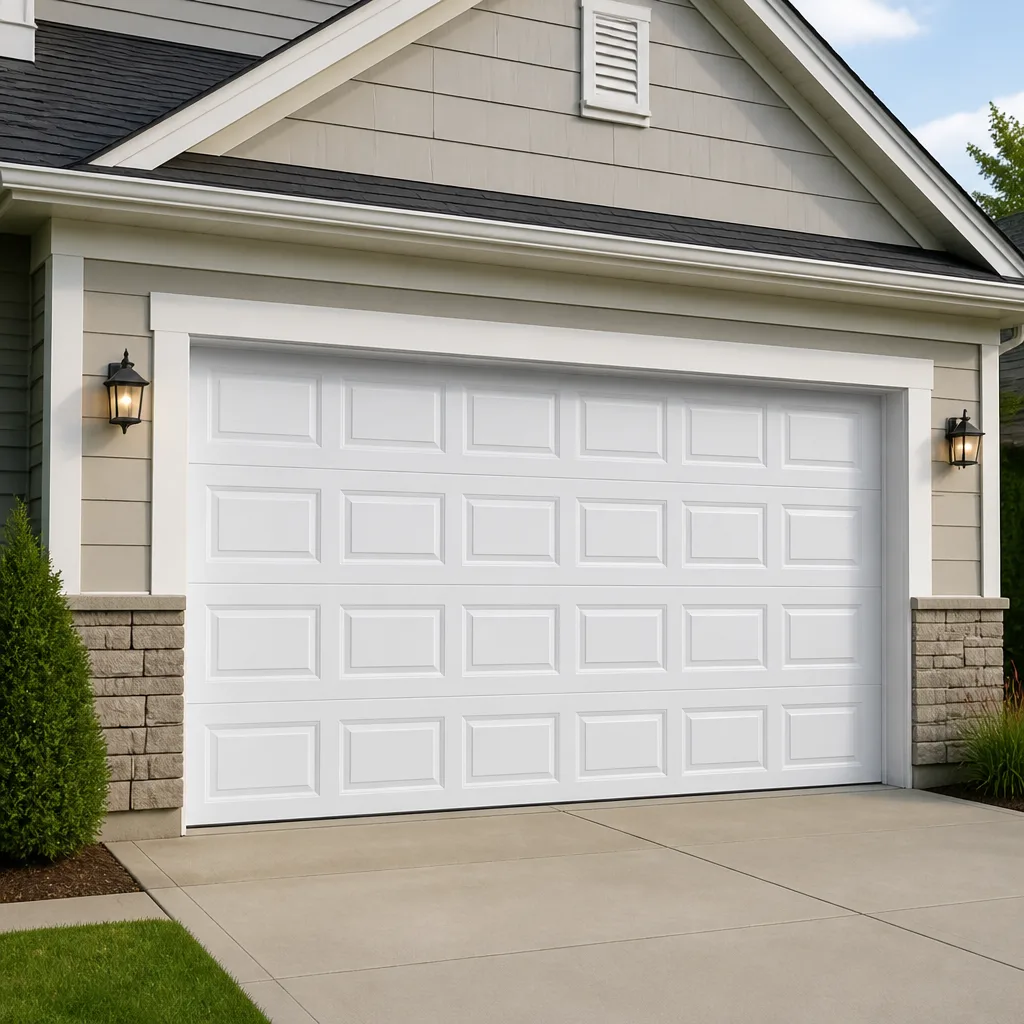 Raised-panel steel
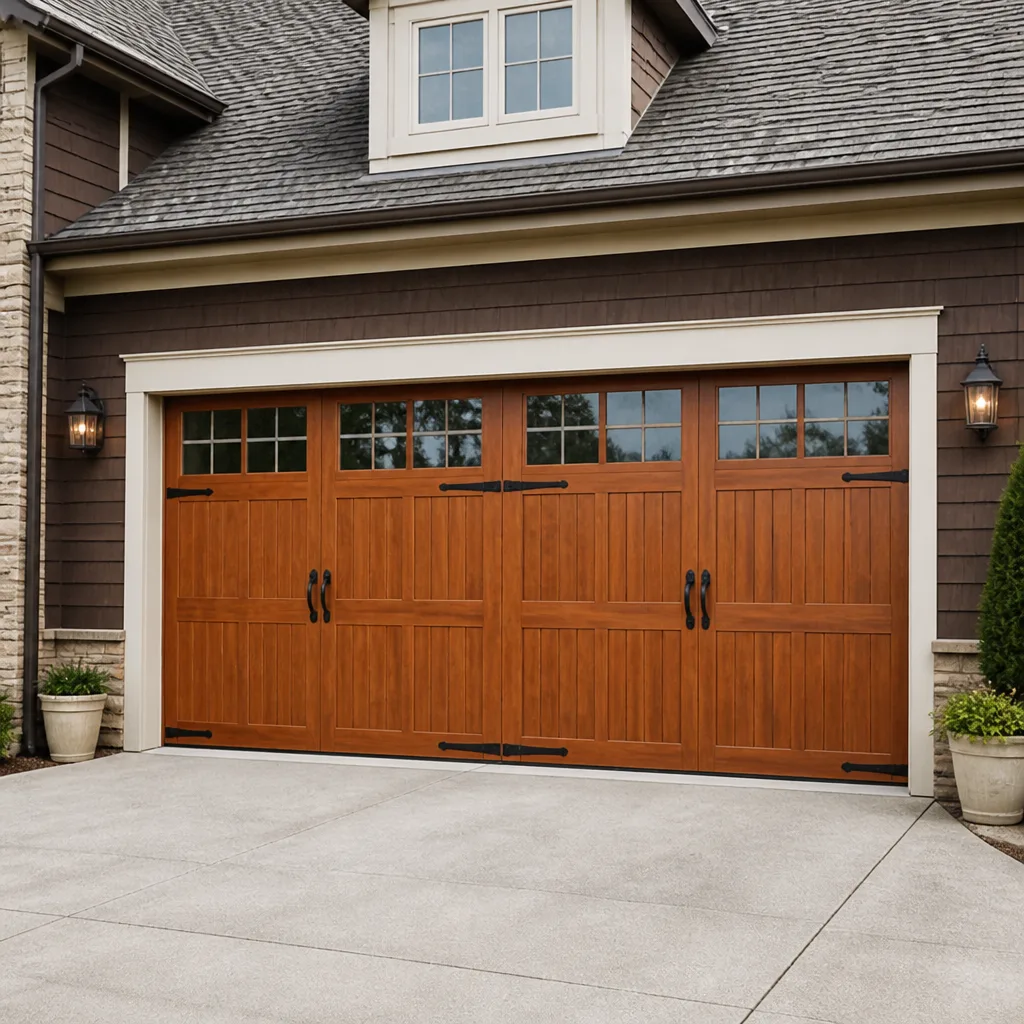 Carriage house
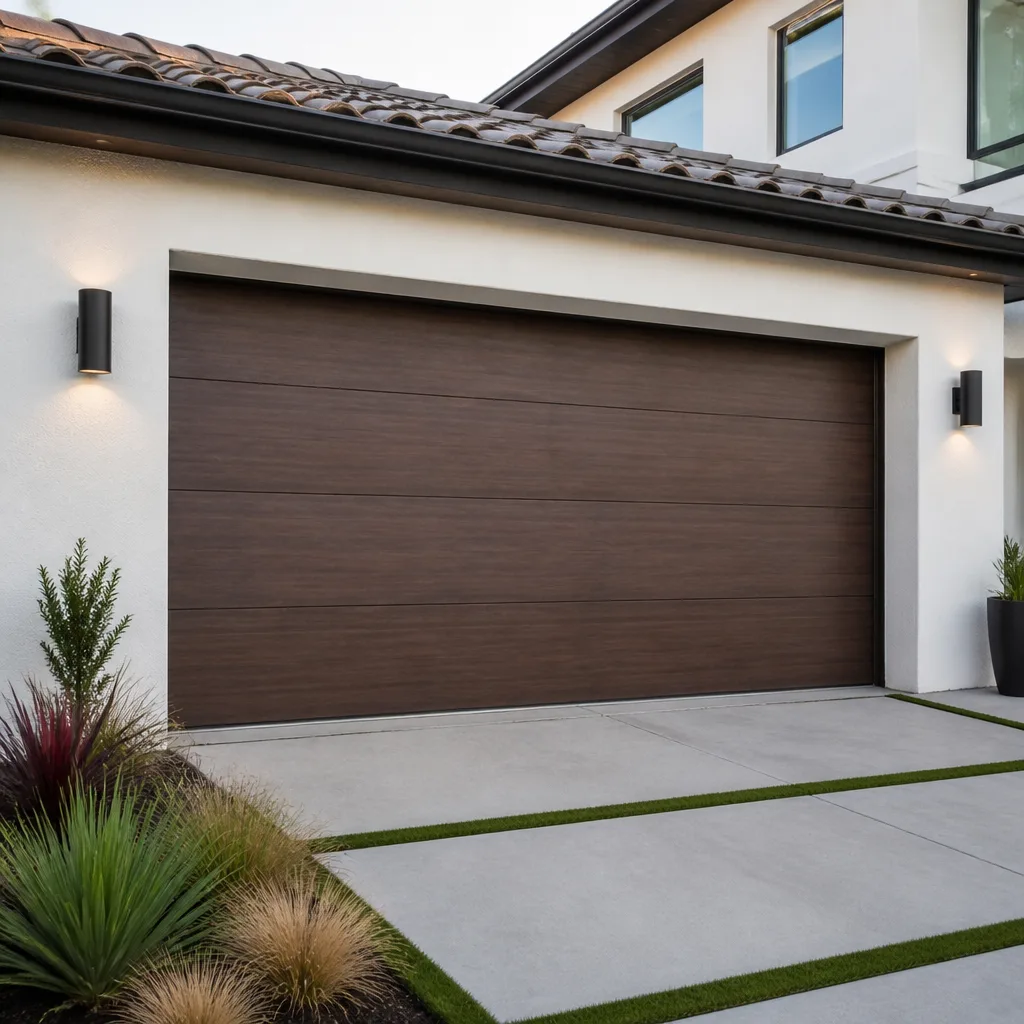 Modern flush
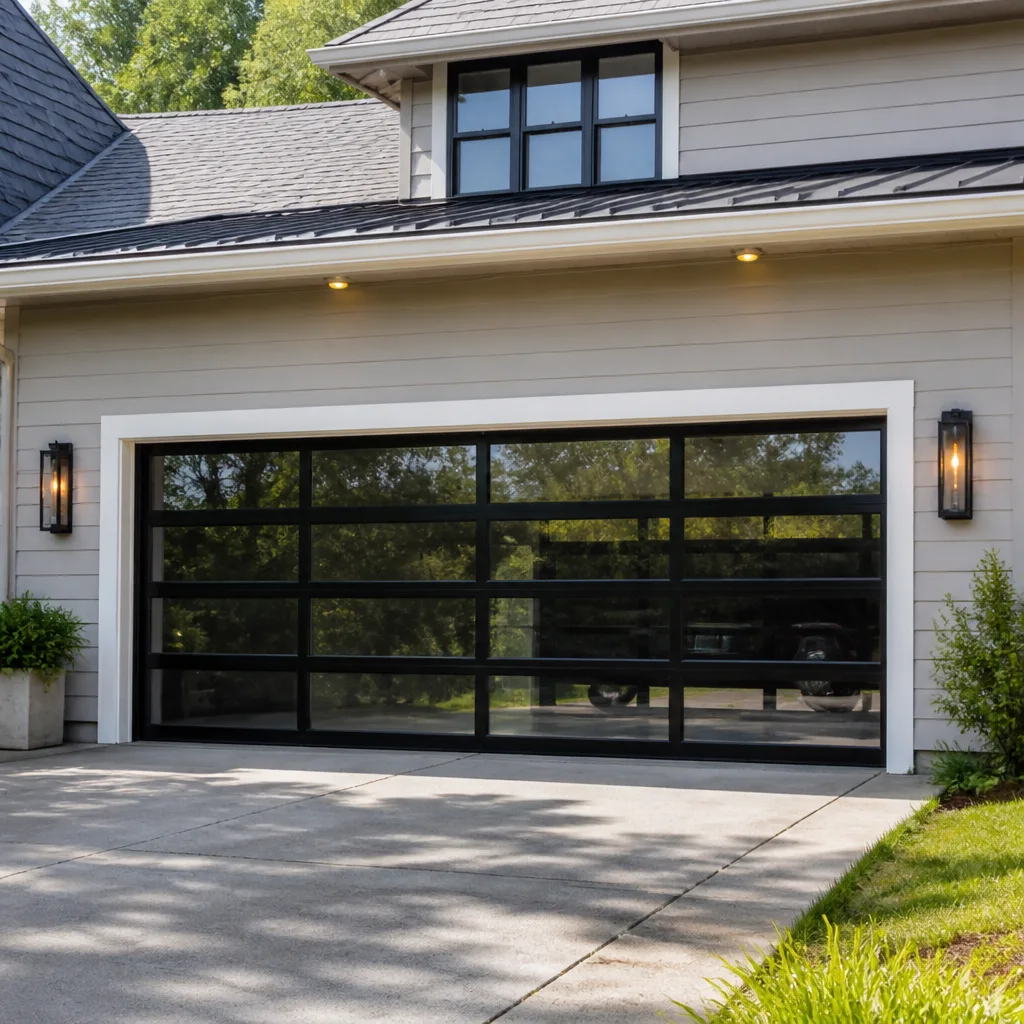 Full-view glass
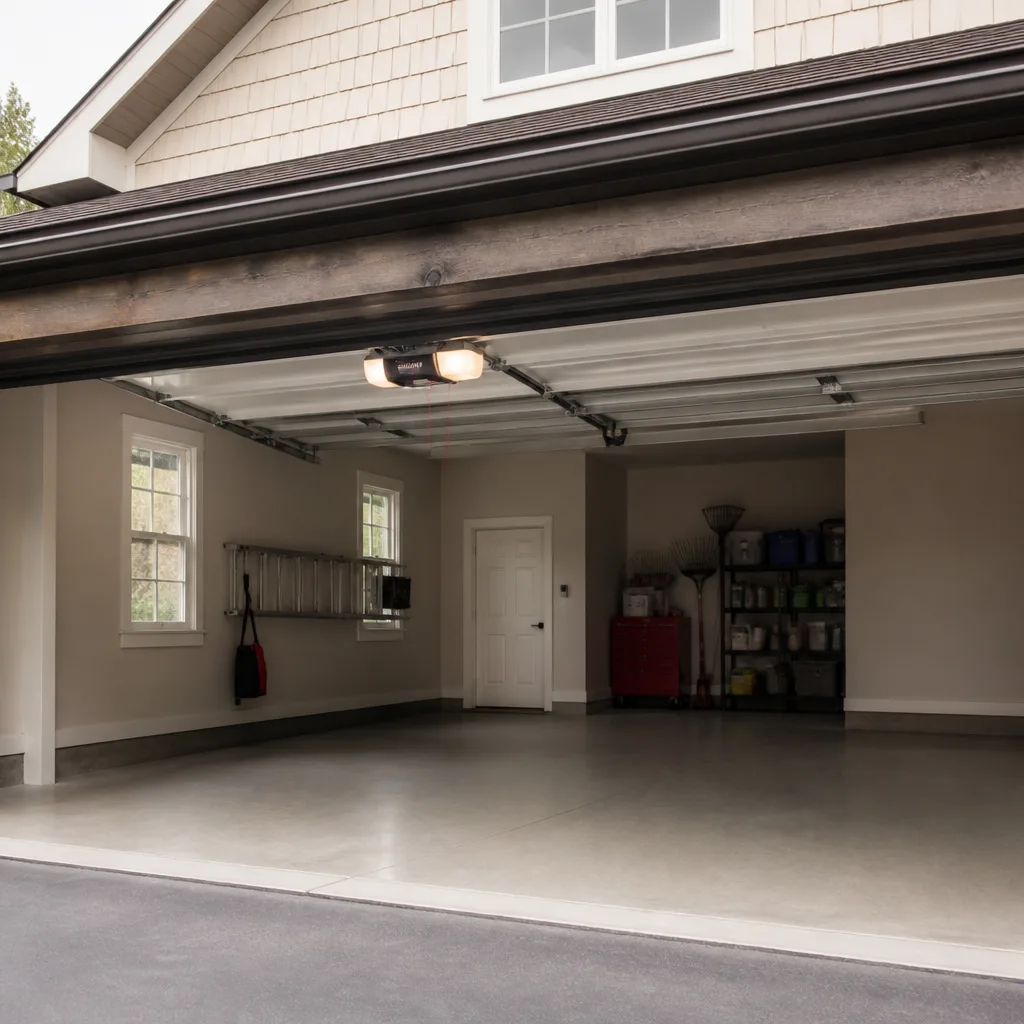 LiftMaster openers
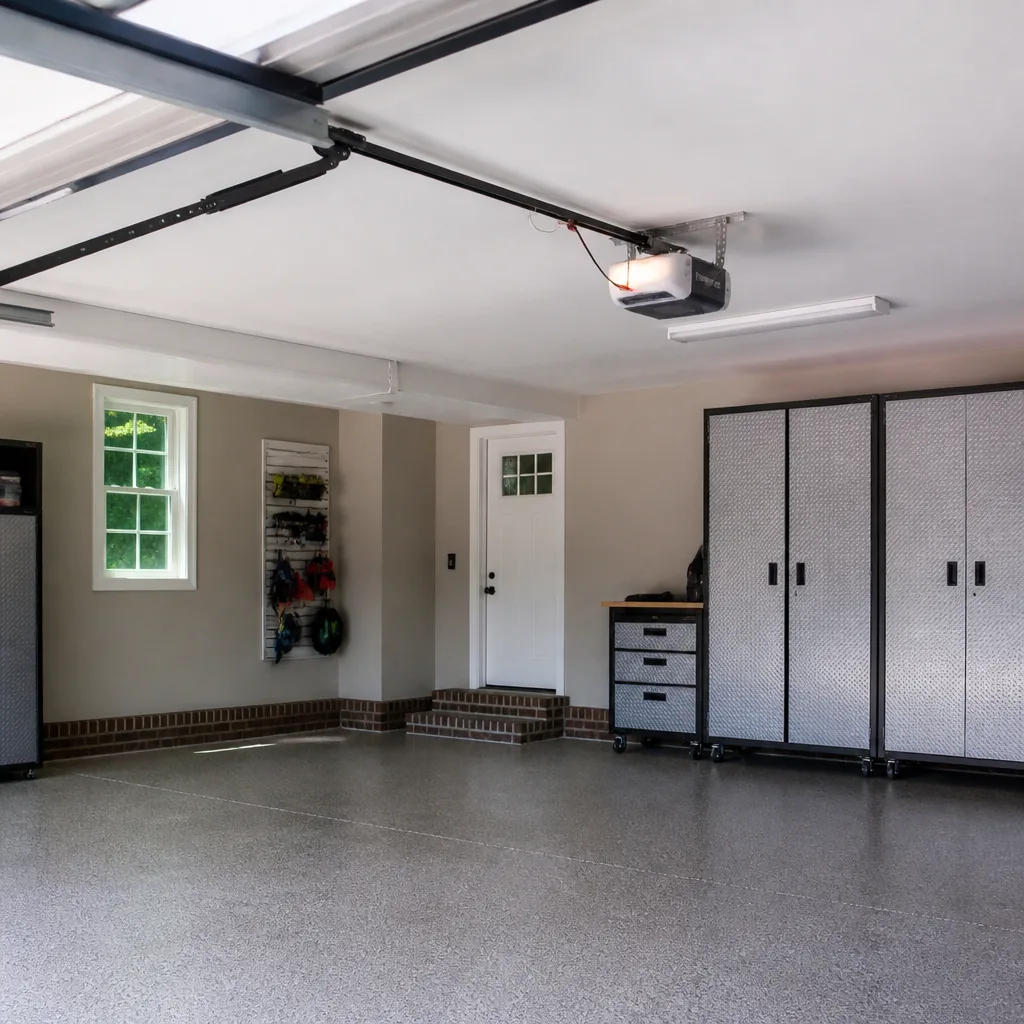 Chamberlain openers
Full 25-point door and opener safety check with every visit - springs, cables, rollers, tracks, and your LiftMaster or Chamberlain opener included
You get a price before we start. It does not change when the pro arrives.
Get your free estimateSeasonal Garage Door Care for Clearwater: Year-Round Homeowner’s Guide
If you’re following a seasonal garage door care schedule designed for a climate with hard winters, you’re maintaining your door on the wrong schedule entirely, and missing the two windows when Clearwater weather actually does the most mechanical damage. Most national checklists build their year around freeze and thaw, snow load, and salt on the roads. Clearwater doesn’t work that way. What we have is a long storm season, a short dry stretch, and a humid middle where small problems quietly get worse. This guide lays out a Clearwater-specific calendar: what to inspect before June, what to do when a storm watch is posted, how to audit the damage afterward, and why the driest months are your best window for the work that actually extends a door’s life. You’ll come away knowing what to check yourself and what to leave alone.
Quick Answer
Garage door care in Clearwater should be scheduled around storm season, not the four traditional seasons: inspect and tighten everything in April and May, run a safety check before every storm watch from June through November, audit for moisture and debris damage in December, and do lubrication, alignment, and hardware replacement in the dry January-to-March window. The single most useful habit is a monthly balance and safety-reverse test, because humidity and heat swing spring tension more here than most homeowners expect.
Styles & brands we work with
- Raised-panel steel
- Carriage house
- Modern flush
- Full-view glass
- LiftMaster openers
- Chamberlain openers
Table of Contents
- Why Clearwater’s Climate Writes Its Own Garage Door Calendar
- Pre-Storm Season Prep: What to Inspect Before June
- Storm Season Protocol: What to Do When a Watch Is Issued
- Post-Storm Season Audit: Reading the Damage in December
- Dry Season: The Best Window for Real Maintenance
- How Florida Temperature Swings Affect Spring Tension
- The Monthly Five-Minute Check
- Brand-Specific Care and Why It Matters
Why Clearwater’s Climate Writes Its Own Garage Door Calendar
Clearwater’s weather doesn’t stress a garage door the way a northern winter does. It stresses it differently. Instead of one brutal season, you get months of high humidity, intense sun on south- and west-facing doors, wind-driven rain finding its way past weather seals, and repeated temperature swings between a hot afternoon and a cooler night. None of those individually destroy hardware. Together, over a year, they loosen fasteners, dry out lubricant, and warp panels a fraction at a time.
That’s why a standard spring-summer-fall-winter framework misses the point here. The two high-risk periods for Clearwater homeowners are the run-up to storm season in April and May, and the aftermath in late fall when the cumulative effects of a wet summer show up as rust, sticking rollers, and a door that no longer sits level. The dry stretch in between is when you want to do the work that prevents failures rather than reacting to them.
We work on garage doors across Clearwater, from the older homes near downtown to newer construction farther north, and the pattern is consistent. Doors that get a proper pre-storm inspection and a real maintenance session in the dry months last noticeably longer between repairs than doors that only get attention when something breaks. The rest of this guide walks through each window in order.
One thing that doesn’t change with the climate: a torsion spring under load can injure you badly if it lets go while you’re working near it. We’ll say it more than once, but treat springs and cables as hands-off for anyone without proper training and tooling.
Pre-Storm Season Prep: What to Inspect Before June
April and May in Clearwater are your last calm window before storm season opens on June 1. This is the time to find and fix the small things that a strong storm turns into big things. Working through the list once, methodically, takes an afternoon and saves far more than that in aggravation.
- Test the balance of the door. Disconnect the opener with the release cord, lift the door by hand to about halfway, and let go. A properly balanced door stays put. If it drifts down or slams up, the spring tension is off, and that’s a job for a trained technician.
- Check the safety reverse. Put a piece of wood or a roll of paper towels on the ground in the door’s path and close it. The door should reverse on contact. If your opener has photo-eye sensors, confirm the beam is unbroken and the lenses are clean.
- Tug every fastener you can safely reach. Brackets, hinges, and the track mounting bolts work loose over a humid year. Snug them up, but don’t overtighten into wood that’s softened.
- Look at the weather seal along the bottom and sides. A brittle or torn seal lets wind-driven rain in during a storm, and that water sits against the door’s bottom panel and the floor.
- Inspect cables for fraying. Look, don’t touch. A frayed cable is a warning sign that a technician needs to see before it fails.
- Clear the tracks and the area around the door. Debris in the track on a normal day is an annoyance. In a storm, it can jam the door.
- Check the emergency release. Make sure the cord and handle are intact and reachable, and that the release actually disengages the door from the opener.
If any of those tests turns up something you’re not comfortable fixing, that’s the moment to book a professional visit, not the day a storm is already forecast. A pre-season inspection is one of the least expensive things you can do for a door. If your door needs more than adjustment, our garage door repair service covers everything from a single hinge to a full track realignment.
Storm Season Protocol: What to Do When a Watch Is Issued
When a storm watch is posted for the Clearwater area, your garage door is one of the largest openings in your home, and it needs a quick, calm routine. You don’t need to panic. You do need a plan you can run in a few minutes.
- Close the door fully and confirm it’s seated. Don’t leave a door partway open. A partially open door is a wind catch.
- Test the emergency release before the weather arrives. If the power goes out and you need to open the door by hand, you want to know the release works now, not in the dark during a storm.
- Clear the path in front of and under the door. Remove anything that could blow into the track or block the door if it needs to open.
- Check the bottom seal. If it’s loose, a quick temporary fix keeps wind-driven rain from pushing under the door. Permanent repair waits until after the storm.
- Know how to disengage your opener manually. Every opener brand handles this a little differently, but the release cord is the common thread. Familiarize yourself with yours before you need it.
During the storm itself, leave the door closed and don’t operate it. If the door is damaged during the storm, don’t force it open or closed, because a misaligned panel under opener power can bend the track and turn a repair into a replacement.
If a storm leaves your door stuck open, jammed shut, or hanging off a track, that’s a security and access problem, and it’s exactly what our emergency garage door service is for. We answer 24/7, and fast dispatch from 7am to 7pm means we can get a technician to you to secure the opening. For opener problems triggered by a power surge or water intrusion, our garage door opener repair covers every major brand.
Post-Storm Season Audit: Reading the Damage in December
By December, storm season has wound down, and the accumulated effects of a wet, windy summer are visible if you know where to look. This audit isn’t about the obvious damage you already fixed. It’s about the slow stuff: the moisture that got into places it shouldn’t, the corrosion starting at hinge pins and roller stems, the debris that worked its way into the tracks.
Here’s how to work through a post-season audit in order:
- Walk the tracks end to end. Run a gloved hand along the inside of each track and feel for grit, hardened debris, or rough patches. Clean what you can reach. If the track is bent anywhere, a technician should look at it.
- Look at hinges and rollers for rust. Brown staining around a hinge pin or roller stem is early corrosion. In Clearwater’s humidity, it’s common, and it’s fixable before the roller seizes.
- Check the door panels for water stains and warping. Run your hand along the inside of the bottom panel. Dampness, soft spots, or bubbling paint point to water that got past the seal.
- Re-test the balance and safety reverse. After a season of use, the door may have drifted out of adjustment. Catch it now.
- Inspect the opener’s mounting and wiring. Look for loose brackets, and if you see chewed or loose wiring, don’t touch it, get a technician to assess it.
- Clear the area behind the door and around the opener. Debris buildup behind the door reduces clearance and can cause an opener to strain.
Any corrosion you find in December is something you can address in the dry season before it turns into a seized roller or a broken hinge. Catch it now, and you’re doing maintenance. Catch it in June, and you’re doing repair.
Dry Season: The Best Window for Real Maintenance
January through March is the best window in Clearwater to do the maintenance that actually extends a door’s life. The air is drier, the afternoon heat is milder, and you’re not racing an approaching storm. This is the time to lubricate, align, and replace the small parts that wear out.
Lubrication is the single highest-value task. Use a garage-door-specific lubricant, not general household oil, and apply it to the hinges, roller stems, and spring (a technician should do the spring). Wipe off excess so it doesn’t attract dust. Lubricating in the dry months means the oil stays where you put it instead of washing out in the summer humidity.
Alignment matters too. A door that’s slightly out of square puts constant strain on the opener and the springs. A technician can check the tracks, adjust the brackets, and get the door tracking true. In our experience, a door that’s aligned properly runs quieter, lasts longer, and puts less load on the opener motor.
Hardware replacement is the other dry-season item. Hinges, rollers, and bearings that have been in service for a while are the parts most likely to fail. Replacing them proactively, before they fail, is one of the cheapest things you can do. If you’re considering a new door entirely, the dry months are also when a measure and installation can be scheduled without weather interference. Our garage door installation service handles the full replacement from measure to final adjustment, and we’ll give you a written price before any work starts.
How Florida Temperature Swings Affect Spring Tension
Homeowners who moved to Clearwater from a colder climate often expect their springs to behave the same way. They don’t, and the reason is simple: metal expands and contracts with temperature. In a northern winter, the cold contracts the metal and thickens the grease. In Clearwater, the more common issue is the opposite: heat expansion across a hot day, then a cooler night, repeated day after day, which works at the spring’s temper and the door’s balance.
The practical effect is that a door that was perfectly balanced in the dry season can drift out of balance once the heat sets in. The door gets heavier to lift, the opener works harder, and the spring is under slightly different tension. Those subtle swings matter less than a hard freeze would, but they happen more often here, and they add up.
That’s why the monthly balance test matters more in Clearwater than in most places. You’re not watching for winter damage. You’re watching for slow drift. Run the test from the monthly five-minute check below, and if the door doesn’t hold its position, don’t try to adjust the spring yourself. Torsion springs are under high tension and can cause serious injury. This is one of the repairs that genuinely requires training and the right tools.
If you’re not sure whether your door is out of balance or your opener is just aging, a diagnostic visit tells you which. Our spring repair service handles the tension adjustment and replacement safely, and our technicians have up to 11 years of experience working on the hardware.
The Monthly Five-Minute Check
This is the routine we recommend to every Clearwater homeowner, regardless of season. It takes about five minutes and catches most failures before they become emergencies.
- Open and close the door once and listen. Grinding, squealing, or a bang at the end of travel means something needs attention.
- Run the balance test. Disconnect the opener, lift the door to halfway, and release. It should hold.
- Run the safety reverse test. Close the door on an object and confirm it reverses.
- Check the photo-eye sensors if your opener has them. Confirm the beam is unbroken and lenses are clean.
- Look at the tracks for debris and bends.
- Test the emergency release so you know it works.
If anything fails the test, don’t ignore it until next month. A small adjustment now is far cheaper than a failed spring or a bent track later. Call our team and we’ll diagnose it properly.
Brand-Specific Care and Why It Matters
Garage doors aren’t a uniform product. A LiftMaster opener, a Chamberlain unit, a Craftsman system, and a Raynor door each have their own parts, their own adjustments, and their own quirks. That matters for maintenance, because a check that makes sense on one brand may be wrong on another. It also matters for repair, because the correct part is the difference between a fix that lasts and a patch that fails again.
Our team services equipment from eight major manufacturers: LiftMaster, Chamberlain, Genie, Clopay, Amarr, Wayne Dalton, Craftsman, and Raynor. That means when you call, we already know the hardware on your door before we arrive, and we can bring the right parts for the brand you have. It’s a simple standard, but it’s one that saves return visits.
For maintenance, the brand-specific items to watch are:
- Openers: Drive system (belt, chain, screw), safety sensor behavior, and force-limit settings differ between brands, so don’t change settings yourself.
- Doors: Panel construction and bottom seal style vary by manufacturer, which affects how the seal is replaced and how it should sit.
- Hardware: Hinge and roller sizing is not universal. Using the wrong size is a common reason a door starts to run rough after a repair.
If you’re unsure what’s on your door, look for a label on the opener housing and any manufacturer marking on the panels. That one piece of information lets us diagnose correctly the first time.
Common Mistakes to Avoid
- Following a northern seasonal schedule. Applying a winter-focused checklist to a Clearwater door wastes time on problems you don’t have and skips the two windows that actually matter. Build your calendar around storm season instead.
- Trying to adjust the torsion spring yourself. This is the most dangerous mistake in garage door care. Springs are under high tension and can cause serious injury. Leave them to a trained technician.
- Lubricating the tracks. Oil on the tracks attracts dirt and makes the rollers slip. Lubricate hinges, roller stems, and pivots, not the track surface.
- Ignoring a door that’s drifted out of balance. A slightly heavy door stresses the opener and the spring every time it opens. Catch it at the monthly test, not at failure.
- Skipping the post-storm audit. In Clearwater’s humidity, corrosion starts quietly. December is when you find it, and dry season is when you fix it.
- Operating a damaged door. If a panel is bent or a track is out of line, forcing the door can turn a repair into a replacement.
- Assuming all brands are interchangeable. Wrong-size hardware and incorrect force settings are common reasons a door runs rough after a repair.
See the difference
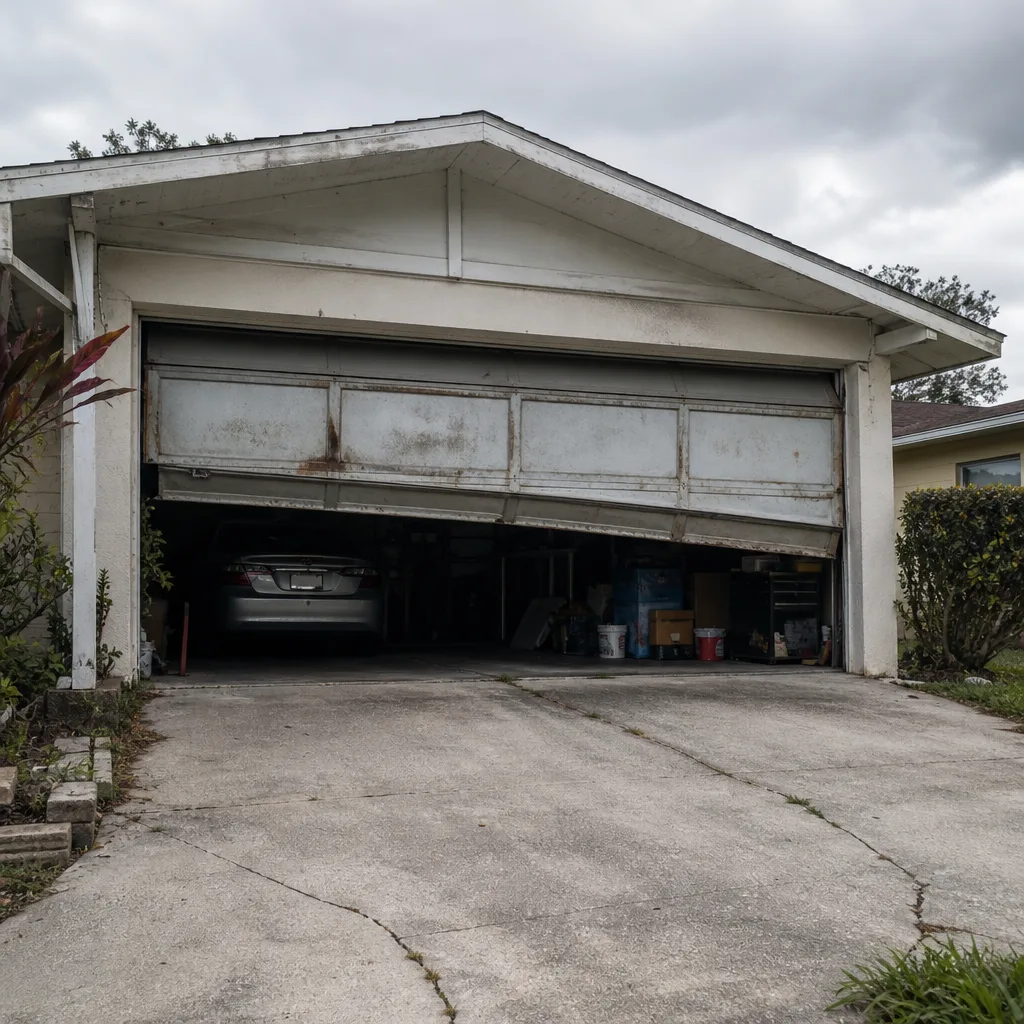 Before
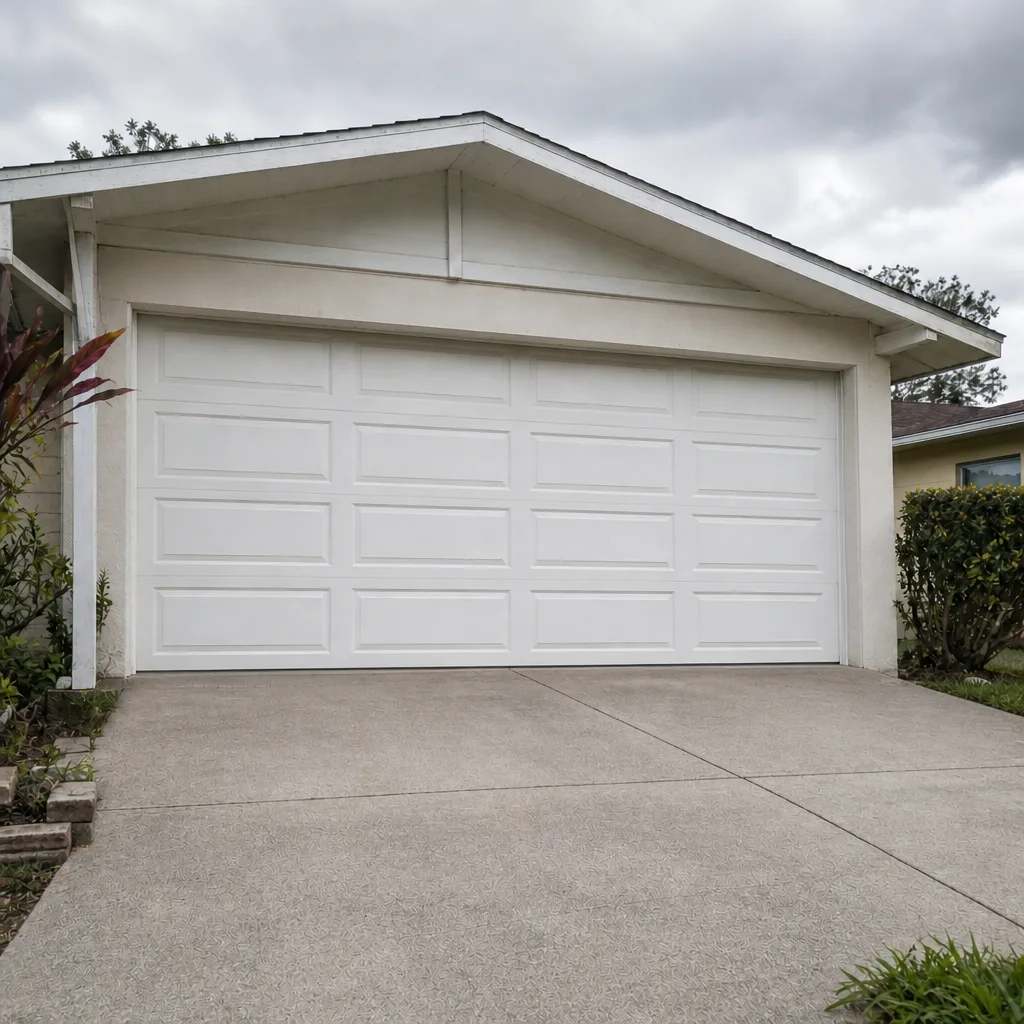 After
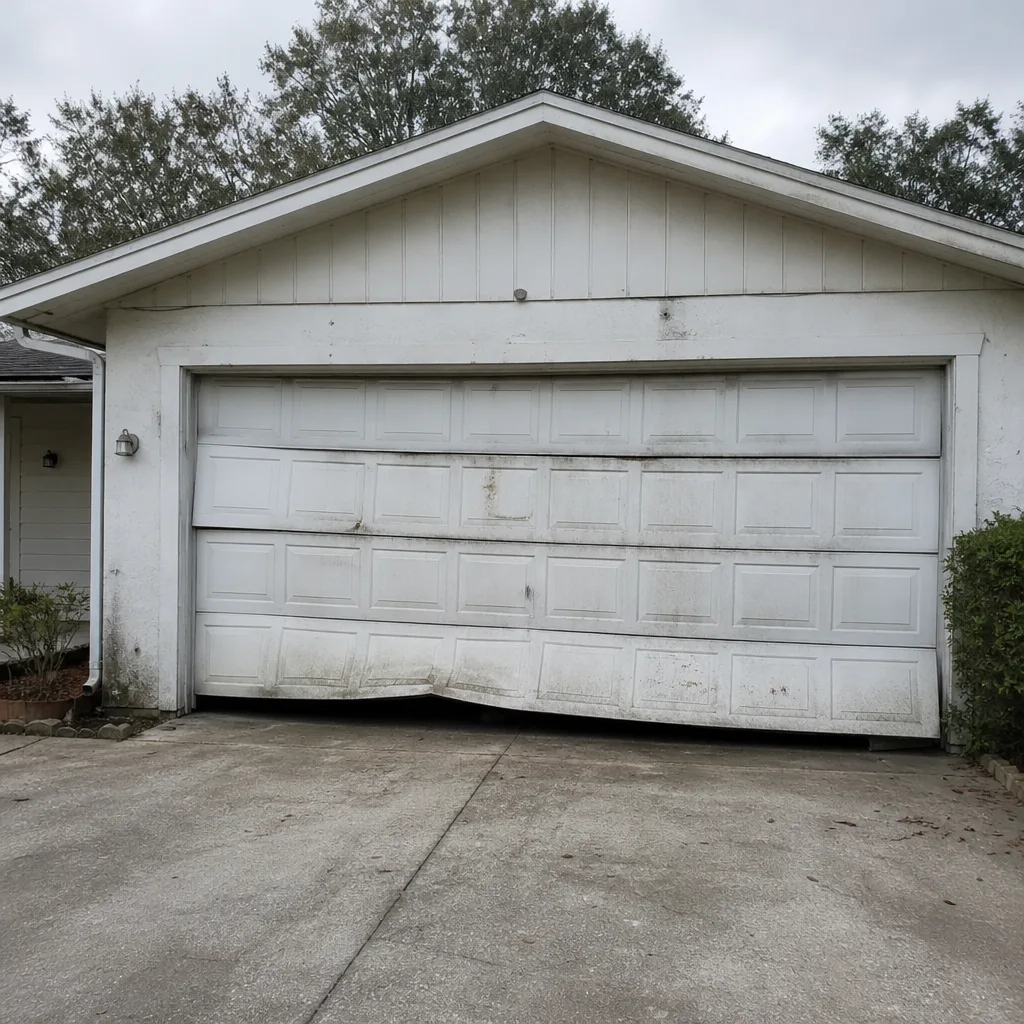 Before
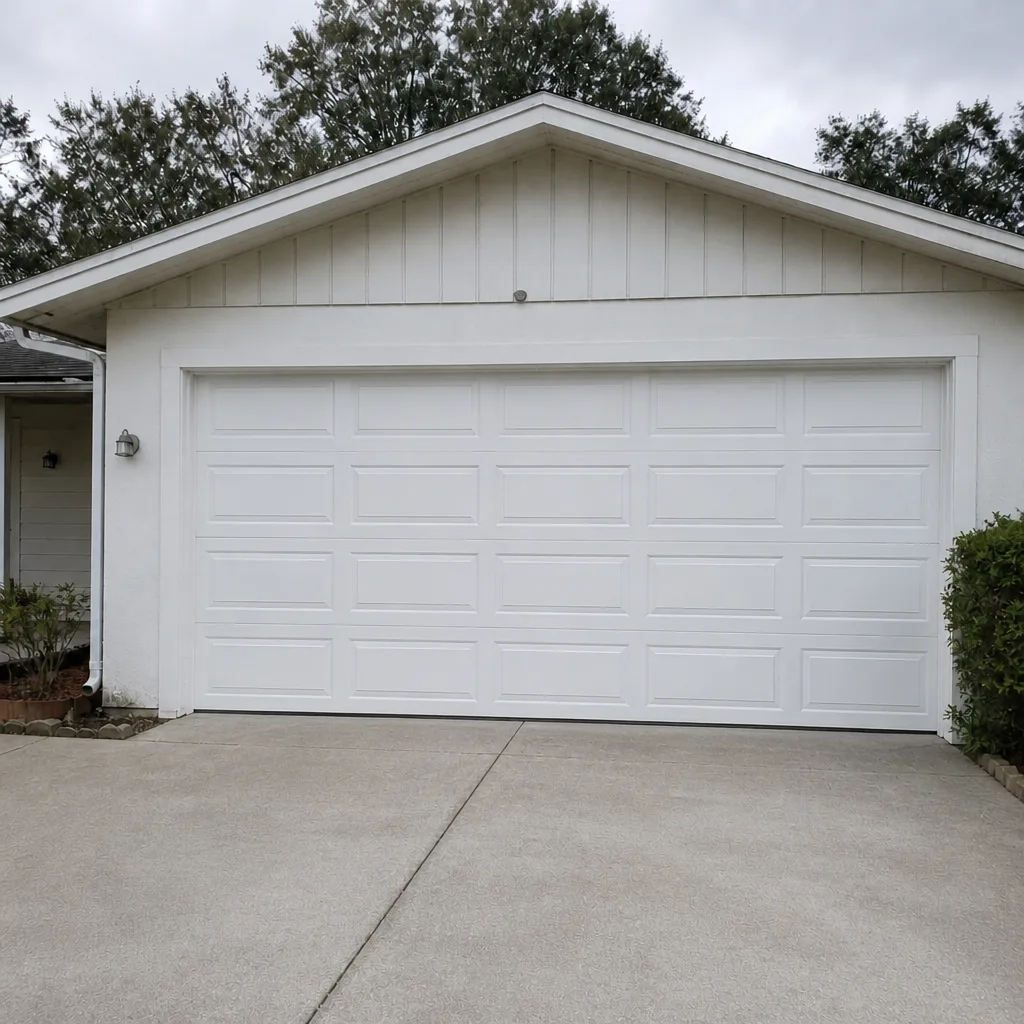 After
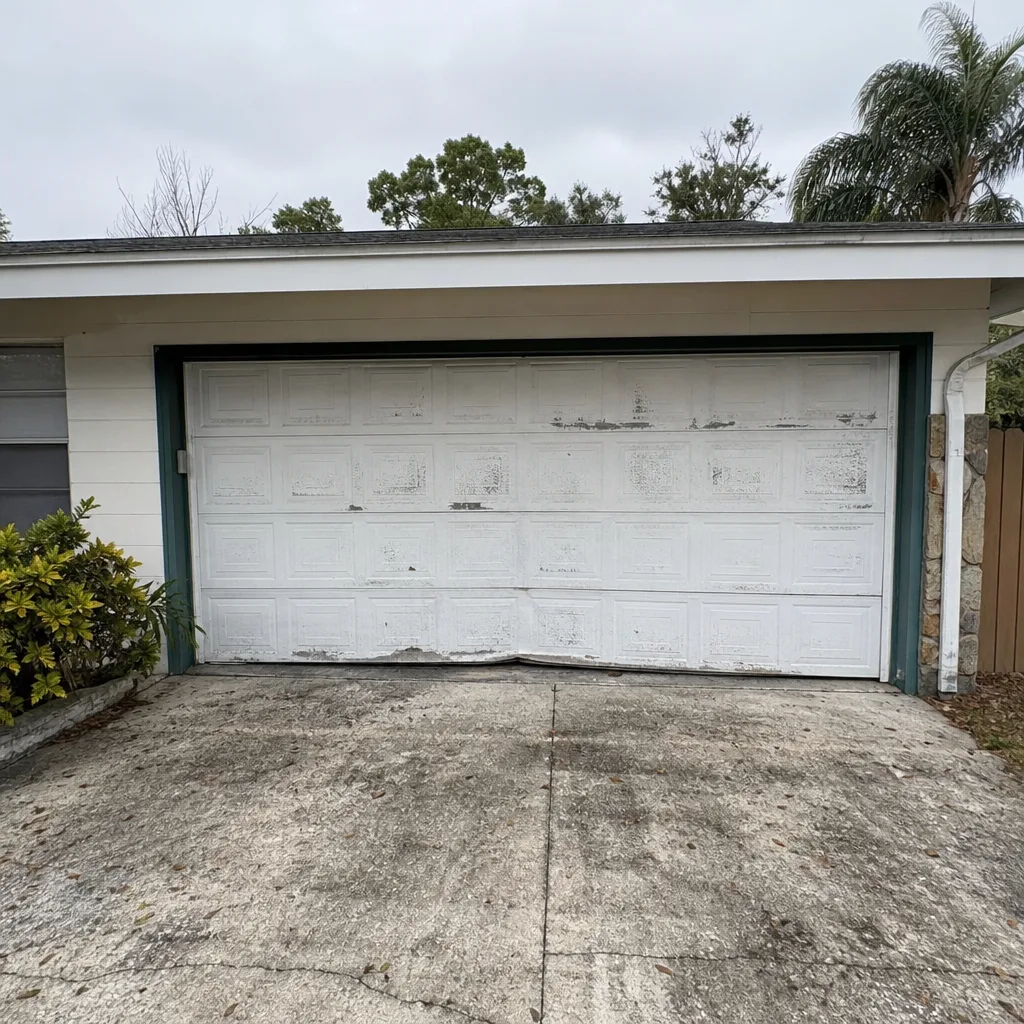 Before
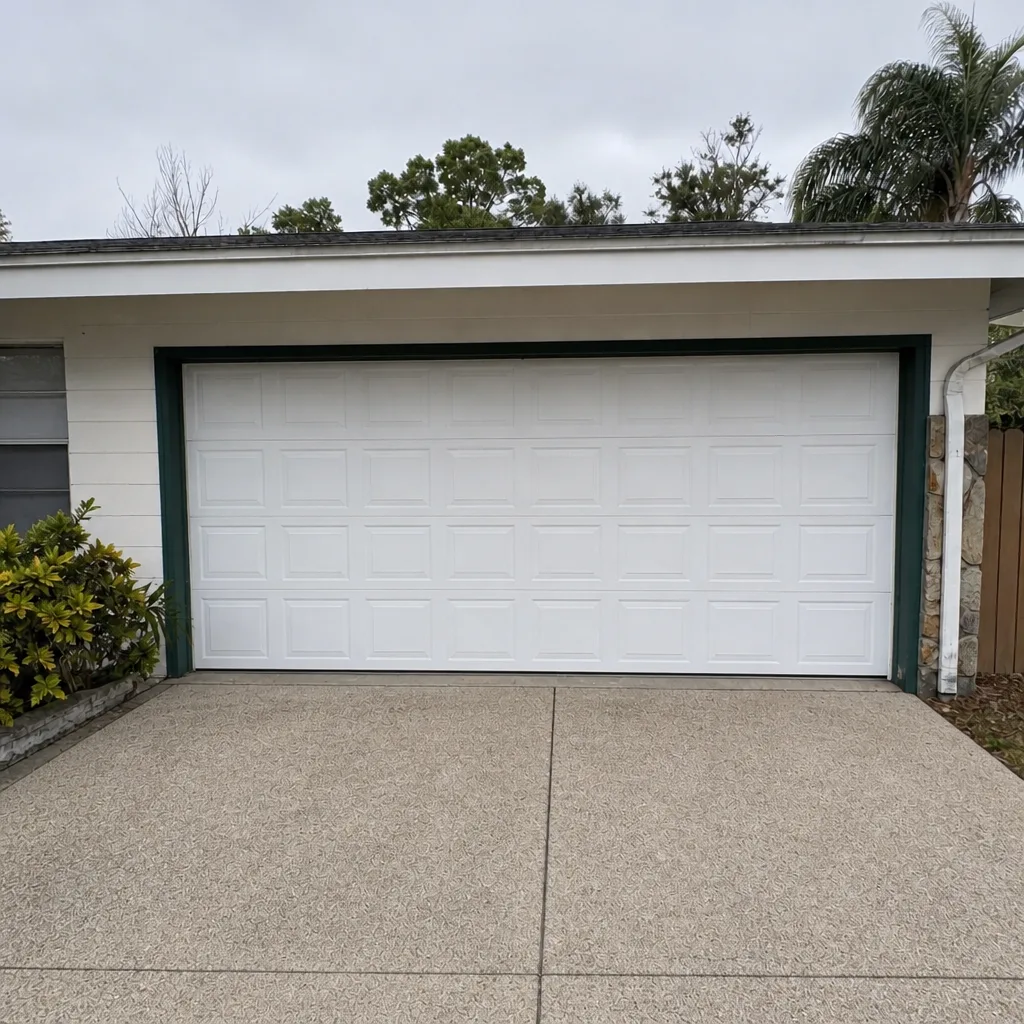 After
When to Call a Professional
Some garage door work is genuinely safe to do yourself: fasteners, the bottom seal, and routine observation. The rest is not. Call a professional if you see a frayed cable, if the door is out of balance and won’t hold position, if a spring looks stretched or broken, if the tracks are bent, if the door reverses unexpectedly or won’t reverse when it should, if your opener runs but the door doesn’t move, if you see loose wiring near the opener, or if the door is stuck open and your home is unsecured. Springs and cables are the most common of these, and they’re the most hazardous.
Clearwater Garage Door Repair Pros offers free estimates in Clearwater. Our technicians have up to 11 years of experience, and every job is quoted and agreed before any work starts. For emergencies, our service is available to secure your home or free a trapped vehicle. Call Clearwater Garage Door Repair Pros at (866) 488-2820. We answer 24/7, with fast dispatch from 7am to 7pm.
Frequently Asked Questions
About once a year is enough for most Clearwater homes, but schedule it in the dry season (January through March) when lubrication and alignment hold up best, and run the monthly five-minute check plus a pre-storm inspection each April or May. A door used heavily or one that’s already showing wear may need more frequent attention.
Close the door fully and confirm it’s seated, test the emergency release before the weather arrives, and clear anything that could blow into the track. Don’t operate the door during the storm. If it’s damaged, don’t force it open or closed, because that can bend the track and turn a repair into a replacement.
No, and we don’t recommend it. Torsion springs are under high tension and can cause serious injury if they release unexpectedly. Lubrication itself is fine, but the risk of working near a loaded spring isn’t worth it. A technician can lubricate quickly and safely during a routine visit.
Heat expansion changes the spring’s tension and the door’s balance, and repeated hot-day, cooler-night swings can leave the door slightly out of adjustment over a season. That’s why the monthly balance test matters here. If your door won’t hold its position, have a technician check the spring tension.
We service equipment from eight major manufacturers: LiftMaster, Chamberlain, Genie, Clopay, Amarr, Wayne Dalton, Craftsman, and Raynor. Brand-specific knowledge means we arrive knowing your hardware, which makes diagnosis faster and the correct parts more likely on the first visit.
Yes. A door stuck open leaves your home unsecured, and it’s exactly what our emergency garage door service is for. We answer 24/7, and fast dispatch from 7am to 7pm lets us get a technician to you to secure the opening. Call (866) 488-2820 for an exact quote, and remember we quote before any work begins.
The Bottom Line
Clearwater’s seasonal garage door care doesn’t follow the national checklist. It follows storm season. Inspect and tighten in April and May, run the storm protocol when a watch is posted, audit for moisture and corrosion in December, and do the real maintenance work in the dry January-to-March window. Add the monthly five-minute balance and safety test, and you’ve covered most of what actually protects a garage door in this climate. Keep springs and cables for a trained technician, watch the small signs of drift, and get the right brand-specific parts. That routine is boring, specific to Clearwater, and far cheaper than reacting after a failure.
Written by the team at Clearwater Garage Door Repair Pros.