
Last updated November 21, 2026
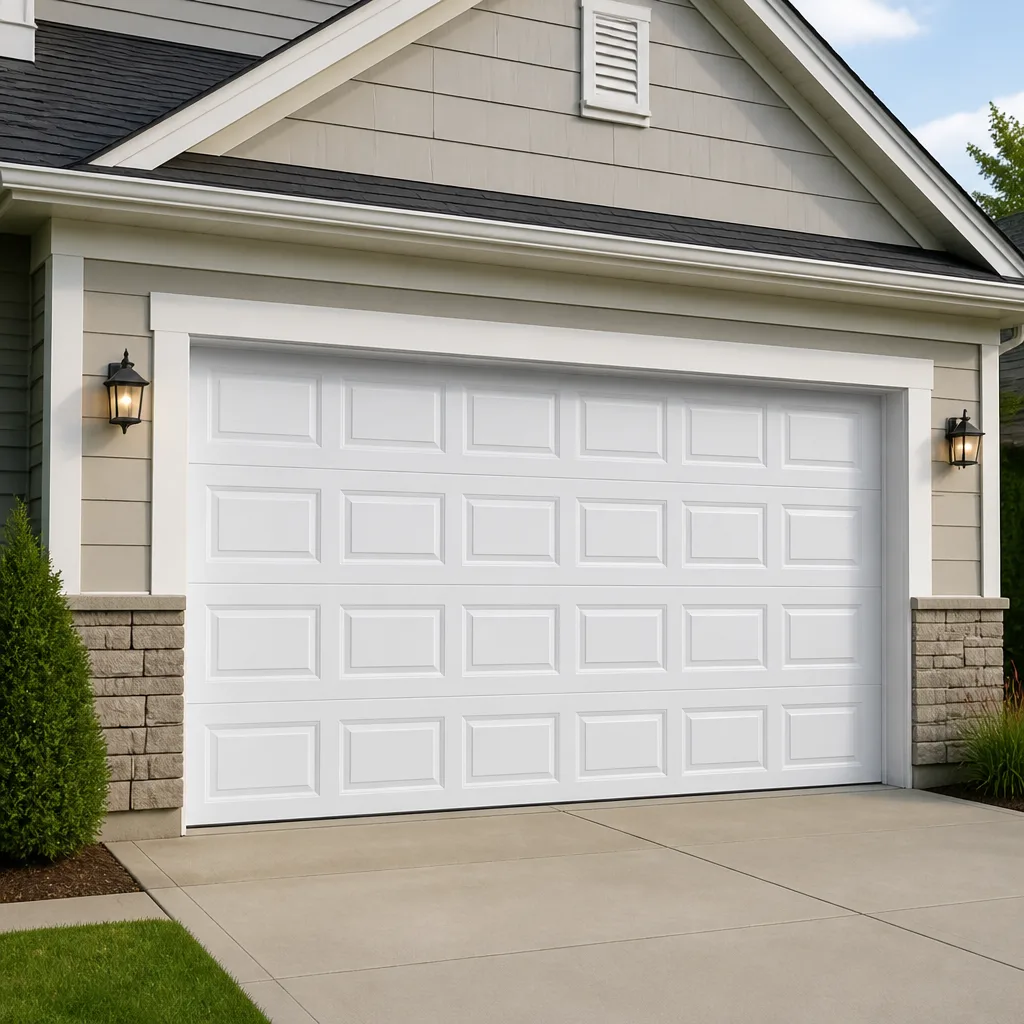 Raised-panel steel
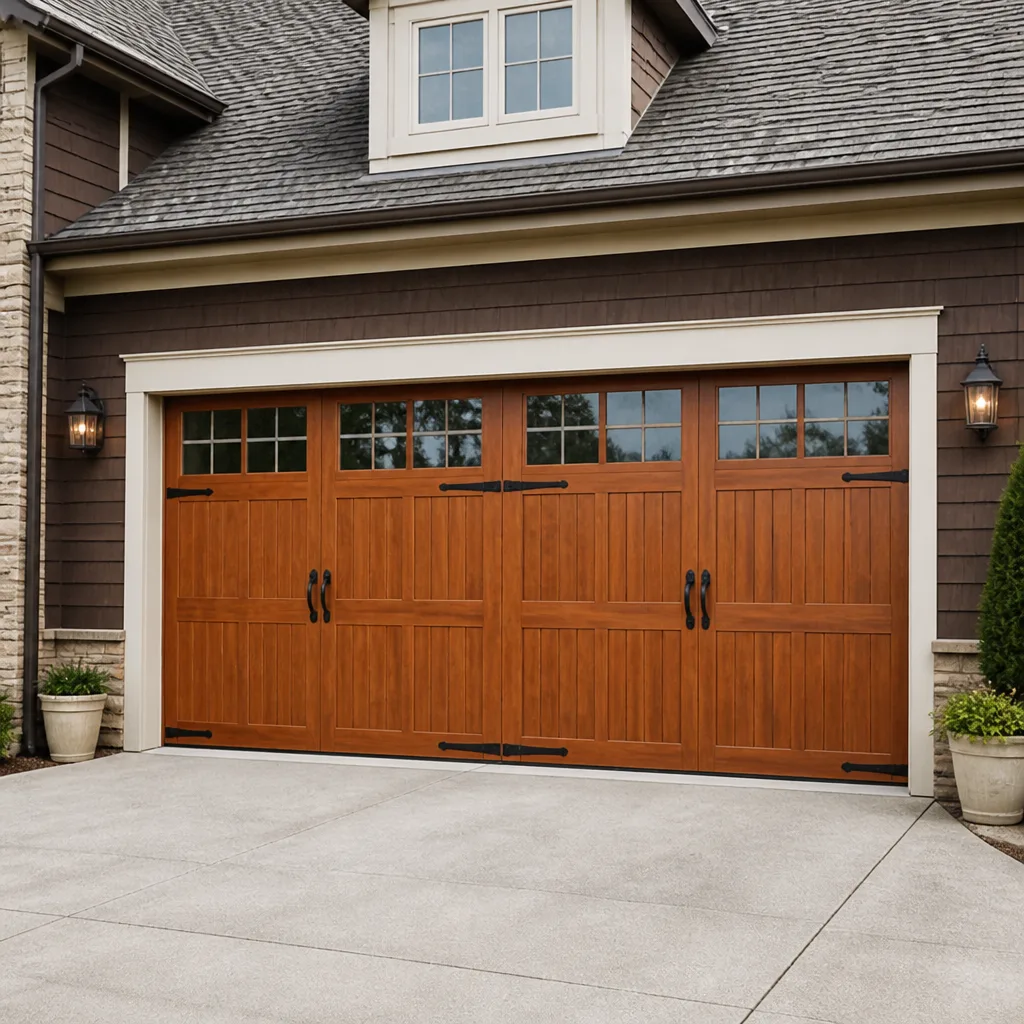 Carriage house
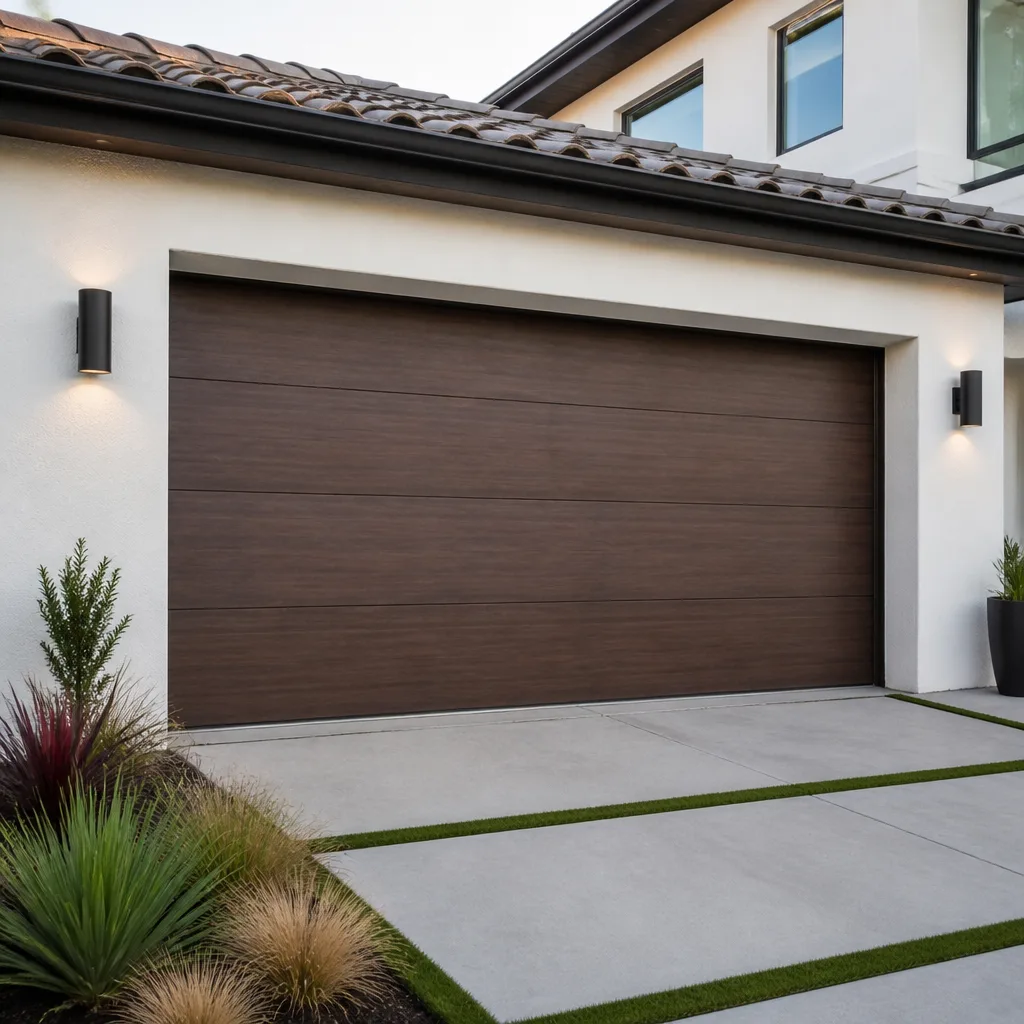 Modern flush
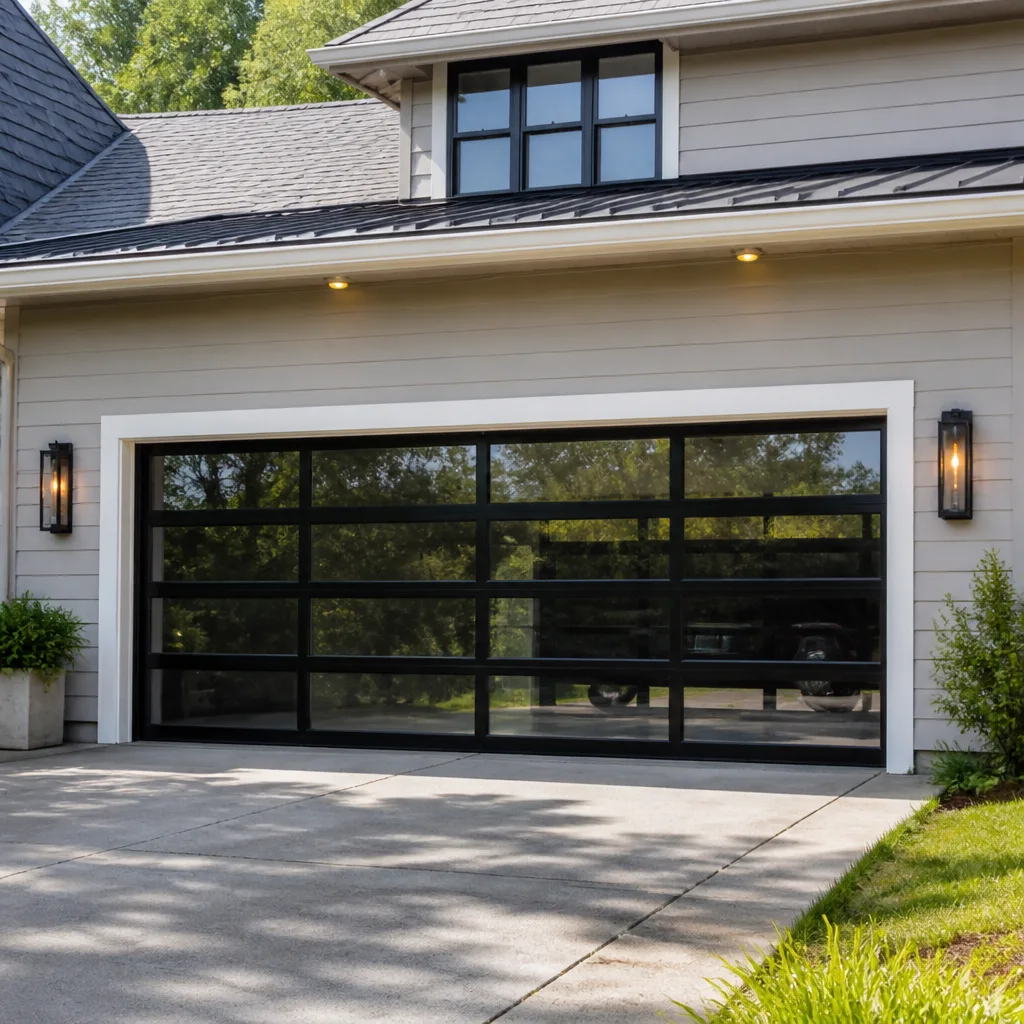 Full-view glass
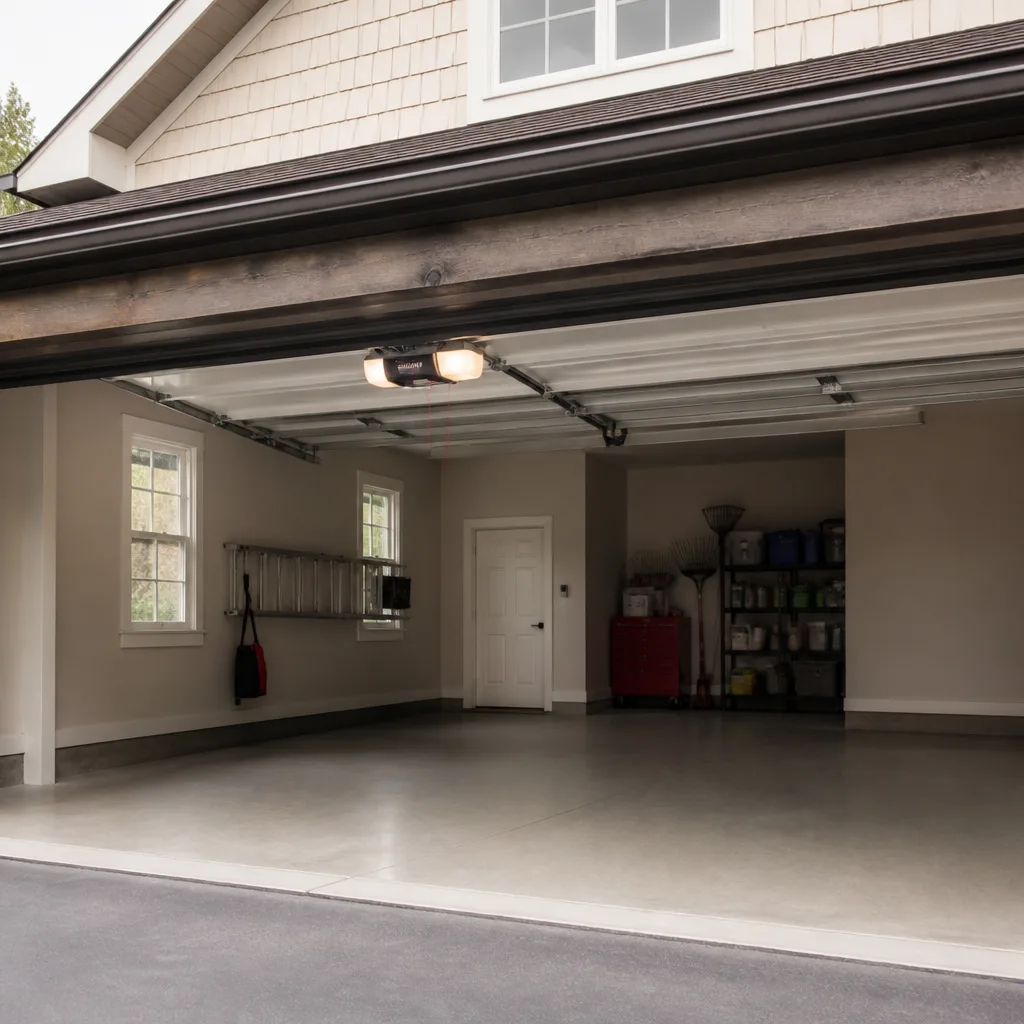 LiftMaster openers
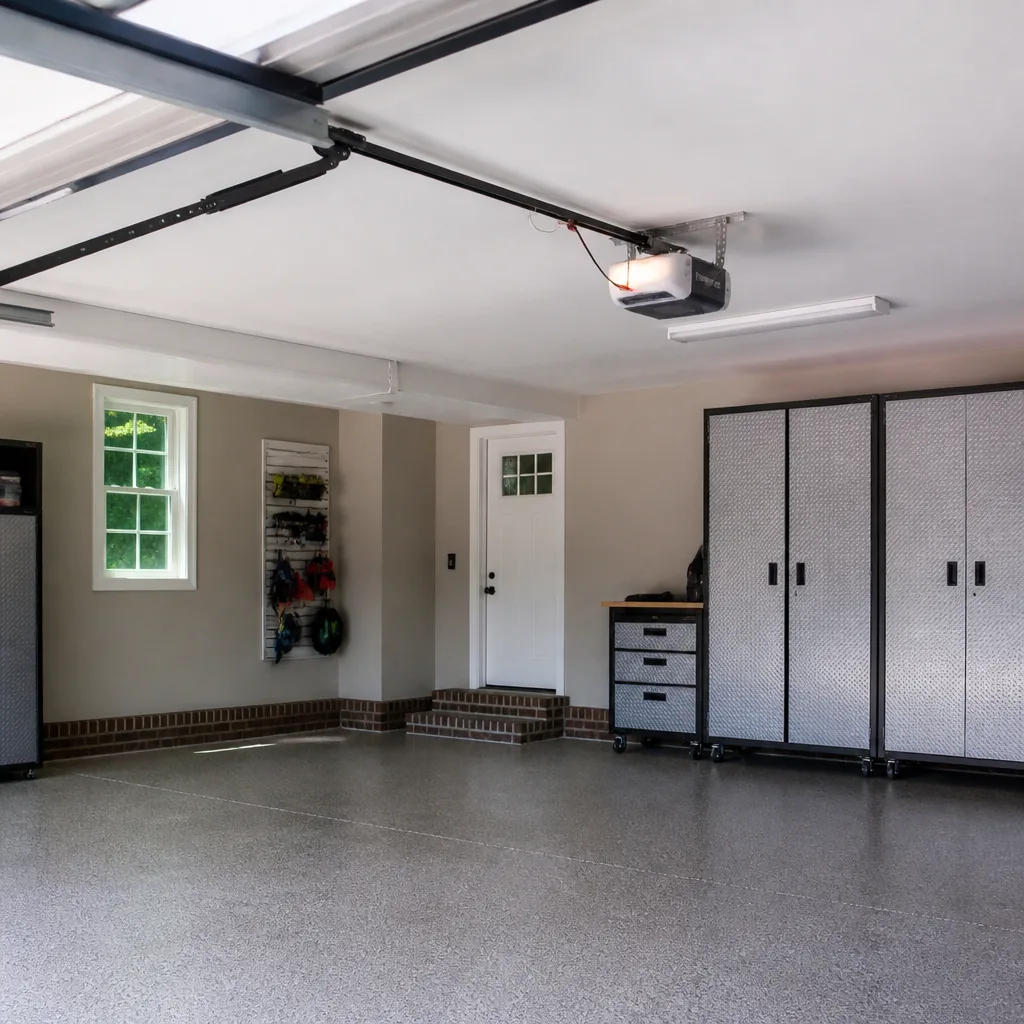 Chamberlain openers
Full 25-point door and opener safety check with every visit - springs, cables, rollers, tracks, and your LiftMaster or Chamberlain opener included
You get a price before we start. It does not change when the pro arrives.
Get your free estimateDIY vs Professional Garage Door: The Clearwater Homeowner’s Decision Guide
Most garage door advice online skips the only question that matters: which parts of this job can you legally and safely touch, and which parts will hurt you? A torsion spring holds enough stored energy to break a bone or worse in a fraction of a second, and the video that makes it look manageable is showing you the attempt that went smoothly. The ones that didn’t go smoothly don’t get uploaded. This guide breaks garage door work into tasks that are genuinely safe for a homeowner and tasks that need a trained technician, explains what Florida licensing law says about each, and shows how a DIY install can quietly cost you a manufacturer warranty. If you live in Clearwater and you’re weighing a Saturday project against a service call, this is the breakdown you need before you pick up a wrench.
Quick Answer
Weatherstripping, lubrication, sensor alignment, and remote or keypad programming are genuinely safe to handle yourself. Springs, cables, cable drums, bottom brackets, and structural track or panel work should go to a trained technician. In Florida, garage door installation and any work that alters the structure or electrical connections of the door system falls under licensed-contractor rules, so a self-installed replacement door can create warranty and resale problems that cost more than the labor you saved.
Styles & brands we work with
- Raised-panel steel
- Carriage house
- Modern flush
- Full-view glass
- LiftMaster openers
- Chamberlain openers
Table of Contents
- What garage door work is genuinely safe to do yourself?
- Which garage door repairs require a professional?
- What does Florida law say about DIY garage door work?
- How does a DIY installation affect your manufacturer warranty?
- DIY vs professional: what’s the real cost comparison?
- When does a botched DIY repair cost more than the original problem?
- Why brand knowledge matters on Clearwater garage doors
- When to call a professional
What garage door work is genuinely safe to do yourself?
A short list, and it’s shorter than most homeowners expect. The safe tasks are the ones that involve no stored spring tension, no cables under load, and no electrical connections to the door system. Everything on this list you can do with basic hand tools and a stepladder. If your door is already broken, though, stop here and fix the underlying problem first: adjusting a sensor on a door that won’t stay up is not going to solve anything.
- Weatherstripping and bottom seals. Replacing a worn bottom seal or the side and top weatherstripping is a straightforward job. On Clearwater doors the rubber takes a beating from sun and humidity, so seals crack and harden faster than homeowners in drier climates expect. A stiff seal lets rain and insects in and makes the door rattle. Pop the old one out of its track, slide the new one in, done.
- Lubrication. A garage door has hinges, rollers, and a track that all benefit from periodic lubrication with a garage-door-specific lubricant, not general-purpose oil or WD-40. Wipe the track clean first, then apply a light coat to the hinges and roller stems. This is the single easiest thing you can do to extend the life of your door.
- Safety sensor alignment. The two photo-eye sensors near the floor should face each other and both have a solid indicator light. If one is bumped or drifted, the door will reverse or refuse to close. Loosen the bracket, align the sensor, and tighten it back down. No tools beyond a screwdriver are needed.
- Remote and keypad programming. Pairing a new remote, changing a keypad code, or clearing old remotes from the opener’s memory is safe on any modern unit, including LiftMaster and Craftsman models. The manual walks you through it and the process doesn’t involve the door moving under spring tension.
- Visual inspection. Look at the springs for gaps or breaks, check the cables for fraying, and listen for grinding or popping when the door moves. Noticing a problem early is free. Fixing it is where the professional comes in.
That’s the whole safe list. Everything else on a garage door involves either stored energy or the structural alignment of the door, and that’s where the risk starts.
Which garage door repairs require a professional?
Springs, cables, cable drums, and bottom brackets. Those four components are the ones that injure homeowners every year, and they’re the ones we handle with trained technicians and the right tooling. A torsion spring on a standard residential door is wound to a specific number of turns under serious tension. When it lets go, it lets go fast, and there’s no second chance to get your hand out of the way. Extension springs are no safer: they can whip toward whatever is in their path when they fail.
Cables are worse in some ways because they’re less obviously dangerous. A cable under tension can slice through a hand or arm if it snaps during adjustment, and cables have to be properly seated in the drum with the right number of wraps. Getting that wrong doesn’t just fail to fix the door, it can send the door crashing down.
Structural track and panel problems are the other category. A bent track, a door that’s come out of its track, or a panel that’s cracked at a hinge point means the door isn’t running true. Forcing it back into alignment without addressing why it left the track in the first place usually results in a door that fails again within weeks. That’s not a handyman job and it’s not a homeowner job. New installation and full replacement also belong to a professional, both for the physical work and for the licensing and warranty reasons covered below.
If your door is already in this territory, it’s time for garage door repair from a technician who handles these components regularly rather than a first attempt at home.
What does Florida law say about DIY garage door work?
Florida regulates construction and installation work through contractor licensing, and a garage door replacement is generally treated as part of that framework rather than as routine maintenance. The practical takeaway: a homeowner can usually maintain and repair their own door, but installing a new door, changing the structural opening, or wiring a new opener into the home’s electrical system is work that falls to a licensed contractor. Before you start any installation project, call your city’s building department and ask exactly what permit and licensed-contractor requirements apply to your address. The rules aren’t identical from one jurisdiction to the next, and asking is free.
Why this matters beyond the permit itself:
- Insurance. If an unpermitted installation is later tied to a failure or a claim, your insurer may take an interest in who did the work and whether it met local requirements. Talk to your insurer about how they view unpermitted work on your policy.
- Resale. When you sell a home in Clearwater, the buyer’s inspector and the title process will look at permitted improvements. An unpermitted garage door installation can become a negotiation point or a delay.
- Liability. If a self-installed door later injures someone, the question of who performed the work and whether it was permitted becomes part of the story.
None of this means every minor repair needs a permit. It means the installation category is different from the maintenance category, and it’s worth knowing which side of the line your project sits on before you order a door.
How does a DIY installation affect your manufacturer warranty?
Most garage door manufacturers write their warranty around professional installation. That’s the part homeowners miss when they compare the price of a door from a supplier against the price of a door installed by a specialist. The door may be the same door, but the warranty coverage may not be. Read the warranty document for the specific door you’re considering before you buy, and look for language about who is authorized to install it and what happens to coverage if the installation doesn’t meet the manufacturer’s requirements. For brands like Wayne Dalton and Raynor, that language is usually spelled out in the installation instructions and the warranty terms that ship with the door.
Warranty coverage isn’t the only thing at stake. A door that’s installed slightly out of balance, with the wrong spring tension for its weight, or with the track not properly plumb will wear out faster. The panels take stress they shouldn’t, the opener works harder than it should, and the door never runs the way it did the first week. A year later you’re paying a technician to diagnose a problem that traces back to the install, and the warranty may not cover it because the installation wasn’t done to the manufacturer’s specification.
This is the quiet cost of DIY installation: not the door, but the callbacks. A professional garage door installation includes balancing the door, setting the spring tension correctly, and verifying the opener’s force and travel limits so the system runs the way it was designed to. That’s the difference between a door that works for fifteen years and a door that works for two before something starts grinding.
DIY vs professional: what’s the real cost comparison?
The repair cost is the visible number. What homeowners tend to miss is the time, the tooling, and the risk, all of which show up on the other side of the ledger. Here’s a straight comparison for a spring repair, which is the most common major garage door job:
- DIY parts cost: a replacement torsion spring is an inexpensive part on its own, in the tens of dollars range depending on the size and wire gauge. That’s the number that makes the project look attractive.
- DIY tooling: winding bars, a proper set of gloves, and a way to safely hold the door while you work. Homeowners often don’t have the right winding bars and use something improvised instead, which is exactly where the injury risk goes up.
- DIY time: a few hours of your time if nothing goes wrong, plus a return trip to the supplier if you get the wrong spring size. The spring has to match the door’s weight, and the wrong one will either fail early or leave the door out of balance.
- Professional cost: a typical spring repair in the Clearwater market runs in the range of a few hundred dollars per spring, quoted in writing before any work begins. A matched pair is usually replaced together at roughly twice that.
- Warranty and callbacks: a professional repair comes with workmanship behind it. A DIY repair comes with you, and if it fails, you’re the callback.
Add up the tooling, the time, the risk, and the chance of a second attempt, and the gap between the two options narrows considerably. For anything on the safe list earlier, doing it yourself is genuinely fine. For springs, the math favors a professional once you account for everything that isn’t on the parts receipt. The written estimate sets the final price, and you’ll know it before anything gets touched.
If your springs are the problem, our Clearwater Garage Door Repair Pros team handles spring repair as a named service because it’s the job most often mishandled at home.
When does a botched DIY repair cost more than the original problem?
Three ways, and all three are common enough that we see them in Clearwater regularly.
The spring that fit but wasn’t right. A replacement spring has to match the door’s weight and the original spring’s specifications. A homeowner who substitutes a spring of a different size or wire gauge can get the door to move, but it will be out of balance, the opener will strain, and the door will eventually fail again. Now the original repair has to be redone, and the door may have taken additional wear in the meantime.
The cable that was adjusted but not replaced. A frayed cable can be wrapped back into place and look fine from the outside. It isn’t fine. It’s a cable that has already lost strength and will fail again, often while someone is standing under it. What was a straightforward cable replacement becomes a full cable and drum job after the failure.
The door knocked back into the track. A door that’s come out of its track gets forced back in by a homeowner who assumes it’s a simple alignment issue. It isn’t: something caused the door to leave the track, and until that’s addressed the door will repeat the failure. A bent track or a misaligned panel that would have been a single repair becomes a track section replacement, a panel replacement, or in the worst case a new door.
The pattern is the same every time: the original problem was one repair, and the botched DIY version is two. That’s the real cost comparison. Not what the parts cost, but what the second repair costs on top of the first one that didn’t hold.
Why brand knowledge matters on Clearwater garage doors
Garage doors and openers aren’t interchangeable, and the differences show up in the repair. A LiftMaster opener’s logic board, travel limits, and force settings are set up differently from a Craftsman unit, and a Wayne Dalton door’s spring and track configuration isn’t the same as a Clopay’s. A technician who works on the specific brand already knows where the adjustments are, which parts are compatible, and what the common failure points look like on that model. That’s the difference between diagnosing a problem right the first time and troubleshooting it in your garage over two visits.
In Clearwater, the humidity and heat put a particular kind of wear on garage doors. Rubber seals harden and crack. Lubricant dries out faster than it does in cooler climates. Openers work harder in a hot garage, and the electronics in older units are less tolerant of it. None of this changes the brand-specific knowledge, but it does mean maintenance intervals here tend to be shorter than what a national guide suggests. A technician who services Clearwater doors regularly knows what to look for and when to say a component needs replacing rather than adjusting.
Our technicians have up to 11 years of experience across LiftMaster, Chamberlain, Genie, Clopay, Amarr, Wayne Dalton, Craftsman, and Raynor systems. That doesn’t make us the right choice for everyone, but it does mean the diagnosis is grounded in the actual hardware rather than a guess. If your opener is the issue, garage door opener repair on a known brand is faster and less likely to result in a repeat visit.
Common Mistakes to Avoid
- Treating a torsion spring as a one-person job. It isn’t one person and it isn’t a beginner job. The spring stores enough energy to cause serious injury, and no online tutorial can teach your hands what to feel for.
- Using the wrong lubricant. General-purpose oil and WD-40 attract dirt and gum up the track. Use a garage-door-specific lubricant on the hinges and rollers, and wipe the track clean first.
- Ignoring a frayed cable. A cable that looks slightly worn is a cable that’s close to failing. Replace it rather than adjusting it back into place, and let a technician handle the replacement since it’s under tension.
- Buying a door without checking the installation requirements. In Clearwater, ask your city’s building department what permits and licensed-contractor rules apply before you order. It’s a five-minute call that can save a real headache later.
- Assuming the warranty transfers to a DIY install. Read the warranty before you buy. Most manufacturers write coverage around professional installation, and a self-install can void parts of it.
- Forcing a door back into its track. If the door left the track, something caused it. Forcing it back usually turns a single repair into a track or panel replacement.
- Skipping the annual visual check. A two-minute look at the springs, cables, and rollers every few months catches most problems while they’re still cheap to fix.
See the difference
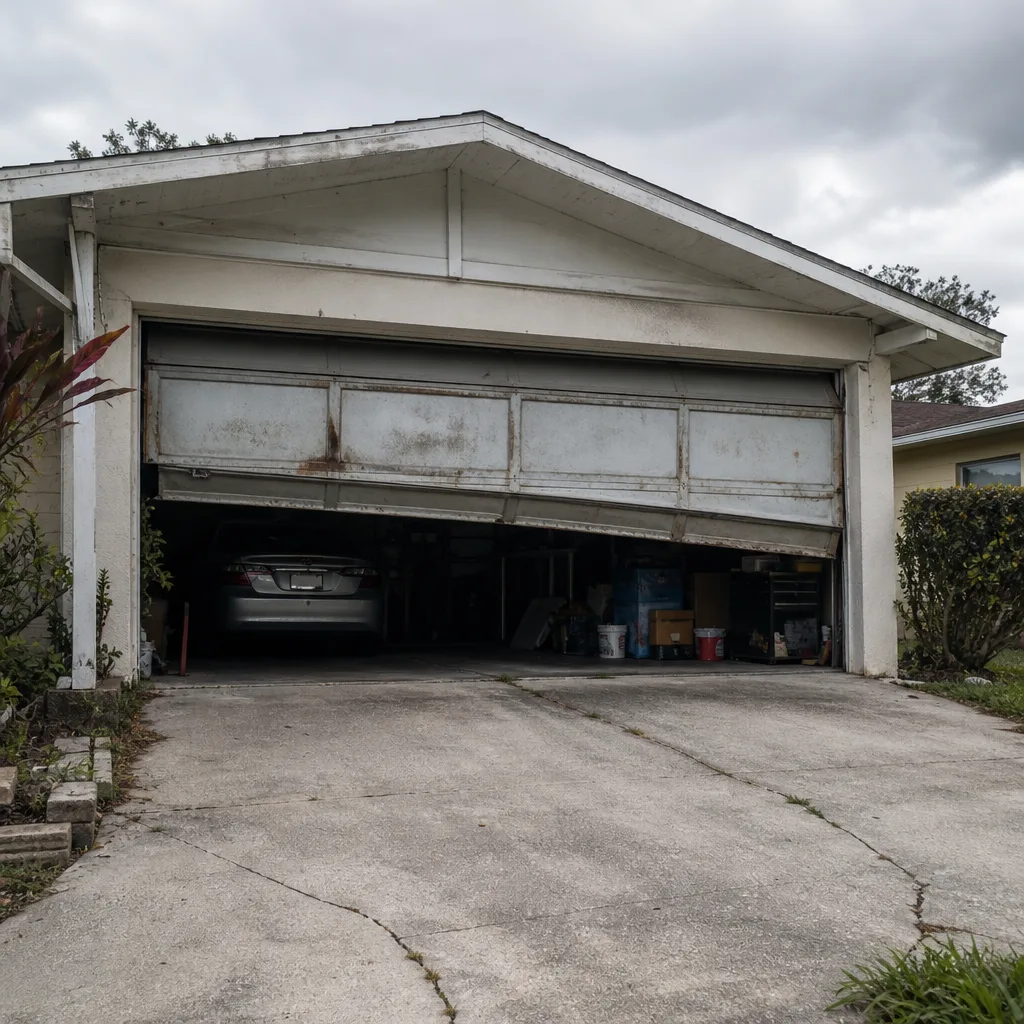 Before
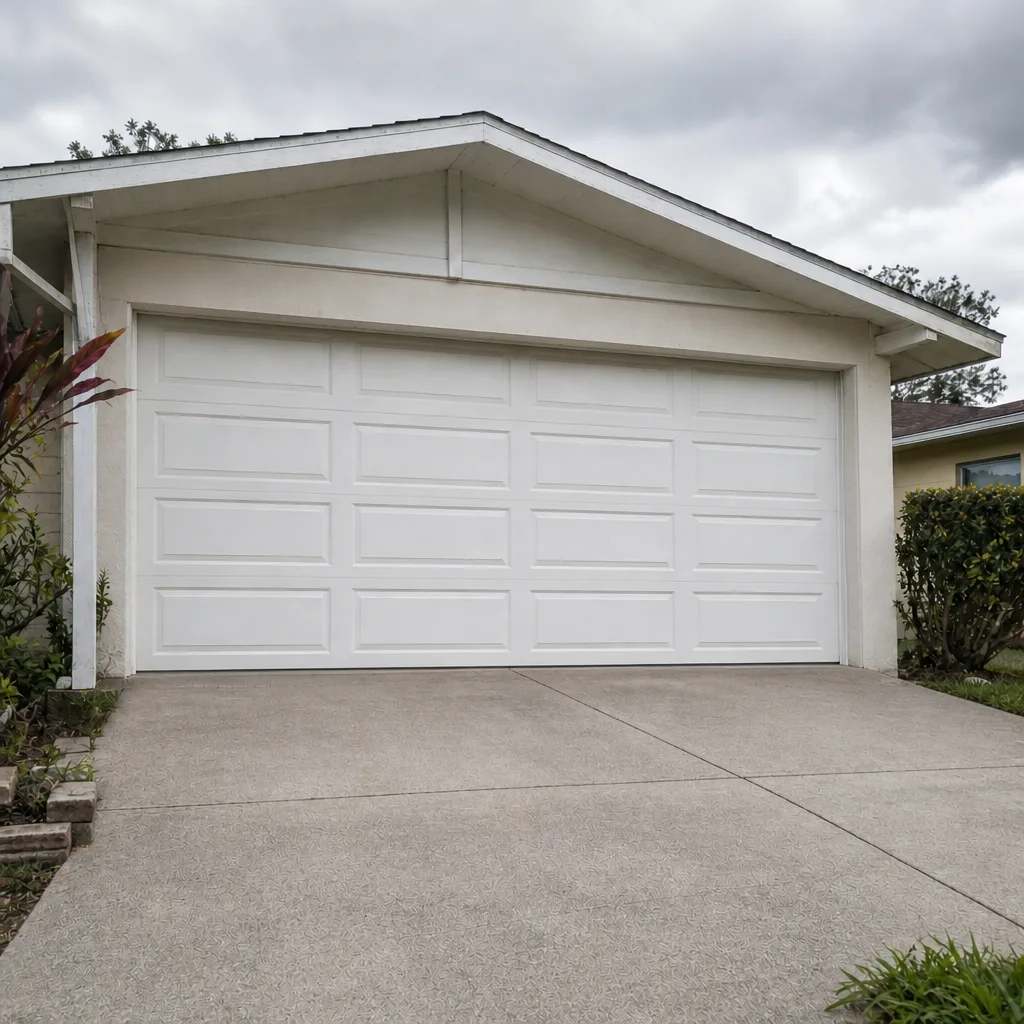 After
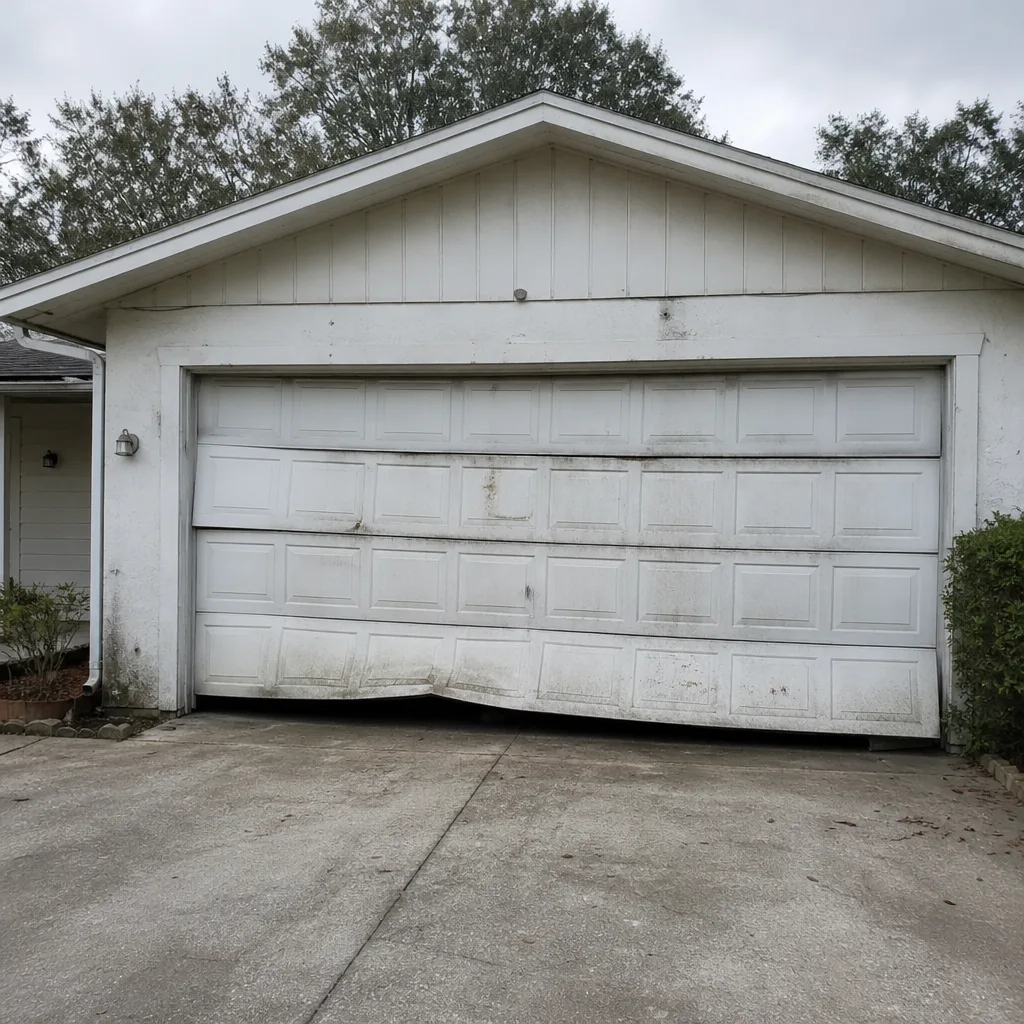 Before
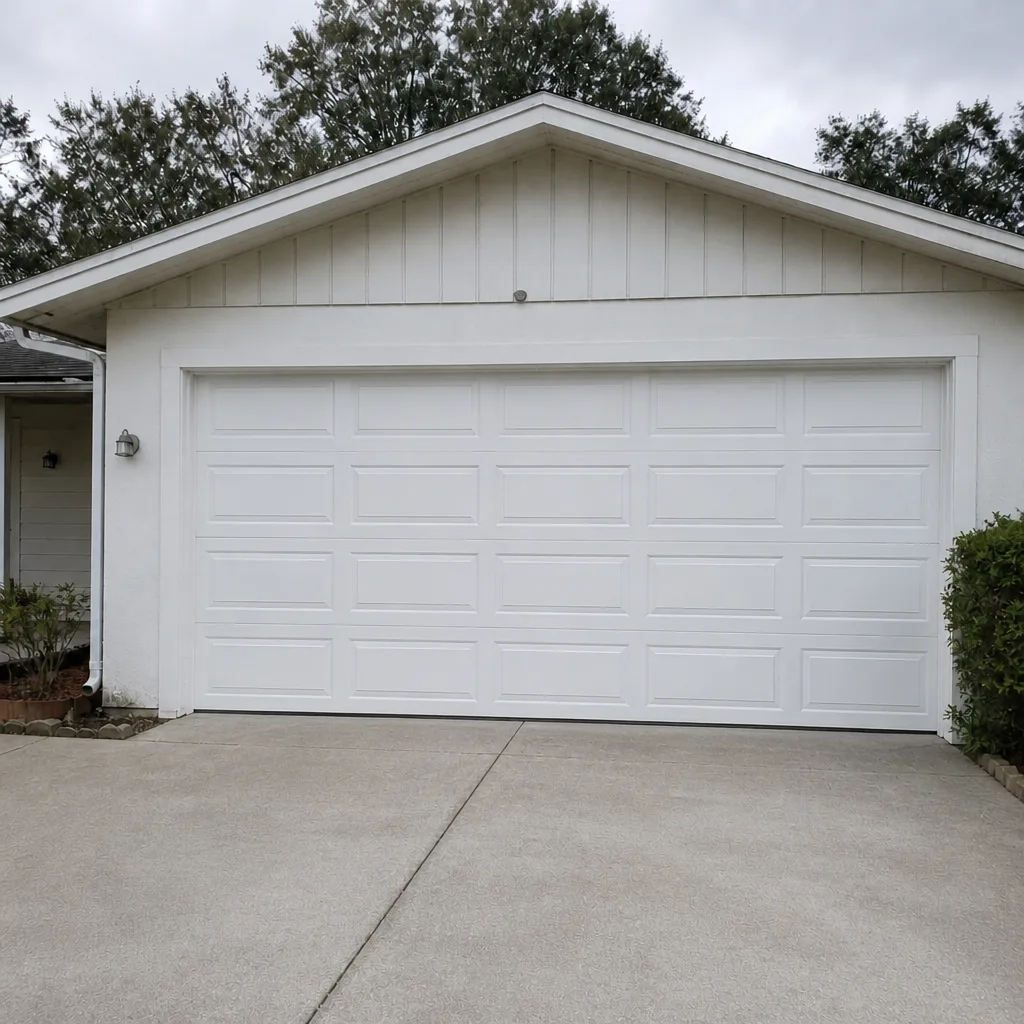 After
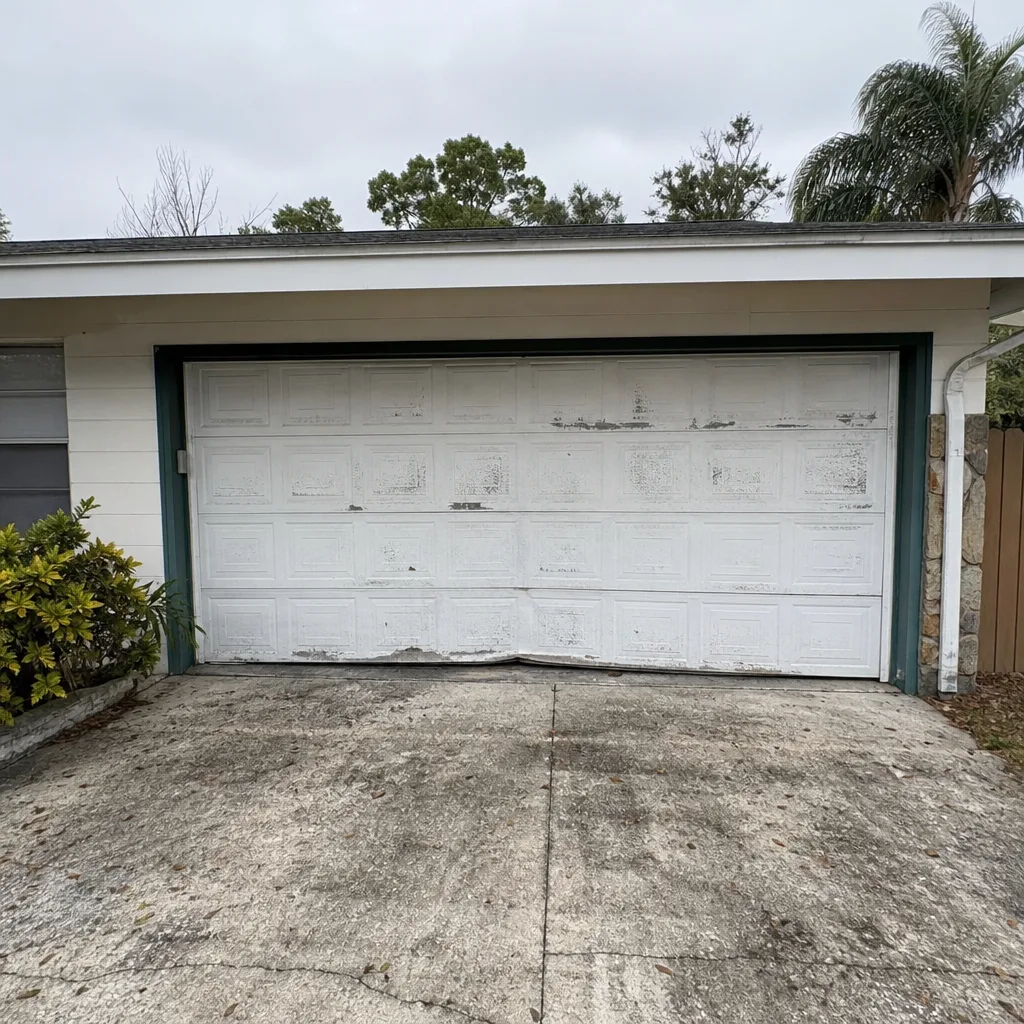 Before
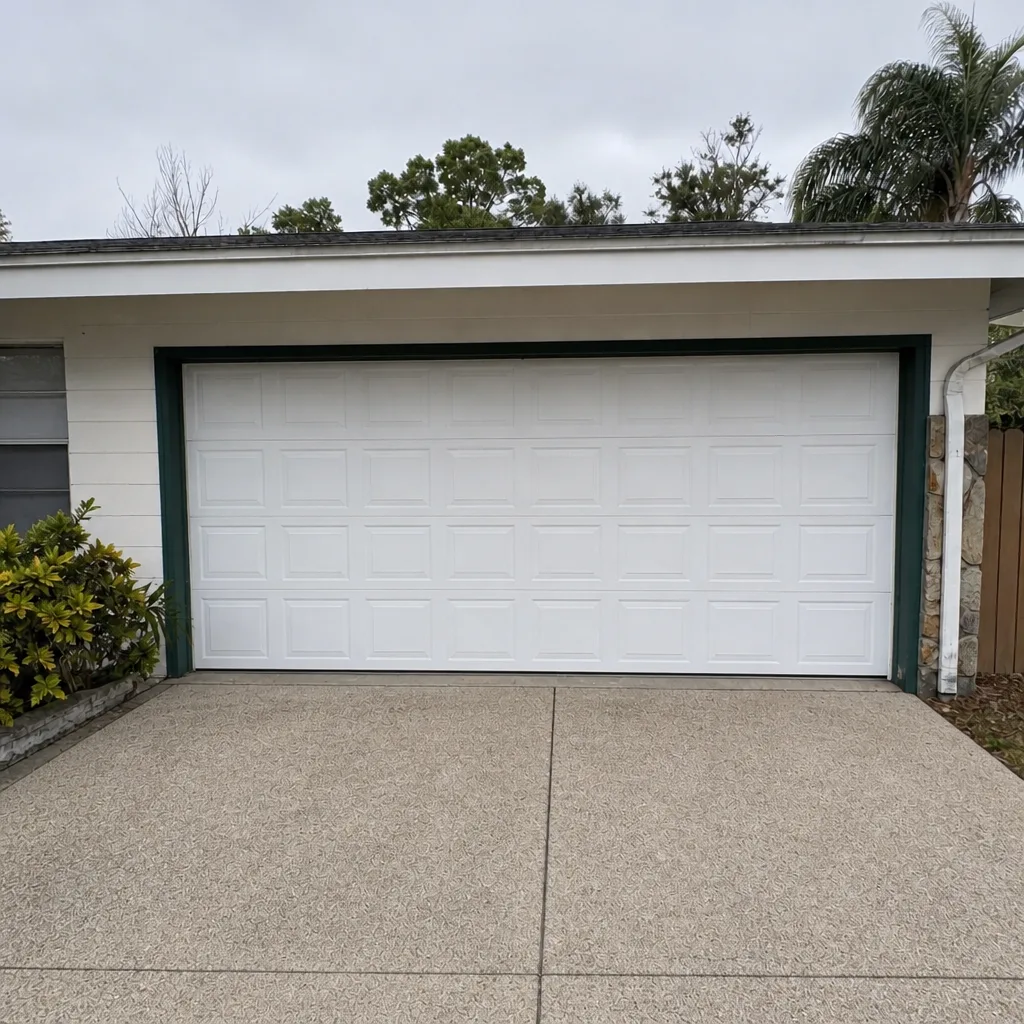 After
When to Call a Professional
Call a professional if the door won’t stay up, if you see a gap or break in a spring, if a cable is frayed or hanging loose, if the door has come out of its track, or if the opener is straining or the door reverses for no clear reason. Those are the scenarios where a DIY attempt is most likely to make the problem worse. Clearwater Garage Door Repair Pros offers free estimates in Clearwater. Call (866) 488-2820. We answer 24/7, and fast dispatch runs from 7am to 7pm, Sunday through Friday. We’re closed Saturday. The estimate is written, and the price is agreed before any work starts.
Frequently Asked Questions
No, and we don’t recommend it for any homeowner. Torsion and extension springs store enough energy to cause permanent injury, and the installation requires specific tooling and knowledge of the door’s weight and spring specifications. It’s one of the most hazardous DIY garage door tasks, which is why spring repair is a named professional service rather than a homeowner project. Call (866) 488-2820 for a free estimate on spring repair.
Generally no, because garage door installation falls under Florida’s licensed-contractor rules, and many installations require a permit. The details vary by jurisdiction, so call your city’s building department and ask what applies to your address before you buy a door. Our team can walk you through the installation side. Call (866) 488-2820 and we’ll set up a free measure and a written quote.
It often can, because most manufacturers write their warranty around professional installation. Read the warranty document for the specific door you’re considering and look for the installation requirements. If coverage depends on who installed the door, that changes the cost comparison considerably. Call (866) 488-2820 to talk through a professional install.
Weatherstripping, lubrication, safety sensor alignment, and remote or keypad programming are all safe to handle yourself. Those tasks involve no spring tension and no electrical connections to the door system. Anything involving springs, cables, cable drums, track alignment, or a full replacement belongs to a trained technician. Call (866) 488-2820 if you’re not sure which category your problem falls into.
A single spring repair typically runs in the range of a few hundred dollars in the Clearwater market, and a matched pair is usually replaced together at roughly twice that. The written estimate sets the final price, and the price is agreed before any work begins. Call (866) 488-2820 for a free estimate.
We’re closed Saturday. Fast dispatch runs from 7am to 7pm, Sunday through Friday, and we answer the phone 24/7. If you call outside dispatch hours, we’ll book you into the next opening. Call (866) 488-2820 and we’ll get you scheduled.
The Bottom Line
Garage door work splits cleanly into two categories: the maintenance tasks that are safe to handle yourself, and the repairs and installations that involve stored spring energy, structural alignment, or licensed work. Weatherstripping, lubrication, sensor alignment, and remote programming are yours to do. Springs, cables, track work, and full installations belong to a technician, both for your safety and for the licensing and warranty reasons that apply in Clearwater. The parts cost on a DIY spring repair looks attractive until you add the tooling, the risk, and the chance of a second repair. A written estimate lets you compare the real numbers, and on the dangerous jobs it usually settles the question.
Call (866) 488-2820 for a free estimate. We answer 24/7. Fast dispatch from 7am to 7pm, Sunday through Friday. We’re closed Saturday.
Written by the team at Clearwater Garage Door Repair Pros.