
Last updated November 21, 2026
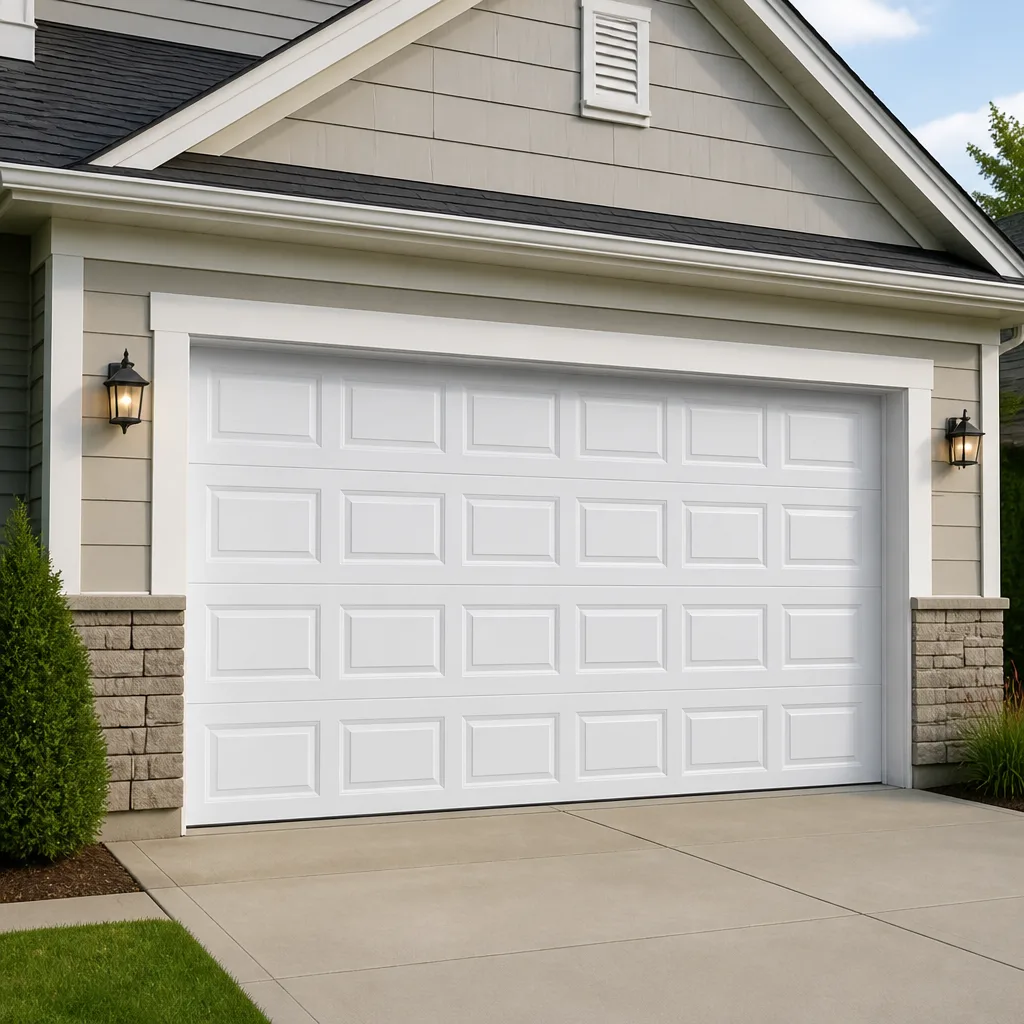 Raised-panel steel
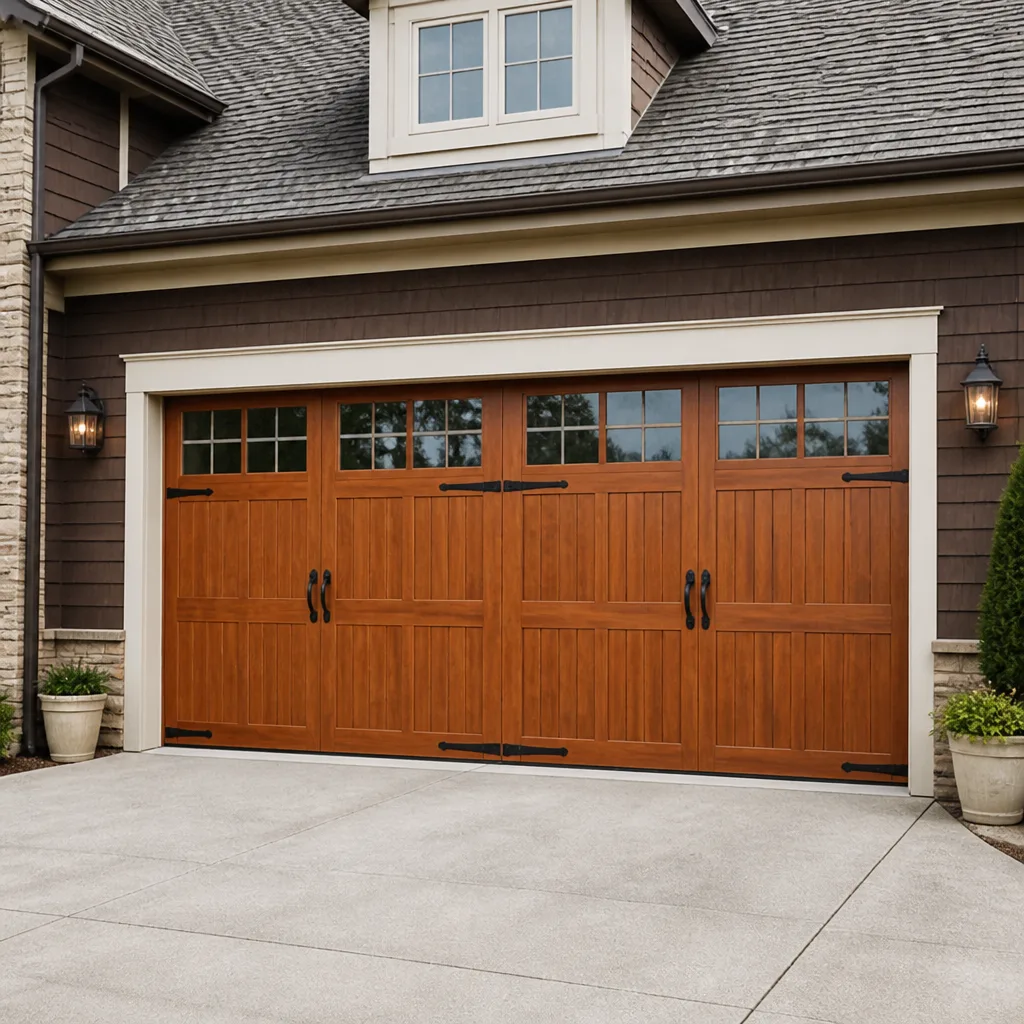 Carriage house
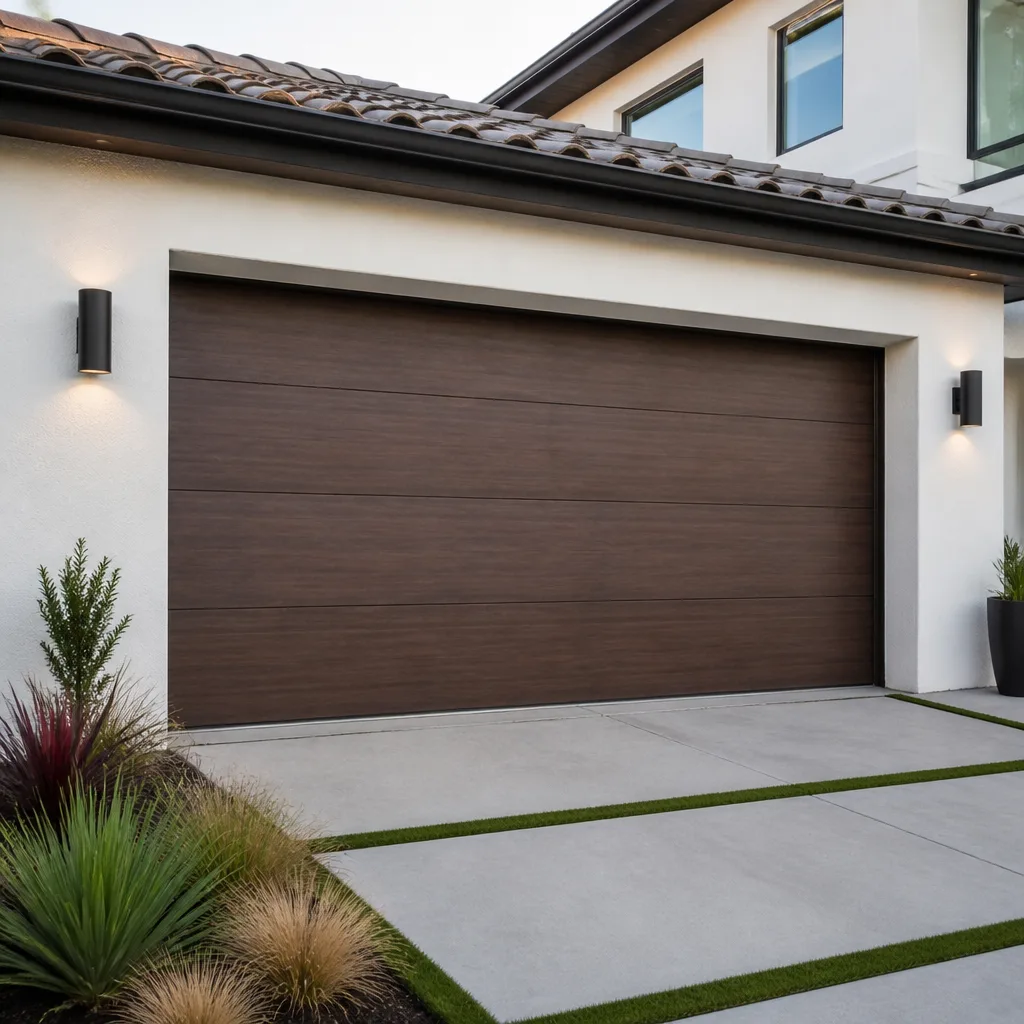 Modern flush
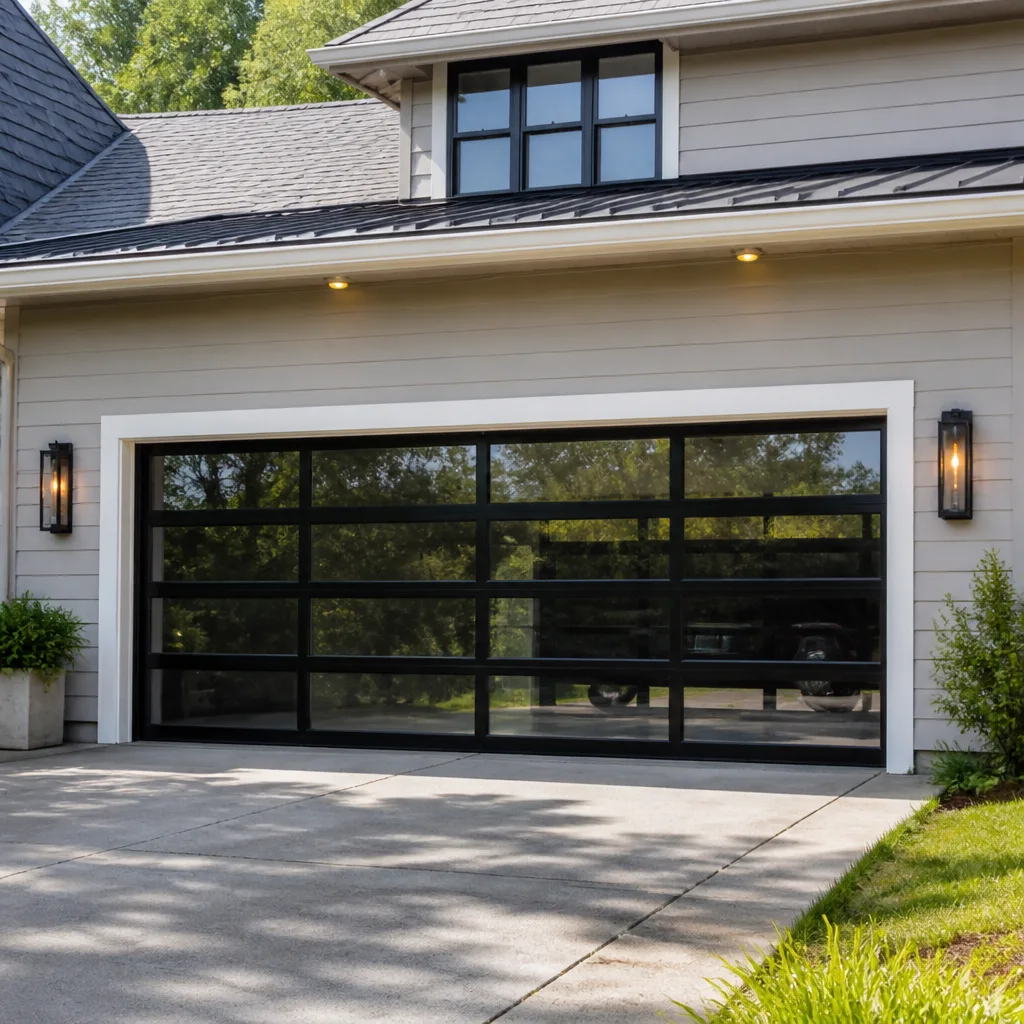 Full-view glass
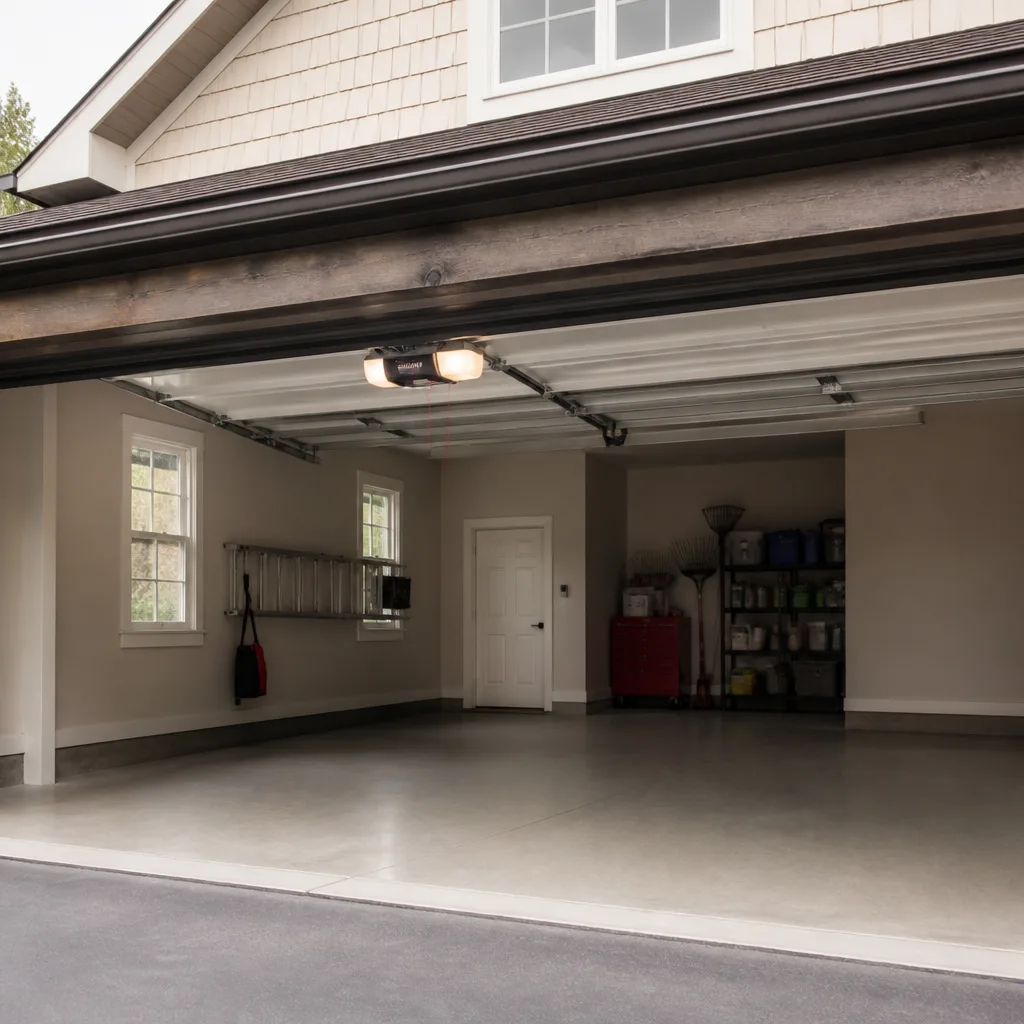 LiftMaster openers
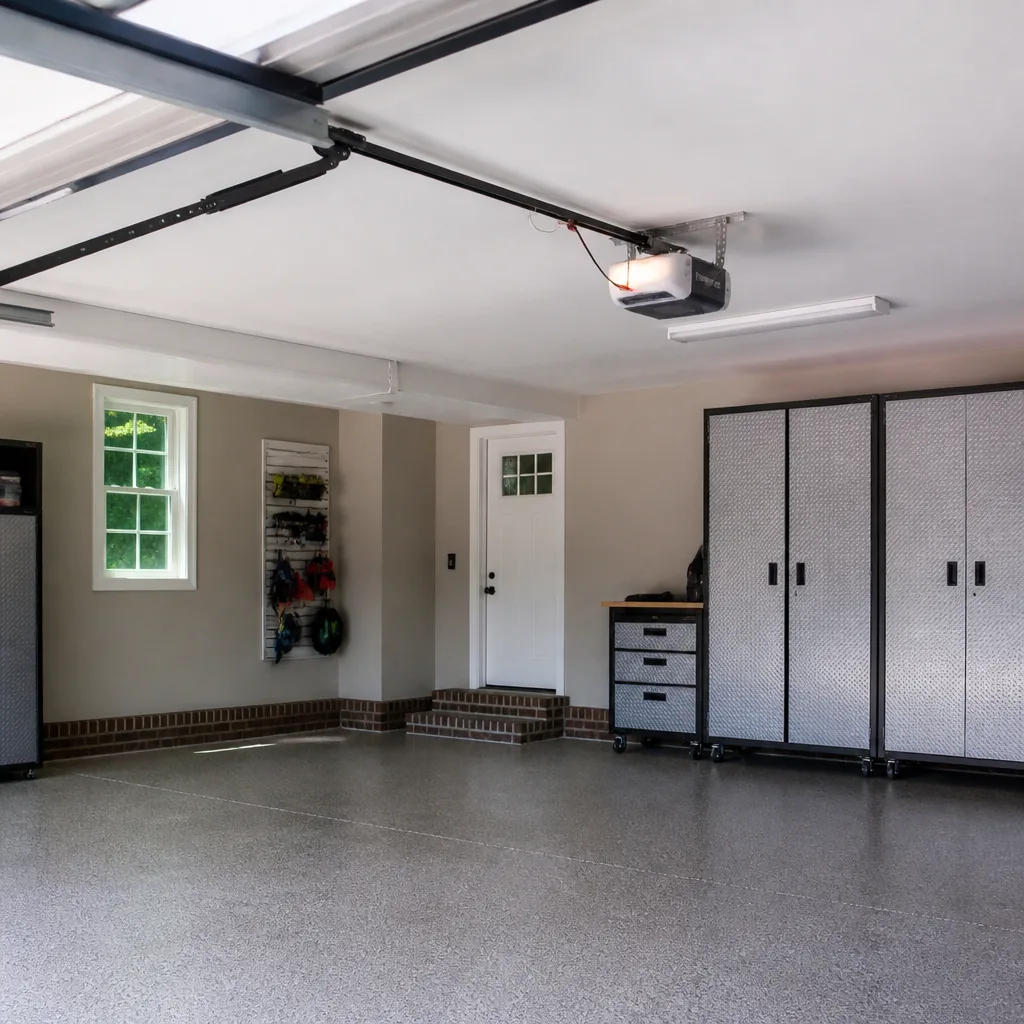 Chamberlain openers
Full 25-point door and opener safety check with every visit - springs, cables, rollers, tracks, and your LiftMaster or Chamberlain opener included
You get a price before we start. It does not change when the pro arrives.
Get your free estimateGarage Door Repair Maintenance Checklist for Clearwater Homeowners
The number one reason Clearwater garage doors fail early isn’t neglect. It’s maintenance copied from a northern climate that shares almost nothing with ours. Plenty of homeowners here grease the same components on the same schedule a Michigan or Ohio guide recommends, then wonder why the door gets stiff, why the rollers flatten, why the paint chalks in a couple of summers. Two seasons drive everything in Clearwater: a hot, humid stretch and a storm season that tests every fastener and seal on the door. This guide lays out a checklist built for that reality – what to check monthly, quarterly, and once a year, which lubricants hold up and which quietly turn to gum, and what to inspect after a named storm passes through.
Quick Answer
A Clearwater garage door needs a monthly visual check and balance test, a quarterly lubrication and hardware tightening, and an annual deep inspection of springs, cables, rollers, and weatherstripping. Use silicone-based lubricant rather than WD-40 or heavy grease in Florida humidity, and inspect the entire system after any named storm. Anything involving springs or cables is a job for a trained technician, not a weekend project.
Styles & brands we work with
- Raised-panel steel
- Carriage house
- Modern flush
- Full-view glass
- LiftMaster openers
- Chamberlain openers
Table of Contents
- Why Clearwater Doors Age Differently
- The Monthly Checklist
- The Quarterly Checklist
- The Annual Deep Inspection
- Choosing the Right Lubricant for Florida Humidity
- Weatherstripping and the Florida Sun
- Post-Storm Inspection Protocol
- The Five Components That Fail First in Clearwater
Why Clearwater Doors Age Differently
Most garage door maintenance advice online was written for a climate with four seasons, hard freezes, and low winter humidity. Clearwater doesn’t have that. We get a long hot stretch where humidity stays high and the sun hammers the door face day after day, followed by a storm season where wind-driven rain and debris test every seal and every anchor point. Your door’s enemies here are humidity, UV exposure, and storm activity, not cold.
That shift changes the maintenance calendar. In a cold climate, the big concern is seized hinges and stiff springs after a freeze. In Clearwater, the big concerns are corrosion creeping into the hinge pins, lubricant thinning out and drying under heat, rubber seals baking and cracking, and hardware working loose from the constant expansion and contraction of a door face that can get very hot in direct afternoon sun.
Roofs over in the Countryside and East Lake areas face the same western sun that hits a lot of garage doors, and homes closer to the water deal with more airborne moisture settling on painted steel and aluminum. Whether your door is a Clopay steel model or a Wayne Dalton with a wood-look finish, the maintenance rhythm is the same. The products and the intervals are what need tuning.
One useful way to think about it: your door has a dry-season maintenance mode and a storm-season maintenance mode. The dry stretch is when you do the deep cleaning, lubrication, and adjustment work. Storm season is when you shift to inspection mode – checking seals, anchors, tracks, and panels before and after weather moves through. Building those two modes into your routine is what keeps a Clearwater door running smoothly for its full expected life.
The Monthly Checklist
A monthly check takes about ten minutes and catches most small problems before they become repair calls. You’re not fixing anything here – you’re looking, listening, and testing. Do this on a day when you can raise and lower the door a few times without rushing.
- Run the door and listen. A healthy door is quiet. Grinding, squealing, popping, or a rattle that wasn’t there last month points to a specific component worth investigating.
- Do the balance test. Close the door, pull the release handle to disconnect the opener, then lift the door by hand to about waist height and let go. A properly balanced door holds roughly in place. If it drops or races up, the springs or tension need attention from a technician.
- Test the safety reverse. Put a piece of wood or a roll of paper towels in the door’s path and close it. The door should reverse on contact. If your opener has a photo-eye system, wave an object in front of the beams and confirm the door reverses.
- Look at the weatherstripping at the floor. Check for daylight underneath and for a seal that’s flattened or torn.
- Glance at the tracks. They should look parallel and straight. Dents, bends, or debris in the channel matter.
- Check the door face for new dings or paint problems. Small chips in paint on steel doors are where corrosion starts. Touch them up promptly.
If the balance test fails or the door reverses inconsistently, don’t keep running it. An unbalanced door strains the opener and can eventually cause a spring or cable failure. Clearwater Garage Door Repair Pros handles the diagnosis and repair, and the price is quoted before any work starts so there’s no surprise on the invoice.
The Quarterly Checklist
Every three months or so, go beyond looking and start maintaining. Fifteen to twenty minutes on a comfortable morning covers it. This is the right interval in Clearwater because heat and humidity work on lubricants and hardware faster than in a dry climate.
- Lubricate the moving metal parts. Hinges, roller stems, and the torsion or extension spring coils (a light wipe on the coils, never a soak) all benefit from a silicone-based spray. Wipe off excess so dust doesn’t collect.
- Check and tighten hardware. Hinge screws, bracket bolts, and track bolts can loosen from vibration and heat cycling. Snug them, but don’t over-torque; stripping a bolt makes the next repair harder.
- Inspect rollers. Steel rollers wear and get noisy. Nylon rollers are quieter and hold up well in humidity. Look for flat spots, cracks, or rollers that wobble in the track.
- Wipe down the tracks. A dry cloth or a lightly damp one clears grit. Never grease or oil the tracks themselves – that attracts dust and gum, and the door needs the tracks dry to roll smoothly.
- Check the opener’s moving parts. For a belt or chain drive, confirm the belt or chain isn’t sagging, and check that the opener housing is clean and free of insect nests, which are common in Clearwater.
- Wash and inspect the door face. A gentle wash removes pollen, dust, and grime, and lets you see the paint condition. Rinse thoroughly.
Brand-specific knowledge matters here. LiftMaster and Chamberlain openers have their own adjustment procedures, and Genie and Craftsman units differ too. When a noise or hesitation shows up, we work on that brand’s system specifically so the diagnosis is right the first time.
The Annual Deep Inspection
Once a year, go through the door system from top to bottom. If you can time it to just before storm season, you’ll get the most out of it. This is the part of the checklist where a professional inspection earns its keep, especially for the spring and cable system.
- Inspect the springs carefully from a distance. Look for gaps, rust, or a stretched appearance. Never touch, adjust, or attempt to loosen a torsion spring.
- Look at the cables for fraying. Frayed strands along a cable are a warning sign of failure. Cables are under high tension and should only be handled by a technician.
- Check the door’s alignment and gap. The door should sit level and close squarely. Uneven gaps point to a track or tension issue.
- Inspect the bottom seal and side seals for UV damage. Rubber that’s cracked, brittle, or pulling away from the frame is due for replacement.
- Confirm all safety features work. Test the safety reverse and the photo-eye system again, and check that any manual release works smoothly.
- Review the opener’s force and travel settings. If the door reverses too easily or struggles to close fully, the settings may need a reset.
For most Clearwater homeowners the annual deep inspection is best done by a trained technician. Springs and cables are under extreme tension and can cause serious injury if handled incorrectly – that’s not a disclaimer, it’s the reason garage door work is treated as a specialty trade. Our technicians have up to 11 years of experience with exactly these components.
Choosing the Right Lubricant for Florida Humidity
This is where most maintenance goes wrong. The right product keeps your door quiet and smooth through a Clearwater summer. The wrong one turns into a sticky mess that collects grit and grinds the moving parts. Here’s how the common choices stack up.
- Silicone-based spray lubricant – the right choice. It stays effective in high humidity, doesn’t attract as much dust, and won’t gum up in the heat. Use it on hinges, roller stems, and a light wipe on the springs.
- WD-40 – avoid as a long-term lubricant. It’s a light solvent-based product, not a lasting lubricant for a garage door. It will quiet a squeak for a day or two and then leave the metal drier than before. Fine for loosening a stuck fastener; not the maintenance product for hinges and rollers.
- White lithium grease – use carefully and sparingly. It’s durable but thick. In hot, humid conditions it can hold dust and turn gritty. Where a manufacturer calls for grease on a specific bearing, use only a small amount.
- Heavy axle grease or motor oil – don’t use it. It collects grit, drips, and stains the door face and driveway.
- Never oil the tracks. The door rolls best on clean, dry tracks. Grease on the tracks makes the rollers slide instead of roll.
The short version: silicone spray for the moving metal, keep the tracks dry, and skip the WD-40 reflex. If you’re not sure what your opener manufacturer recommends, check the manual or call us – we work with all the major brands and know their service requirements.
Weatherstripping and the Florida Sun
Rubber weatherstripping takes the most sun damage of anything on your door. The bottom seal and the side seals sit directly in UV exposure all year, and in Clearwater’s sun they degrade faster than most homeowners expect. Cracking, hard spots, a seal that’s flattened flat to the concrete, or gaps you can see light through all mean it’s time to replace it – not just to seal the garage but to keep out water, insects, and the wind-driven rain that storm season brings.
Check the seals quarterly rather than annually. Run your hand along the bottom seal and see if it feels stiff or crumbly. On the sides, look for the weatherstripping pulling away from the frame or curling at the edges. If the rubber has lost its flexibility, it can’t do its job even if it hasn’t visibly split yet.
When you replace seals, choose a product rated for UV exposure and a material that stays flexible in heat. Replacement is a straightforward job for most homeowners on the bottom seal, but damaged frames or a door that’s out of alignment often point to a bigger issue worth diagnosing. This is one of the areas where a small repair now prevents water intrusion later.
Good weatherstripping also keeps your garage cooler and cuts the humidity that drives corrosion on the door’s hardware. It’s an easy win in a Clearwater summer, and it’s the kind of small investment that pays back every month.
Post-Storm Inspection Protocol
When a tropical storm or hurricane threat passes through the Clearwater area, do a full inspection before you trust the door again. The wind and wind-driven rain can loosen anchors, bend tracks, damage panels, and push water past the seals. Here’s the order to do it in, from safest to most technical.
- Look from a distance first. Are any panels dented or pushed in? Is the door crooked in its opening? Does anything look misshapen before you run it?
- Check the tracks for bends or misalignment. Wind and debris often bend a track or knock it out of alignment. A bent track can be dangerous if the rollers jump out.
- Inspect anchors and the frame. Wind loads can work lag bolts loose or pull brackets out of the framing. Loose anchors need to be corrected before the door runs.
- Examine seals and the bottom seal for water damage. Look for puddles, soaked areas, or a seal that’s been pushed out of position.
- Test the balance and safety reverse before normal use. If the door fails the balance test, stop using it and call a technician.
- Run the door once, carefully, and listen. Any grinding, popping, or hesitation is a sign to stop and have it looked at.
If the door is stuck partially open after a storm, the priority is getting it secured – a home left open by a failed door is a security problem. Clearwater Garage Door Repair Pros offers emergency garage door service for exactly these situations. We answer 24/7, with fast dispatch from 7am to 7pm, Sunday through Friday.
The Five Components That Fail First in Clearwater
Based on the repair calls that come through in Clearwater, some components fail far more often than others. Knowing what to watch for helps you spot trouble early.
- Torsion springs. Heat, humidity, and constant cycling wear them out. A broken torsion spring leaves the door heavy and unsafe – call a technician, don’t force it.
- Rollers. Steel rollers wear and get noisy; nylon holds up better but still ages. Flat spots and wobble are early warning signs.
- Hinges and their fasteners. Corrosion and vibration loosen them, and a hinge that’s pulled free can cause a bigger repair. Tighten and inspect quarterly.
- Weatherstripping. UV exposure cracks it faster here than in cooler climates, and worn seals let in water and insects.
- The opener’s drive system. A belt or chain that sags, a gear that strips, or a logic board that fails in a power surge. Opener service is one of the most common calls in Clearwater.
If one of these is failing, Clearwater Garage Door Repair Pros can handle it right the first time. We offer garage door repair for the full range of component problems, from a single hinge to a full spring and cable job. If your opener’s the issue, we also handle garage door opener repair across the major brands.
Common Mistakes to Avoid
- Lubricating with WD-40 and calling it done. It quiets a squeak briefly and leaves the metal dry. Use a silicone-based lubricant for the moving parts and keep it off the tracks.
- Greasing the tracks. It’s the most common mistake we see. The tracks need to stay clean and dry so the rollers roll rather than slide. Grease attracts grit and causes the door to skip.
- Adjusting the torsion spring yourself. Springs are under extreme tension and can cause serious injury. This is not a maintenance task; it’s a technician’s job.
- Copying a cold-climate schedule. A twice-a-year routine written for a northern winter doesn’t fit Clearwater’s humidity. Check and lubricate more often, and inspect after storms.
- Ignoring a failing balance test. If your door doesn’t hold when you let it go at waist height, the springs or tension need attention. Running it anyway strains the opener and can end in a failure.
- Skipping the post-storm inspection. Wind damage that’s not visible from a quick glance can bend a track or loosen an anchor. Do the inspection before you trust the door.
- Letting a small paint chip go. On steel doors, a small chip in the paint is where corrosion starts. Touch it up promptly, especially after the summer sun has baked the finish.
See the difference
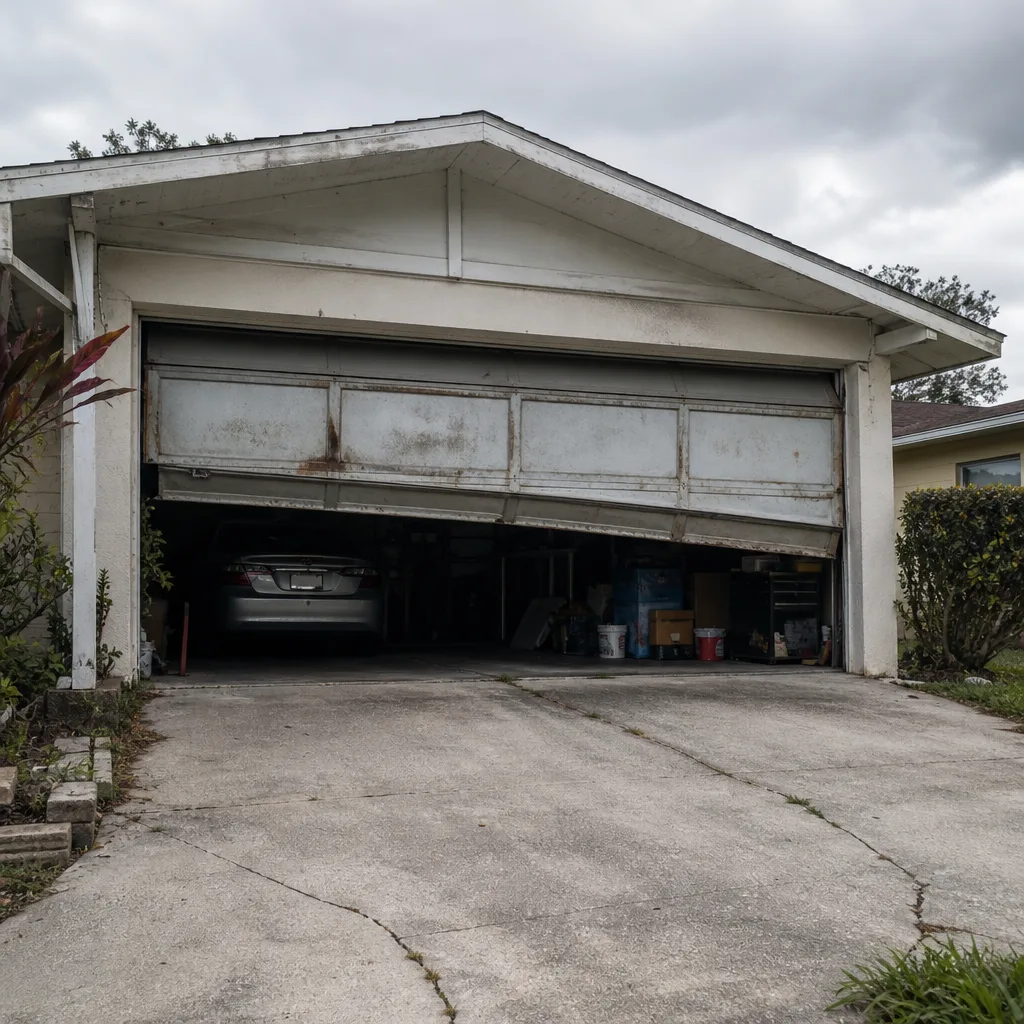 Before
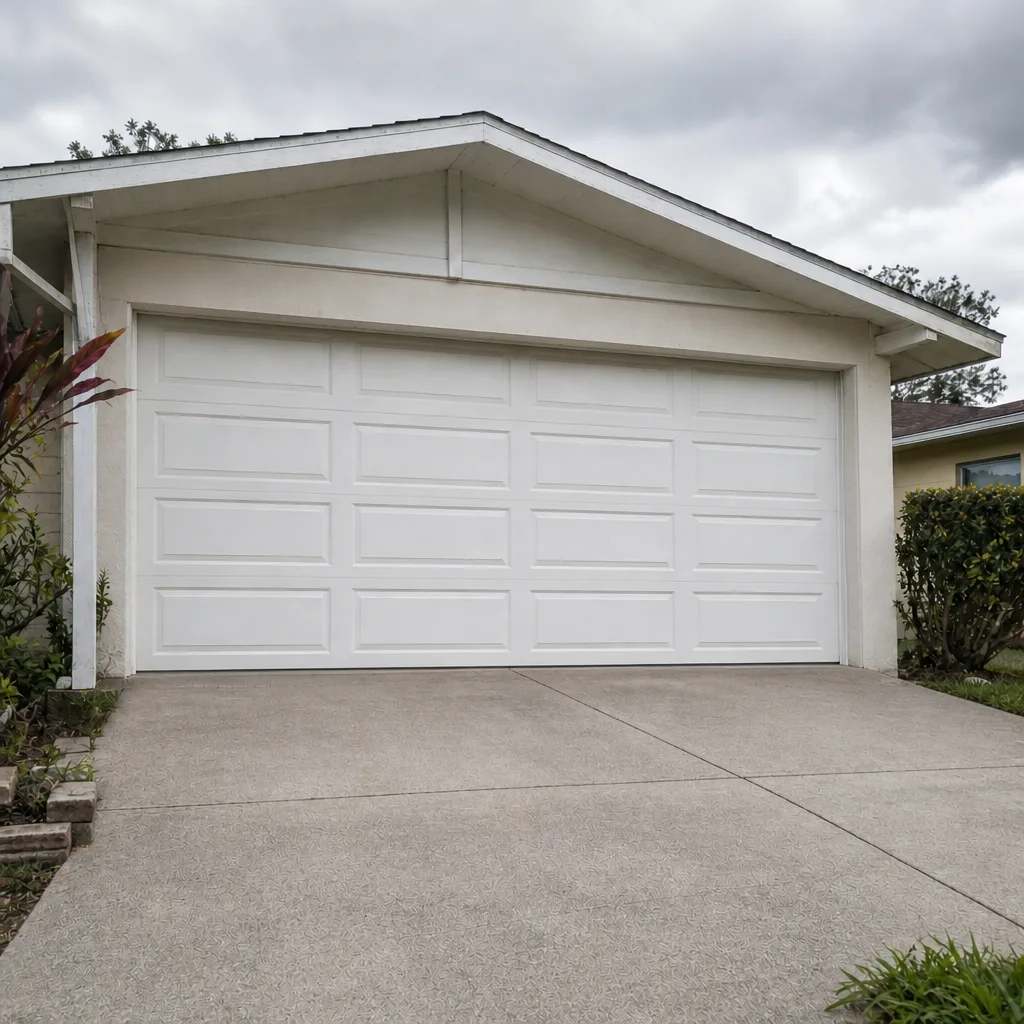 After
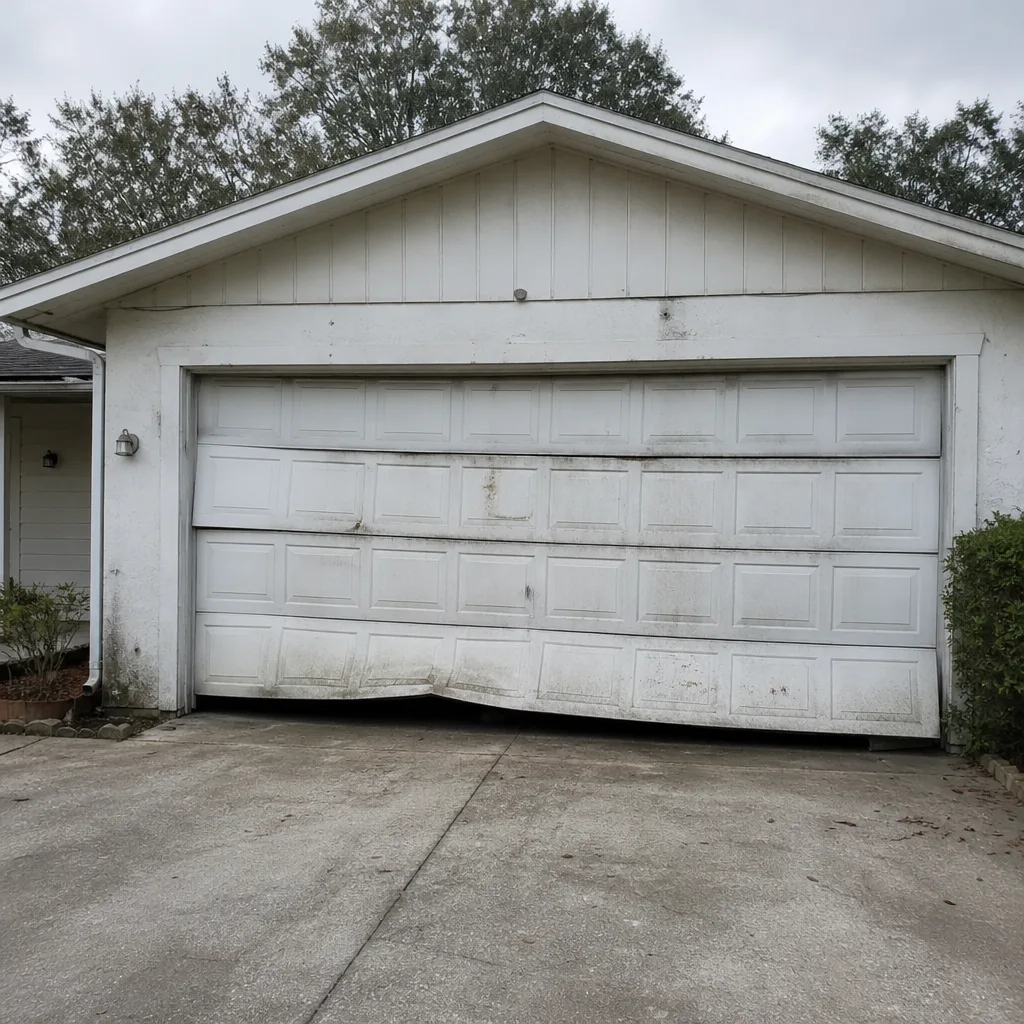 Before
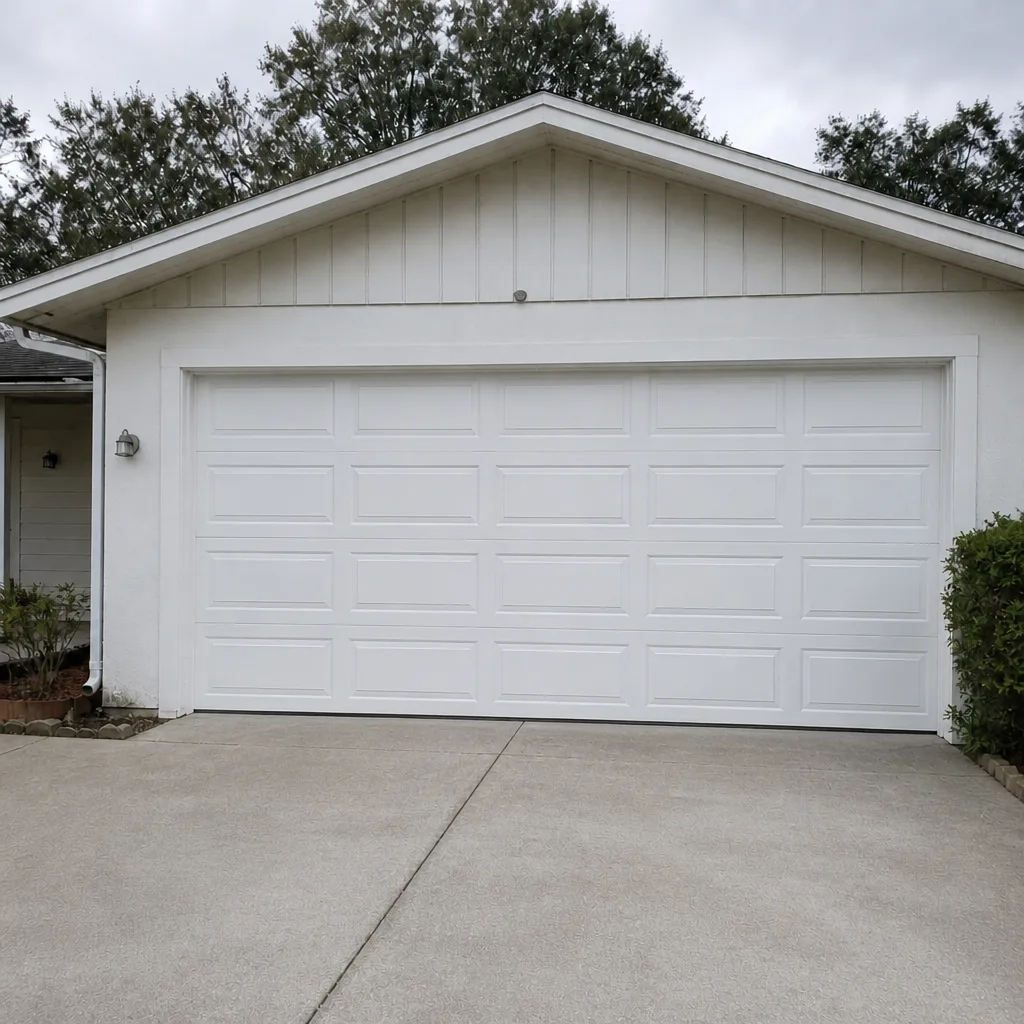 After
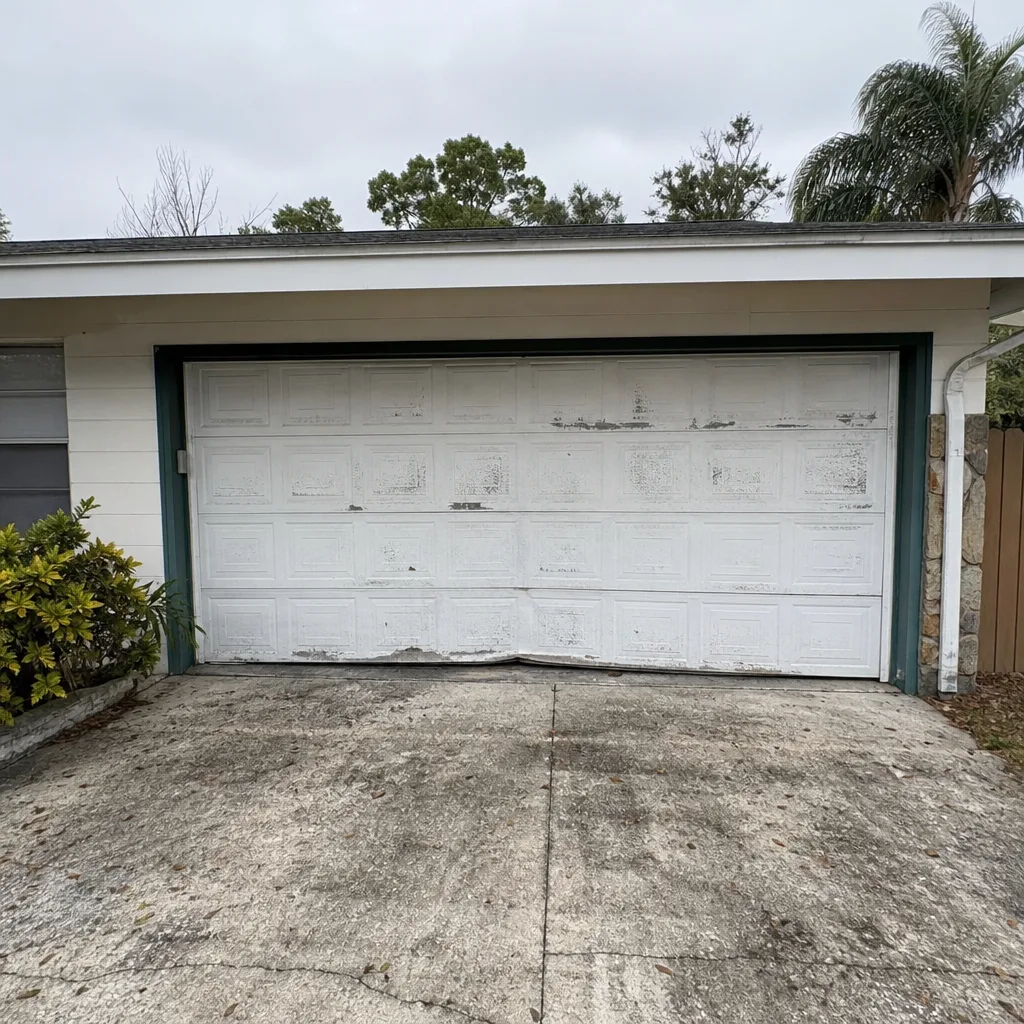 Before
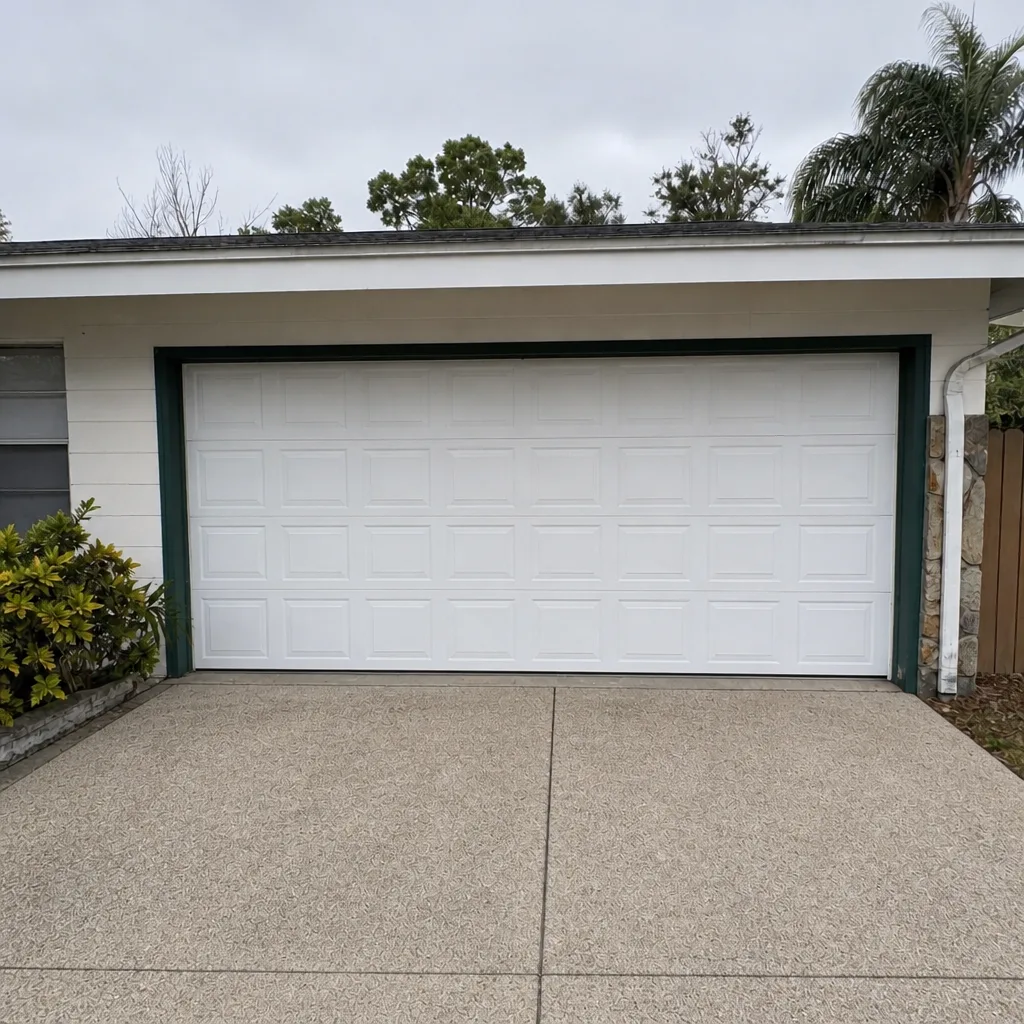 After
When to Call a Professional
Some maintenance you can do yourself: washing the door, wiping the tracks, lubricating hinges and roller stems, testing the safety reverse, and replacing the bottom seal. But when any of the following comes up, call a trained technician: a failed balance test, a broken or sagging spring, frayed cables, a door that’s off its track, a door that won’t open or close fully, or a post-storm inspection that turns up bent tracks or loose anchors. The springs and cables are the specific components where a do-it-yourself attempt can cause serious injury – if you see either in trouble, stop and call.
Clearwater Garage Door Repair Pros offers free estimates in Clearwater – call (866) 488-2820. We can also help when the time comes for a new door; we handle garage door installation for the major brands. And if your door is stuck and your home is unsecured, we offer emergency service for exactly that situation.
Frequently Asked Questions
Every three months is the right rhythm in Clearwater’s humidity, and more often if you notice squeaks or stiffness between checks. Use a silicone-based spray on hinges, roller stems, and a light wipe on the springs, and keep grease off the tracks. Hot, humid air thins and dries most lubricants faster than in a dry climate, so a quarterly schedule is more effective than a twice-a-year one carried over from a cold-weather guide.
If a noise or stiffness doesn’t clear up after you lubricate, call (866) 488-2820 – the estimate is free and the price is quoted before any work starts.
Start with the door from a distance: any dented panels, a door crooked in its opening, or visibly bent tracks. Then check the anchors and brackets, the seals for water damage, and the balance and safety reverse before running the door normally. If panels are dented, tracks bent, or the balance test fails, stop using the door and have it inspected.
If the door is stuck partially open and your home isn’t secure, call (866) 488-2820. We answer 24/7 and offer emergency garage door service for those situations.
No, not as a lasting lubricant. WD-40 is a light solvent-based product – it quiets a squeak briefly and leaves the metal drier than before, which is the opposite of what you want in Florida humidity. Use a silicone-based spray lubricant on hinges, roller stems, and a light wipe on the springs, and never grease the tracks.
If something is squeaking after lubrication, call (866) 488-2820. Estimates are free and the price is settled before work begins.
No. Torsion springs are under extreme tension and can cause serious injury if handled incorrectly – this is the most dangerous component on the door. The same goes for the cables. Leave spring and cable work to a trained technician, and if you see a broken spring or a frayed cable, keep the door closed and call for help.
Call (866) 488-2820 for spring and cable repair. We quote the price before any work starts, and estimates are free.
Heat, humidity, and storm activity do most of it. Lubricants dry out faster, hardware loosens from heat cycling, weatherstripping degrades with UV exposure, and storm-season wind works on anchors and tracks. Springs also fail faster from the constant cycling that comes with a hotter, more humid environment. That’s why maintenance here needs to be more frequent than the cold-weather guides suggest.
If you’re seeing the early signs of one of these failures, call (866) 488-2820 for a free estimate on the repair.
Same-day service is often possible for repairs – call and we’ll do our best to get a technician out quickly. Our technicians have up to 11 years of experience with springs, openers, and the major brands, so they diagnose correctly the first time. The price is quoted and agreed before any work begins, so you’ll know the cost up front.
Call (866) 488-2820. We answer 24/7, with fast dispatch from 7am to 7pm, Sunday through Friday.
The Bottom Line
A Clearwater garage door needs a maintenance rhythm built for its actual climate, not one copied from a four-season guide. That means a monthly visual check and balance test, a quarterly lubrication and hardware tightening with a silicone-based product, and an annual deep inspection of the springs, cables, seals, and opener. Watch the five components most likely to fail in Clearwater – springs, rollers, hinges, weatherstripping, and the opener’s drive – and always inspect the full system after a named storm. Leave spring and cable work to a technician. Do those things and your door will run quieter and last longer than a homeowner following a generic checklist. When anything in this guide points to a repair, Clearwater Garage Door Repair Pros offers free estimates in Clearwater. Call (866) 488-2820. We answer 24/7, with fast dispatch from 7am to 7pm, Sunday through Friday.
Written by the team at Clearwater Garage Door Repair Pros.